


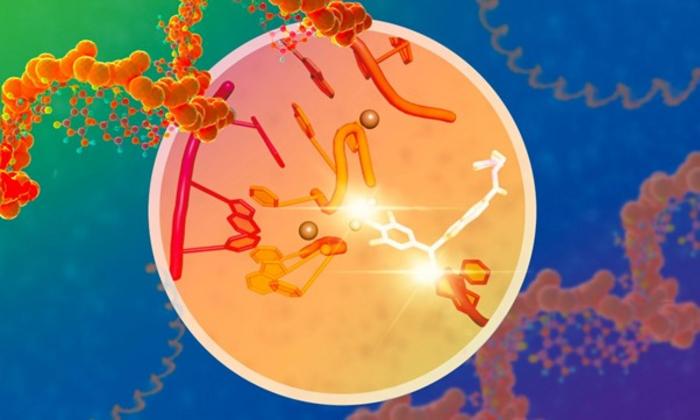
Genoa (Italy)/Grenoble (France) – 2nd July, 2024 – The correct functioning of cells relies heavily on the ability to finely control gene expression, a complex process by which the information contained in DNA is copied into RNA to eventually give rise to all the proteins and most of the regulatory molecules in the cell. If DNA can be imagined as a dense technical manual, gene expression is the method by which the cell extracts useful information from it.

Credit: Isabel Romero Calvo/EMBL
Genoa (Italy)/Grenoble (France) – 2nd July, 2024 – The correct functioning of cells relies heavily on the ability to finely control gene expression, a complex process by which the information contained in DNA is copied into RNA to eventually give rise to all the proteins and most of the regulatory molecules in the cell. If DNA can be imagined as a dense technical manual, gene expression is the method by which the cell extracts useful information from it.
Researchers at the Istituto Italiano di Tecnologia (IIT) in Genoa and the European Molecular Biology Laboratory (EMBL) in Grenoble have unveiled how this process can be modulated using small molecules. The study lays the groundwork for the future identification of potential drugs that act directly on genetic mutations or modifications which alter the process of gene expression, thereby targeting the onset of tumours or genetic diseases.
The research paper, published in Nature Communications, was coordinated by Marco De Vivo, Principal Investigator of the Molecular Modeling & Drug Discovery Lab and Associate Director for Computation at IIT in Genoa, and by Marco Marcia, Group Leader at EMBL Grenoble. The results were achieved by integrating EMBL’s and the Partnership for Structural Biology’s expertise in biochemistry, biophysics, and structural biology, and using the automated MASSIF-1 beamline jointly operated by EMBL and the European Radiation Synchrotron Facility (ESRF) to deliver X-ray photographs of the process. This was combined with expertise in computational simulation from IIT, which allowed for the study of the physico-chemical interactions of the molecules involved.
The study focused on splicing – one of the key levels of control in the gene expression process. Splicing, as the name suggests, is a process by which molecular machines in the cell ‘cut and paste’ specific sequences of RNA to create functional versions. These ‘mature’ RNA versions then perform various functions in the cell, including acting as a set of instructions to produce proteins, or directly as regulators of various cellular processes.
“Studying the RNA splicing process is very complex due to the chemical reactions and the molecular actors involved, such as RNA, proteins, ions, and water molecules. Thanks to modern molecular simulation techniques, we have acquired a detailed understanding of what happens, and how to intervene to modulate splicing. Our study has already enabled us to synthesise new drug-like molecules capable of modulating splicing in a new, specific, and highly effective way,” commented Marco De Vivo.
Indeed, IIT and EMBL researchers, with the support of EMBLEM – EMBL’s technology and knowledge transfer branch – and IIT’s patent office, have recently also deposited a patent that describes novel chemical compounds acting as splicing modulators. In the future, by further improving these compounds, it may become possible to regulate the production of specific proteins linked to defective or mutated genes.
“Visualising splicing modulation at the near-atomic level is breathtaking. It allows us to control one of the most fundamental reactions in life. In the future, we will consolidate the successful integration of our biological experimental studies with the chemical and computational studies of our collaborators, aiming at an ambitious goal: to develop new drugs, such as antibacterials and antitumor agents,” said Marco Marcia.
The research is also part of IIT’s RNA flagship initiative dedicated to the development and application of new RNA-based technologies.
Journal
Nature Communications
Method of Research
Experimental study
Subject of Research
Cells
Article Title
Targeting the conserved active site of splicing machines with specific and selective small molecule modulators
Article Publication Date
19-Jun-2024
Cite Scienmag News
Juliet Wilcox. (July 2, 2024). New molecules to modulate gene expression. Scienmag. https://scienmag.com/new-molecules-to-modulate-gene-expression/
Juliet Wilcox. "New molecules to modulate gene expression." Scienmag, 2 July 2024, https://scienmag.com/new-molecules-to-modulate-gene-expression/. Accessed 5 September 2026.
Juliet Wilcox. "New molecules to modulate gene expression." Scienmag. July 2, 2024. https://scienmag.com/new-molecules-to-modulate-gene-expression/

