


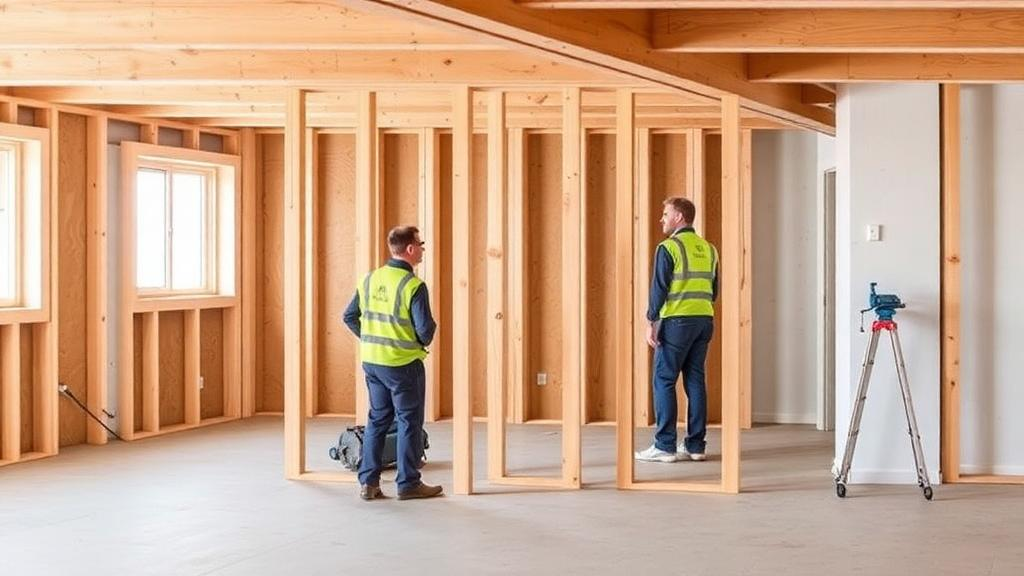
For decades, engineers have faced an uncomfortable truth about earthquake safety: retrofitting a vulnerable building all at once is often prohibitively expensive, yet leaving it untouched leaves occupants exposed to catastrophic risk. A new study published in the Bulletin of Earthquake Engineering by Amirhossein Orumiyehei and Kiarash M. Dolatshahi of Sharif University of Technology in Tehran offers a rigorous answer to this dilemma. The researchers have developed a risk-based, multi-criteria decision-making framework that tells building owners exactly which stories of a structure to strengthen first, in what order, and at what point in the sequence the investment delivers the greatest return in reduced seismic losses. The work transforms what has traditionally been an intuitive, experience-driven judgment call into a transparent, quantitatively grounded procedure that can be applied to real buildings with limited budgets.
The core idea behind the framework is staged, or incremental, seismic retrofit. Rather than committing to a single, massive construction campaign, an owner can spread the work over multiple phases, strengthening the most critical parts of the building first and deferring less urgent interventions until funds become available. The concept is not new; the Federal Emergency Management Agency has published incremental rehabilitation guidelines for schools, hospitals, offices, and apartment buildings since the early 2000s. What has been missing, the authors argue, is a systematic method for deciding the sequence of those interventions at the level of individual stories, optimized against explicit economic and safety metrics. Their framework fills that gap by combining probabilistic loss estimation with optimization and multi-criteria decision analysis.
The researchers propose two complementary approaches. The first, which they call the rigorous approach, employs a Greedy search algorithm as a zero-order optimization tool. Greedy algorithms work by making the locally best choice at each step, and here the method groups and prioritizes economically viable stories for retrofit one stage at a time. At every stage, the algorithm evaluates candidate retrofit packages using three financial metrics: expected annual loss, which captures the average yearly economic damage a building is likely to suffer; net present value of benefit, which discounts future risk reduction into today’s money; and marginal benefit, which measures how much additional value each successive retrofit stage delivers. Crucially, all three metrics can be computed both with and without accounting for fatality losses, allowing decision-makers to see how the ranking of interventions changes when human lives are assigned an economic value.
Underpinning these metrics is a probabilistic seismic loss engine built on iterated cloud analyses. Cloud analysis is a technique in performance-based earthquake engineering in which a structural model is subjected to a suite of ground motion records of varying intensities, and the resulting engineering demand parameters, such as interstory drift ratios and floor accelerations, are regressed against ground motion intensity measures. By fitting these demand-intensity relationships probabilistically, the method captures both the aleatory variability of ground motions and the uncertainty in structural response. The resulting fragility and vulnerability functions feed directly into loss calculations consistent with the FEMA P-58 performance assessment methodology, giving the economic metrics a defensible, hazard-consistent foundation rather than relying on simplified empirical rules.
The second, simplified approach is designed for practitioners who lack the computational resources or time for repeated loss analyses. It prioritizes stories based on cost efficiency using the Technique for Order of Preference by Similarity to Ideal Solution, or TOPSIS, a well-established multi-criteria decision-making method. TOPSIS ranks alternatives by measuring their geometric distance from an ideal positive solution, which maximizes all beneficial criteria, and from a negative ideal solution, which minimizes them. In this application, the alternatives are stories of the building, and the criteria are engineering demand parameters obtained from a single cloud analysis, a pushover analysis, and a response spectrum analysis. Pushover analysis pushes a nonlinear structural model laterally to reveal its strength, stiffness, and yielding sequence, while response spectrum analysis captures modal demands efficiently. Together these three analyses supply a rich but tractable set of indicators for each story.
Because the criteria in the TOPSIS framework carry different degrees of importance, the researchers needed a principled way to weight them. They applied two independent weighting schemes: the Analytical Hierarchy Process, a subjective method introduced by Thomas Saaty in which experts make pairwise comparisons to express relative priorities, and the Entropy-Based Method, an objective technique rooted in Claude Shannon’s information theory that assigns weights according to the dispersion of criterion values across alternatives. Using both methods side by side allows the analysts to test whether the resulting story rankings are sensitive to how the weights are chosen, an important robustness check in any multi-criteria study.
To demonstrate the framework, the authors applied both approaches to two case study buildings: a nine-story and a three-story steel moment-resisting frame. In these structures, the staged rehabilitation targeted the beam-column connections, the welded joints that are notorious failure points in older steel frames, as dramatically illustrated by the 1994 Northridge earthquake. The results were striking: the rigorous Greedy search approach and the simplified TOPSIS approach yielded similar story groups and similar priorities for both buildings. This convergence matters because it suggests that engineers who cannot afford the full probabilistic machinery can still arrive at nearly the same retrofit sequence using a handful of standard analyses and a spreadsheet-implementable decision method.
The practical implications extend well beyond steel moment frames. Although the demonstration focused on connection rehabilitation, the underlying decision-making architecture is agnostic to structural system and material. It could, in principle, guide the staged strengthening of reinforced concrete frames, masonry buildings, or any structure subjected to comparable rehabilitation strategies. For public agencies managing portfolios of schools and hospitals, for insurance companies pricing retrofit incentives, and for owners of aging commercial buildings, the framework provides a defensible way to allocate scarce funds across years or decades. It also aligns with a broader shift in earthquake engineering from prescriptive code compliance toward risk-informed decision-making, in which the value of an intervention is measured in avoided losses rather than in abstract performance targets.
The study also contributes a subtle but important insight: the ranking of retrofit stages can shift depending on whether fatality losses are included in the economic calculus. When the value of a statistical life is folded into expected annual loss and net present value calculations, stories whose failure would endanger many occupants may rise in priority even if their direct repair costs would be modest. By reporting metrics both ways, the framework makes this trade-off explicit rather than hiding it inside a single number, giving stakeholders the information they need to weigh economic efficiency against life safety in a transparent manner. The authors report no external funding for the work, and both the rigorous and simplified procedures are presented as flexible yet robust tools that support risk-informed, economically optimized, and practically implementable retrofit strategies.
As cities from Tehran to Los Angeles grapple with vast stocks of seismically deficient buildings, tools like this one may prove decisive in converting awareness into action. The promise of the framework lies in its pragmatism: it does not demand unlimited budgets or heroic assumptions, but instead meets owners where they are, offering a mathematically sound path to safer buildings one stage at a time. If widely adopted, staged retrofit guided by such risk-based prioritization could steadily chip away at urban seismic vulnerability, ensuring that every dollar spent on strengthening delivers the maximum possible reduction in losses and, ultimately, in lives saved when the next major earthquake strikes.
Subject of Research: Risk-based multi-criteria decision-making for sequencing multi-stage seismic retrofit of buildings
Article Title: Multi-stage seismic retrofit of buildings: a risk-based multi criteria decision-making procedure
Article References: Orumiyehei, A., & Dolatshahi, K. M. (2026). Multi-stage seismic retrofit of buildings: a risk-based multi criteria decision-making procedure. Bulletin of Earthquake Engineering. https://doi.org/10.1007/s10518-026-02673-9
Image Credits: AI Generated
DOI: 10.1007/s10518-026-02673-9
Keywords: seismic retrofit, earthquake engineering, decision-making, TOPSIS, Greedy search, expected annual loss, cost-benefit analysis, steel moment frames, cloud analysis, incremental rehabilitation, structural safety, risk assessment
Cite Scienmag News
Violet Maxwell. (October 2, 2026). New Decision Framework Tells Engineers Which Floors to Retrofit First When Budgets Run Short. Scienmag. https://scienmag.com/new-decision-framework-tells-engineers-which-floors-to-retrofit-first-when-budgets-run-short/
Violet Maxwell. "New Decision Framework Tells Engineers Which Floors to Retrofit First When Budgets Run Short." Scienmag, 2 October 2026, https://scienmag.com/new-decision-framework-tells-engineers-which-floors-to-retrofit-first-when-budgets-run-short/. Accessed 4 October 2026.
Violet Maxwell. "New Decision Framework Tells Engineers Which Floors to Retrofit First When Budgets Run Short." Scienmag. October 2, 2026. https://scienmag.com/new-decision-framework-tells-engineers-which-floors-to-retrofit-first-when-budgets-run-short/


