

Saturday, February 14, 2026
Science
No Result
View All Result
  • Login
  • HOME
  • SCIENCE NEWS
  • CONTACT US
  • HOME
  • SCIENCE NEWS
  • CONTACT US
No Result
View All Result
Scienmag
No Result
View All Result
Home Science News Cancer

New class of cancer mutations discovered in so-called ‘junk’ DNA

July 3, 2024
in Cancer
Reading Time: 4 mins read
0
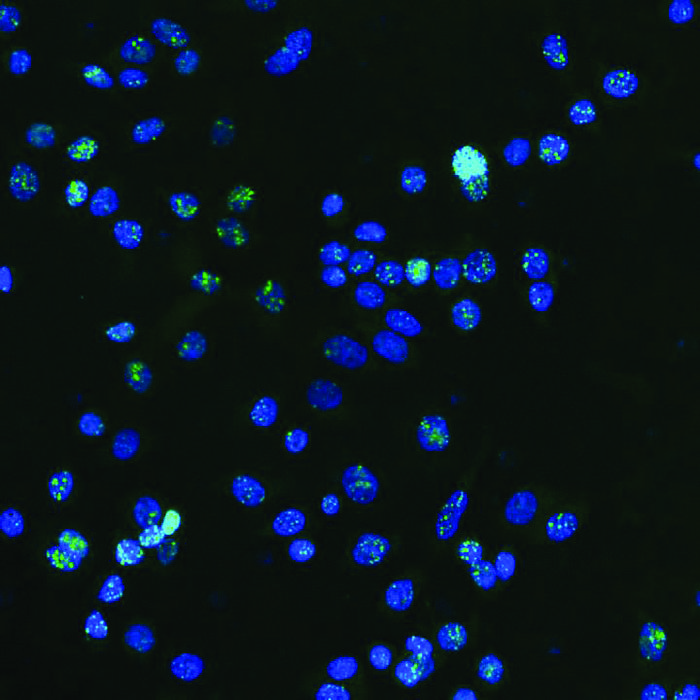
DNA damage in human breast cancer cells
68
SHARES
615
VIEWS
Share on FacebookShare on Twitter
ADVERTISEMENT

Using artificial intelligence, Garvan Institute researchers have found potential cancer drivers hidden in so-called ‘junk’ regions of DNA, opening up possibilities for a new approach to diagnosis and treatment.

DNA damage in human breast cancer cells

Credit: Garvan Institute

New class of cancer mutations discovered in so-called ‘junk’ DNA

Using artificial intelligence, Garvan Institute researchers have found potential cancer drivers hidden in so-called ‘junk’ regions of DNA, opening up possibilities for a new approach to diagnosis and treatment.

Non-coding DNA – the 98% of our genome that doesn’t contain instructions for making proteins – could hold the key to a new approach for diagnosing and treating cancers, according to a new study from the Garvan Institute of Medical Research. The findings, published in the journal Nucleic Acids Research, reveal mutations in previously overlooked regions of the genome that may contribute to the formation and progression of at least 12 different cancers, including prostate, breast and colorectal.

The discovery could lead to early diagnosis and new treatments effective for many cancer types.

“Non-coding DNA was once dismissed as ‘junk DNA’ due to its apparent lack of function,” says Dr Amanda Khoury, Research Officer at Garvan and co-corresponding author of the study. “Our research has found mutations in these DNA regions that could open an entirely new, universal approach to cancer treatment.”

Investigating DNA ‘anchors’ disrupted in cancer

The researchers focused on mutations affecting binding sites for a protein called CTCF, which helps fold long strands of DNA into specific shapes. In their previous work, they found that these binding sites bring distant parts of the DNA close together, forming 3D structures that control which genes are turned on or off.

“We had already identified a subset of CTCF binding sites that are ‘persistent’ – that is they act like anchors in the genome, present across different cell types,” says Dr Khoury. “We hypothesised that if these anchors become faulty, it could disrupt the normal 3D organisation of the genome and contribute to cancer.”

To test this, the researchers developed a new sophisticated machine learning (AI) tool called CTCF-INSITE, which used genomic and epigenomic features to predict which CTCF sites are likely to be persistent anchors in a total of 12 cancer types. They then assessed more than 3000 tumour samples from patients diagnosed with the 12 cancer types, available from the International Genome Consortium database, and found the persistent anchors were rich with mutations.

“Using our machine learning tool, we identified persistent CTCF binding sites in 12 different cancer types,” says Dr Wenhan Chen, first author of the study. “Remarkably, we found that every cancer sample had at least one mutation in a persistent CTCF binding site.”

“This research confirmed that persistent CTCF binding sites are ‘mutational hotspots’ in cancers. We think these mutations give cancer cells a survival advantage, allowing them to proliferate and spread,” adds Dr Khoury.

Towards a universal cancer treatment approach

The findings could have broad implications for understanding and treating many types of cancer. “Most new cancer treatments have to be carefully targeted to specific mutations not always common amongst different tumour types, but because these CTCF anchors are mutated across multiple different cancer types, we’re opening up the possibility of developing approaches that could be effective for multiple cancers,” says Professor Susan Clark, Head of the Cancer Epigenetics Lab at Garvan and lead author of the study.

The researchers are now planning further large-scale experiments using CRISPR gene editing to investigate how these anchor mutations disrupt the 3D genome and potentially promote cancer growth.

“Now that we’ve discovered what we believe to be critical anchors of the genome and shown they are important to maintaining homeostasis of the genome architecture, it makes sense that these non-coding DNA mutations would disrupt this homeostasis in the cancer cell – a hypothesis we will test when we edit them out,” says Professor Clark. “Observing the downstream impact, we hope to identify key genes or gene pathways that are affected by the mutations, which could serve as markers for early cancer detection or targets for new treatments.”

“Finding these clues that were hidden in a vast amount of data is a powerful example of how artificial intelligence is boosting medical research,” she says. “This is a whole new frontier in the study of cancer, and we’re excited to explore it further.”

–ENDS–

This research was supported by a National Health and Medical Research Council Ideas grant and Investigator grant funding.

Dr Amanda Khoury is a Conjoint Lecturer and Professor Susan Clark is a Conjoint Professor at St Vincent’s Clinical School, Faculty of Medicine and Health, UNSW Sydney.


Journal

Nucleic Acids Research

DOI

10.1093/nar/gkae530

Method of Research

Experimental study

Subject of Research

Cells

Article Title

Machine learning enables pan-cancer identification of mutational hotspots at persistent CTCF binding sites

Article Publication Date

2-Jul-2024

Share27Tweet17
Previous Post

Splicing it all together in the fight against cancer

Next Post

World’s first research journal dedicated to psychology and artificial intelligence announced

Related Posts

blank
Cancer

How Cell Metabolism Fuels the Immunosuppressive Tumor Environment

February 14, 2026
blank
Cancer

Glaucoma: How Metabolic Axis Failure Triggers Vision Loss

February 14, 2026
Cancer

To give you the best rewrite, I have categorized these by the “vibe” of your magazine post. Since it is for February 2026, these titles lean into the future of oncology and proactive health.

The “Cutting Edge” Approach (Best for Tech/Research focused feeds)

  • The Next Frontier in Oncology: Sylvester’s February 2026 Breakthrough Brief
  • Precision and Prevention: New Cancer Insights from Sylvester (Feb ‘26)
  • Future-Proofing Your Health: The Sylvester Cancer Center Research Update
  • Decoding Cancer: Advanced Strategies from Sylvester’s 2026 Tip Sheet

The “Actionable & Health” Approach (Best for General Wellness readers)

  • Smart Moves: Your February Guide to Cancer Prevention & Care
  • Sylvester Cancer Center: Essential Health Takeaways for February 2026
  • Living Proactively: New Cancer Prevention Standards for the Year Ahead
  • The Cancer Fighter’s Toolkit: Sylvester’s Latest Expert Recommendations

The “Punchy & Modern” Approach (Best for Social Media/Newsletters)

  • Sylvester’s Top Cancer Tips for Feb 2026
  • The February Edit: Innovations in Cancer Care
  • Cancer Care 2026: What You Need to Know This Month
  • Sylvester Intelligence: New Guidelines for Cancer Prevention

The “Science Journalism” Approach (Best for a formal magazine header)

  • Monthly Briefing: Breakthroughs in Clinical Oncology from Sylvester
  • Current Trends in Cancer Research: The Sylvester February Report
  • Reporting from Sylvester: New Paradigms in Early Detection and Treatment

Which one should you choose?

  • If your magazine is high-tech: Use “The Next Frontier in Oncology.”
  • If your magazine is lifestyle-oriented: Use “Your February Guide to Cancer Prevention.”
  • If your magazine is a quick news digest: Use “Sylvester’s Top Cancer Tips for Feb 2026.”

February 14, 2026
blank
Cancer

Here are several ways to rewrite that headline, depending on the “vibe” of your magazine:

The “Cutting Edge” Approach

  • Bridging the Gap: How Telehealth is Revolutionizing Genetic Care for Childhood Cancer Survivors
  • The Virtual Clinic: Virtual Consults Break Down Barriers to Genetic Testing for Adult Survivors

The Human-Interest Approach

  • Lifesaving Connections: Telehealth Brings Expert Genetic Counseling to Childhood Cancer Survivors Everywhere
  • No Specialist Nearby? No Problem. How Remote Care is Protecting the Future of Cancer Survivors

Short & Punchy (Best for Social Media/Web)

  • Virtual Genetics: A New Lifeline for Childhood Cancer Survivors
  • Webcam Consults are Narrowing the Care Gap for Adult Survivors
  • Telehealth: The New Frontier in Post-Cancer Genetic Screening

Academic/Serious

  • Overcoming Geographical Barriers: The Rise of Telegenetics in Long-Term Survivorship Care
  • Closing the Access Gap: Telemedicine’s Vital Role in Genetic Services for Adult Survivors

Which one should you choose?

  • If your magazine is scholarly, go with the “Academic” options.
  • If your magazine is consumer-facing/lifestyle, go with the “Human-Interest” options.
  • If you need to drive clicks, go with the “Short & Punchy” options.

February 14, 2026
blank
Cancer

L-Aspartate Heals Fatty Liver by Protecting Mitochondria

February 14, 2026
blank
Cancer

Glycolysis Pathway Genes Upregulated Before Tauopathy in Mice

February 13, 2026
Next Post
World’s first research journal dedicated to psychology and artificial intelligence announced

World’s first research journal dedicated to psychology and artificial intelligence announced

  • Mothers who receive childcare support from maternal grandparents show more parental warmth, finds NTU Singapore study

    Mothers who receive childcare support from maternal grandparents show more parental warmth, finds NTU Singapore study

    27612 shares
    Share 11041 Tweet 6901
  • University of Seville Breaks 120-Year-Old Mystery, Revises a Key Einstein Concept

    1018 shares
    Share 407 Tweet 255
  • Bee body mass, pathogens and local climate influence heat tolerance

    662 shares
    Share 265 Tweet 166
  • Researchers record first-ever images and data of a shark experiencing a boat strike

    529 shares
    Share 212 Tweet 132
  • Groundbreaking Clinical Trial Reveals Lubiprostone Enhances Kidney Function

    516 shares
    Share 206 Tweet 129
Science

Embark on a thrilling journey of discovery with Scienmag.com—your ultimate source for cutting-edge breakthroughs. Immerse yourself in a world where curiosity knows no limits and tomorrow’s possibilities become today’s reality!

RECENT NEWS

  • How FOXJ1 Helps Cancer Cells Resist Chemotherapy
  • How CBT-I Calms the Insomniac Brain: A Study
  • When Sea-Level Rise Outpaces Delta Adaptation Limits
  • How Cell Metabolism Fuels the Immunosuppressive Tumor Environment

Categories

  • Agriculture
  • Anthropology
  • Archaeology
  • Athmospheric
  • Biology
  • Biotechnology
  • Blog
  • Bussines
  • Cancer
  • Chemistry
  • Climate
  • Earth Science
  • Editorial Policy
  • Marine
  • Mathematics
  • Medicine
  • Pediatry
  • Policy
  • Psychology & Psychiatry
  • Science Education
  • Social Science
  • Space
  • Technology and Engineering

Subscribe to Blog via Email

Enter your email address to subscribe to this blog and receive notifications of new posts by email.

Join 5,190 other subscribers

© 2025 Scienmag - Science Magazine

Welcome Back!

Login to your account below

Forgotten Password?

Retrieve your password

Please enter your username or email address to reset your password.

Log In
No Result
View All Result
  • HOME
  • SCIENCE NEWS
  • CONTACT US

© 2025 Scienmag - Science Magazine

Discover more from Science

Subscribe now to keep reading and get access to the full archive.

Continue reading
