


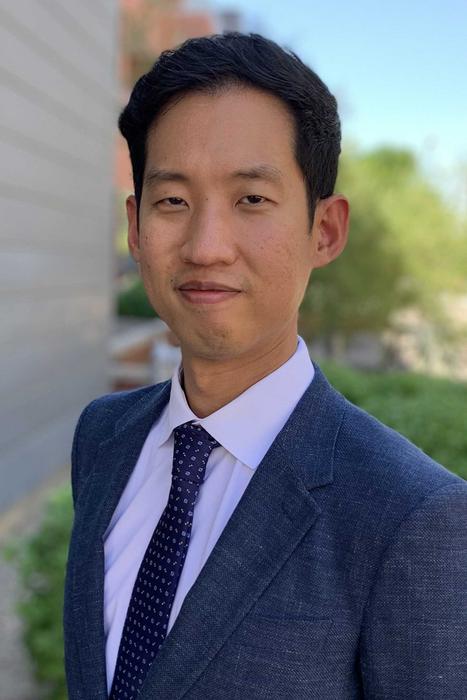
TUCSON, Arizona – In a pioneering research initiative, Chris Lim, PhD, an assistant professor of environmental health sciences at the University of Arizona Mel and Enid Zuckerman College of Public Health, has secured a substantial grant of $1.2 million from the American Cancer Society. This funding is aimed at investigating the intricate relationship between neighborhood environments and cancer risk, particularly connections between those environments and obesity-related cancers. This study is particularly relevant as it seeks to illuminate previously under-explored aspects of how the neighborhoods we inhabit can influence our health outcomes, especially in the face of growing cancer disparities.
Despite the recognized importance of the neighborhood environment in shaping health, most existing research in cancer epidemiology has been narrow in its focus. Traditional studies tend to investigate specific factors in isolation, such as the availability of healthy food options or the safety of public spaces for physical activity. However, they often overlook the broader context of the neighborhood as a synergistic system, where various elements interact in complex ways to affect community health. Lim’s approach aims to break this mold by considering a comprehensive array of neighborhood features and their cumulative impact on cancer risk.
The scope of the study spans multiple dimensions of both the built and social environments of neighborhoods. By examining various built environment domains, including urban design, transportation accessibility, local retail options, public service availability, housing characteristics, parks, and green spaces, the research aims to construct a detailed profile of neighborhood settings. Equally important is the analysis of social environment factors, which encompass socioeconomic status, racial and ethnic composition, historical experiences of racism, and the processes of immigration and acculturation that have shaped these communities.
Central to Lim’s research methodology is the incorporation of advanced analytical techniques, specifically machine learning and deep learning algorithms, that will be applied to large geospatial datasets. This will allow his research team to create highly specific characterizations of each participant’s neighborhood environment, thus providing more nuanced insights into how these settings impact health. The integration of multiple neighborhood features into what Lim refers to as “archetypes” can lead to results that are not only more interpretable but also actionable. This innovative approach could enable public health officials to pinpoint specific areas where interventions could be most effectively applied.
The analysis will rely heavily on data gathered from two significant ongoing studies: the NIH-AARP Diet and Cancer Study, which is one of the largest prospective cohort studies in the United States, and the Arizona Cancer Registry, providing a rich foundation for understanding cancer patterns across diverse populations. The emphasis on using existing data sets allows for a robust and thorough investigation while also maximizing resource efficiency.
Public health impacts are far-reaching, and findings from this study promise to inform policy-making and community engagement. By providing insights that can effectively guide infrastructure improvements within neighborhoods, Lim’s research could help mitigate cancer risk factors that arise from environmental conditions. Recognizing that cancer disparities result from multifaceted interactions between various determinants of health is crucial. Thus, the research aims to broaden understanding not only of the direct effects of the environment but also how these factors affect health equity.
Iman Hakim, MD, PhD, MPH, dean of the Zuckerman College of Public Health, has noted the transformative potential of this project, stating that this comprehensive approach to investigating the relationship between neighborhood environments and cancer risk has not been studied at such a depth before. The complexity of the methodologies being employed holds the possibility for defining new pathways for public health interventions aimed at fostering healthier communities, not just in Arizona but potentially beyond.
The collaborative nature of this research is further strengthened by Lim’s partnerships with key research entities, including the University of Arizona Health Sciences, the University of Arizona Cancer Center, New York University Grossman School of Medicine, and the University of Pennsylvania. Together, these institutions provide a wealth of expertise and resources that will complement Lim’s investigative efforts. Notable collaborators within the Zuckerman College include Robin B. Harris, PhD, MPH, a respected professor in the Department of Epidemiology and Biostatistics, and Celina Valencia, DrPH, an emerging voice in the field of family and community medicine.
The American Cancer Society’s support underlines the urgency of this research, emphasizing a commitment to understanding and addressing cancer risk through environmental perspectives. This research aligns with broader public health goals aimed at minimizing health disparities, enhancing community well-being, and promoting equitable healthcare solutions. As results emerge, insights will be shared not just with academics but also with policy-makers and community stakeholders directly involved in shaping public health initiatives.
In summary, Lim’s study presents a significant advancement in cancer research, particularly as it pertains to the critical role neighborhood environments play in health outcomes. By exploring these relationships through a multifaceted lens and employing cutting-edge analytical techniques, the research promises to contribute to a more comprehensive understanding of cancer risk factors and their environmental underpinnings. As such, this work stands to inform robust public health strategies geared towards fostering healthier living spaces that mitigate cancer risks and promote health equity across diverse populations.
Cite Scienmag News
Phoebe Ingram. (March 19, 2025). New $1.2 Million Grant Aims to Investigate the Impact of Neighborhood Environment on Cancer Risk. Scienmag. https://scienmag.com/new-1-2-million-grant-aims-to-investigate-the-impact-of-neighborhood-environment-on-cancer-risk/
Phoebe Ingram. "New $1.2 Million Grant Aims to Investigate the Impact of Neighborhood Environment on Cancer Risk." Scienmag, 19 March 2025, https://scienmag.com/new-1-2-million-grant-aims-to-investigate-the-impact-of-neighborhood-environment-on-cancer-risk/. Accessed 3 September 2026.
Phoebe Ingram. "New $1.2 Million Grant Aims to Investigate the Impact of Neighborhood Environment on Cancer Risk." Scienmag. March 19, 2025. https://scienmag.com/new-1-2-million-grant-aims-to-investigate-the-impact-of-neighborhood-environment-on-cancer-risk/


