


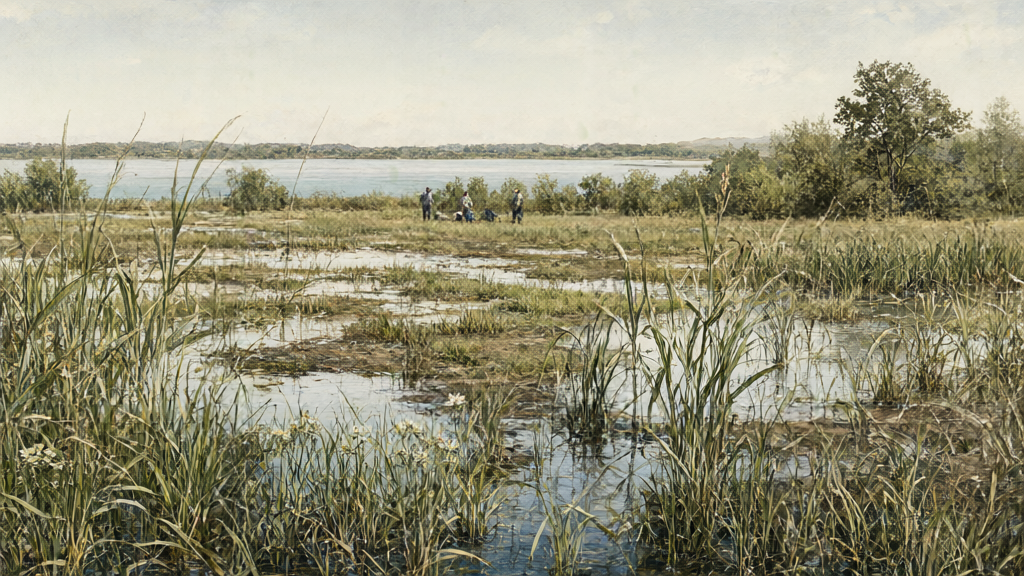
European ecosystems are currently facing increasing pressure, making it more important than ever to understand where and how restoration measures can deliver the greatest possible impact. The European Union’s Nature Restoration Regulation sets an EU-wide goal for restoration measures to cover at least 20 percent of its land and sea areas by 2030. The European Commission describes the 2050 goal as covering ecosystems that need restoration. To support these ambitious goals, a new initiative called NatureRestoreR has been launched to bridge the gap between ecological science and restoration policy. The project aims to provide the evidence and modelling capacity needed to develop and refine effective National Restoration Plans.
Funded by the European Commission and coordinated by Radboud University, the cornerstone project NatureRestoreR: guiding nature restoration through integrated ecological modelling was officially launched on 1 September 2026. The project carries grant number 101287178 and will be implemented over a four-year period, concluding on 1 September 2030. The primary objective of NatureRestoreR is to provide publicly available ecological modelling tools and guidelines. These resources are intended to enable national and regional authorities to design restoration plans based on a scientifically sound understanding of how species, habitats, and ecosystem services respond to restoration measures in different places and under evolving climate dynamics.
A critical challenge in guiding ecosystem restoration efforts is that there is no single approach to restoring nature. Species and habitats may respond differently to a given restoration measure depending on local environmental conditions. Furthermore, climate change can affect the long-term outcomes of restoration efforts. Consequently, authorities need robust scientific evidence to understand how species and ecosystems are likely to respond to restoration under specific circumstances. They also need to identify where interventions can create synergies or trade-offs. NatureRestoreR seeks to address this challenge by convening existing data, scientific knowledge, and modelling approaches to develop an innovative suite of adaptive and easy-to-use ecological modelling tools.
These modelling tools will enable evidence-based prospective assessment of restoration measures. Specifically, they will model the potential impacts on species’ habitats, the extent and condition of habitats protected under the EU Nature Directives, and the provision of ecosystem services. By providing these insights, the project aims to help decision-makers make more informed choices about where and how to allocate restoration resources. This approach is designed to ensure that restoration efforts are not only ecologically sound but also practically feasible for national and regional authorities.
The development of these modelling tools will be a collaborative effort, co-developed and tested through a co-creation process involving researchers and implementation partners. The project will use information from the initial and final revised National Restoration Plans of five EU Member States: Austria, Italy, France, Estonia, and the Netherlands. This collaborative approach will enable the project partners to assess how these plans contribute to the objective of the EU Biodiversity Strategy and the Nature Restoration Regulation. By working with these specific national plans, the project ensures that the tools are relevant to real-world policy contexts and can be adapted to different national circumstances.
Reflecting on the project’s long-term vision, Aafke Schipper, a member of the coordination team at Radboud University, emphasized the importance of the partnership structure. Schipper noted that NatureRestoreR relies on a unique co-creation partnership between ecological researchers and national authorities responsible for or involved in the implementation of the Nature Restoration Regulation. Through this partnership, the project ensures that it meets the needs of decision-makers and practitioners who are implementing and monitoring the regulation. This focus on user needs is central to the project’s design, aiming to create tools that are not only scientifically rigorous but also practical for those on the ground.
NatureRestoreR’s transdisciplinary partnership brings together ecological modelling experts and national agencies with deep knowledge of the EU Nature Directives and National Restoration Plans. Working together, these partners aim to strengthen the relation between ecological knowledge and the decisions shaping Europe’s landscape. The project recognizes that effective restoration requires a close link between scientific understanding and policy implementation. By integrating these two areas, NatureRestoreR hopes to create a more cohesive approach to ecosystem restoration across the continent. This integration is seen as essential for achieving the ambitious targets set by the EU.
Throughout the project, NatureRestoreR will engage with researchers, practitioners, policymakers, and other stakeholders interested in advancing effective, evidence-informed ecosystem restoration across Europe. This broad engagement is intended to ensure that the project’s outputs are widely accessible and useful to a diverse range of actors involved in nature restoration. The project team encourages stakeholders to follow NatureRestoreR on LinkedIn to stay up to date with the project’s latest news, activities, and results. This ongoing communication is part of the project’s strategy to build a community of practice around evidence-based restoration.
The launch of NatureRestoreR represents a significant step forward in the effort to make nature restoration smarter and more effective in Europe. By providing the tools and evidence needed to design and refine restoration plans, the project aims to support the implementation of the EU Nature Restoration Regulation. The focus on co-creation and transdisciplinary collaboration is expected to ensure that the project’s outputs are relevant and useful to those responsible for implementing restoration measures. As the project progresses over the next four years, it will provide valuable insights into how ecological modelling can be used to guide restoration efforts in a changing climate. The ultimate goal is to contribute to the restoration of Europe’s ecosystems and the achievement of the EU’s biodiversity targets.
Subject of Research: Environmental Policy and Ecology
Article Title: NatureRestoreR launches to support Europe in making nature restoration smarter and more effective
Article References: NatureRestoreR launches to support Europe in making nature restoration smarter and more effective. (n.d.). Original publication
Image Credits: AI Generated
DOI: Not provided
Keywords: Nature Restoration, EU Policy, Ecological Modelling, Biodiversity, Climate Change, Radboud University, European Commission, NatureRestoreR, launches, support, Europe, making
Cite Scienmag News
Margaret Porter. (October 2, 2026). NatureRestoreR Project Launches to Enhance European Nature Restoration. Scienmag. https://scienmag.com/naturerestorer-project-launches-to-enhance-european-nature-restoration/
Margaret Porter. "NatureRestoreR Project Launches to Enhance European Nature Restoration." Scienmag, 2 October 2026, https://scienmag.com/naturerestorer-project-launches-to-enhance-european-nature-restoration/. Accessed 4 October 2026.
Margaret Porter. "NatureRestoreR Project Launches to Enhance European Nature Restoration." Scienmag. October 2, 2026. https://scienmag.com/naturerestorer-project-launches-to-enhance-european-nature-restoration/


