


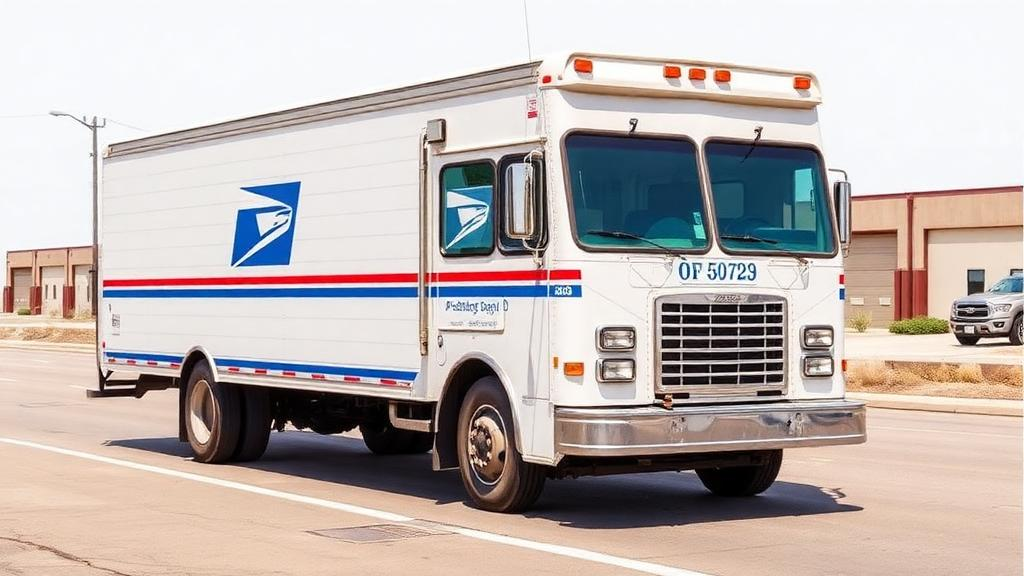
A policy change at the United States Postal Service that might sound like a minor logistical adjustment—one daily truck trip to rural post offices instead of two—could result in the rejection of tens of thousands of mail-in ballots in the November election, according to a new analysis from the Brookings Institution. The finding lands at a moment when the margin between winning and losing in many American contests can be measured in hundreds or even dozens of votes, giving a seemingly technical scheduling decision an outsized potential to shape political outcomes.
The report, authored by Brookings senior fellow Elena Patel, examined the implications of the new rule in detail. Its central conclusion is stark: the policy could lead to many thousands of ballots arriving at election offices after their deadlines, and late ballots are, in most jurisdictions, rejected. Patel’s analysis estimates that the change could produce between 43,000 and 55,000 additional ballot rejections nationwide. Set against the roughly 158 million voters who participate in recent national elections, that figure is small as a share of the electorate. But the distribution of those rejected ballots matters enormously, because many races around the country are extremely close, and a few votes either way might make all the difference in a contested district or state.
According to the analysis, the effects of the policy change will likely be most pronounced in rural areas of the western United States. These are regions where Post Office service is most likely to become less frequent under the new rule, and where many states automatically send mail ballots to all registered voters, meaning that the population most dependent on reliable mail service is also the population most exposed to the change. The overlap between rural postal routes, once-daily transportation, and universal mail-ballot states creates a concentrated zone of risk that the national averages obscure.
The policy at the center of the analysis is known as Regional Transportation Optimization, or RTO, which the Postal Service began rolling out last year as part of an effort to run its transportation network more efficiently. RTO applies to post offices that are located more than 50 miles from the plant that processes their mail. The change is a response to a long and steep decline in letter volume: the amount of single-piece first-class mail has fallen precipitously in recent decades, from 57 billion pieces in 1997 to 12 billion in 2023. Faced with a shrinking core business, the agency has been restructuring its network, and RTO is one of the most consequential pieces of that restructuring for the communities it touches.
The mechanics of the change are straightforward but far-reaching in their effects. In the past, each Post Office had two pickups a day: one to drop off mail in the morning, and a second later in the day to pick up additional mail. Under the new RTO policy, post offices more than 50 miles from their regional plant now have only one combined pickup and drop-off per day. Carriers still collect mail from homes and businesses according to the same schedule as before, but in many rural post offices, the mail those carriers gather is now taken to the regional sorting center only once a day rather than twice. The practical consequence is that for any mail posted, or picked up by mail carriers, later in the day, RTO adds an extra day to the total delivery time. In an election context, where ballots must physically arrive by a statutory deadline, an extra day of transit can be the difference between a counted vote and a discarded one.
It is important to note that this policy change is separate from recent and ongoing Trump administration efforts to restrict voting and mail-in voting, which have been the subject of lengthy legal battles. Although the Supreme Court recently declined to intervene in a federal injunction barring the Postal Service from carrying out the administration’s mail-voting provisions, the administration has signaled that it will continue to pursue that effort. The RTO policy, by contrast, originated as an efficiency measure within the Postal Service’s own network planning, driven by economics rather than election administration. Its electoral consequences, however, may prove just as significant as any deliberate voting restriction, which is precisely why election analysts are paying close attention.
The scale of exposure is considerable. Roughly 121 million of the country’s 253 million voting-age adults in the 48 contiguous states and Washington, D.C. live nearest to a post office that will now have once-a-day pickup. Taken together, these post offices serve around 47 percent of all voting-age adults—nearly half the country. While not every one of those adults votes by mail, and not every mailed ballot is at risk of arriving late, the sheer breadth of the affected population means that even a small increase in rejection rates translates into tens of thousands of discarded ballots.
To estimate the effects of the rule change, Patel focused on three states: California, North Carolina, and Washington. These states each held primary elections earlier this year, and each reports how many mail ballots voters in each county returned, how many were rejected, and why, with late arrival recorded as a separate category. All three also report the same level of detail for the 2022 and 2024 primaries, both of which were held before RTO was implemented. That allowed Patel to compare 2026 rejection rates directly with previous years. In addition, because RTO does not affect all counties evenly, she was able to compare counties that are more and less exposed to the change, isolating the effect of the policy from other factors that might influence rejection rates.
The results of that comparison are unambiguous. In these three states, RTO doubled the rate of rejection for mail-in ballots. The overall rate of mail-in ballots rejected in California and Washington was around one percent, while in North Carolina the rejection rate was several times higher. Extrapolating from these state-level findings to the national picture is difficult, but the underlying volume of mail voting makes the stakes clear: nearly one in three Americans voted by mail in the 2024 general election, a total of around 48 million votes. Around forty percent of mail-in ballots in recent elections came from places covered by RTO, meaning that a large fraction of the country’s mail ballots now moves through a transportation network with materially less daily capacity than it had during the last presidential election.
Patel offers several recommendations for reducing the risk that the RTO policy leads to increased ballot rejections. The most immediate one belongs to voters themselves: do not wait until the last minute to send in mail ballots. By mailing earlier, voters can ensure their ballots arrive well before the deadline, building in a buffer against the extra day of transit that RTO can impose. This is especially crucial now because the Postal Service has declared that a postmark may no longer reliably show the day a piece of mail was sent, undermining the traditional signal voters and election officials have used to judge timeliness. Moreover, the Supreme Court has ruled that the postmark can be used as proof that a voter met the deadline for in-time voting, and several states have ended the grace periods that once cushioned late-arriving ballots, removing another layer of protection for ballots that arrive just after election day.
Beyond individual behavior, Patel recommends that states and counties widely publicize the change to the voters affected by RTO, so that those voters know to adjust when they mail their ballots. She further recommends that the Postal Service make it clear to voters exactly which post offices are now operating under the one-pickup RTO rules, which would help people understand the constraints they are working under when they decide how and when to return a ballot. Whether those recommendations are adopted in time for November remains an open question, but the analysis makes clear that the window for action is narrow. A scheduling change designed to trim costs from a transportation network serving a declining mail volume has, in effect, become an election administration issue of national consequence, and the tens of thousands of ballots it could reject will not be evenly spread—they will land hardest in the rural western communities where mail service was already thinnest and where entire electorates vote by post.
Subject of Research: Impact of the USPS Regional Transportation Optimization policy on mail-in ballot rejection rates in U.S. elections
Article Title: New post office policy could lead to the rejection of tens of thousands of mail-in ballots in November
Article References: New post office policy could lead to the rejection of tens of thousands of mail-in ballots in November. (n.d.). Original publication
Image Credits: AI Generated
DOI: Not provided
Keywords: USPS, mail-in voting, Regional Transportation Optimization, Brookings Institution, ballot rejection, rural post offices, election administration, Elena Patel, postal policy, voting rights, mail ballots, 2026 election
Cite Scienmag News
Courtney Benton. (October 4, 2026). One Truck a Day: Postal Policy Change Could Reject Tens of Thousands of Mail Ballots. Scienmag. https://scienmag.com/one-truck-a-day-postal-policy-change-could-reject-tens-of-thousands-of-mail-ballots/
Courtney Benton. "One Truck a Day: Postal Policy Change Could Reject Tens of Thousands of Mail Ballots." Scienmag, 4 October 2026, https://scienmag.com/one-truck-a-day-postal-policy-change-could-reject-tens-of-thousands-of-mail-ballots/. Accessed 4 October 2026.
Courtney Benton. "One Truck a Day: Postal Policy Change Could Reject Tens of Thousands of Mail Ballots." Scienmag. October 4, 2026. https://scienmag.com/one-truck-a-day-postal-policy-change-could-reject-tens-of-thousands-of-mail-ballots/


