


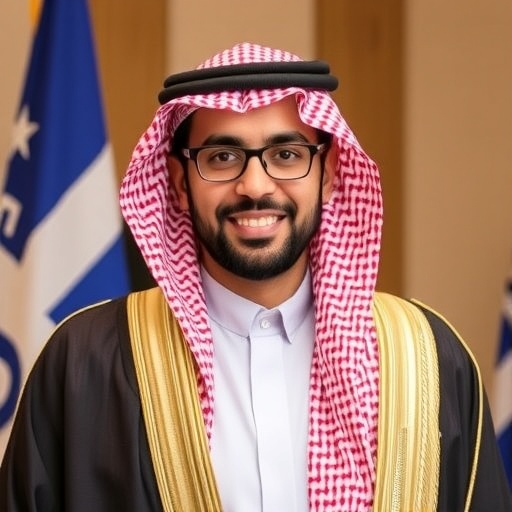
The International Association for Dental, Oral, and Craniofacial Research (IADR) has recently declared Nasir Bashir as the distinguished recipient of the prestigious 2026 IADR John Clarkson Fellowship. This announcement was made during the opening ceremonies of the 104th General Session of IADR, a landmark event conducted alongside the 55th Annual Meeting of the American Association for Dental, Oral, and Craniofacial Research and the 50th Annual Meeting of the Canadian Association for Dental Research held in San Diego, California. Recognized for his extraordinary contributions at the convergence of dentistry and data science, Bashir’s selection highlights his pioneering work in oral epidemiology and the increasing incorporation of machine learning methodologies within biomedical data analysis.
Nasir Bashir’s academic trajectory is characterized by a robust amalgamation of mathematical precision and clinical insight. Holding advanced qualifications in mathematics and a Master’s degree in statistics, Bashir exemplifies the integration of quantitative sciences with medical research. His current role as a Wellcome Trust Fellow at the Medical Research Council Biostatistics Unit at the University of Cambridge underscores his commitment to advancing scientific knowledge through rigorous quantitative techniques. His prior appointments, including the National Institute for Health and Care Research Academic Clinical Fellowship and one of the inaugural Academic Dental Foundation posts in the United Kingdom, afforded him the opportunity to embark on independent research pathways early in his career, setting a solid foundation for his subsequent scholarly impact.
At the core of Bashir’s investigations lies the innovative development and application of sophisticated mathematical models aimed at dissecting vast and complex datasets pertinent to oral health. His research transcends traditional boundaries by integrating statistical rigour with machine learning algorithms to extract actionable insights from heterogeneous data sources. One landmark achievement includes his contributory work on the most contemporary national epidemiological statistics detailing the prevalence of dental caries in the United States, a critical public health indicator reflecting oral disease burden across diverse populations.
Bashir’s methodological expertise is further exemplified in his pioneering exploration of machine learning techniques in dentistry, where he conducted early, rigorous evaluations of algorithmic approaches for diagnostic and prognostic tasks. This paradigm shift towards computational intelligence in dental research heralds a transformative era, whereby autonomous and semi-autonomous systems may enhance clinical decision-making and epidemiological surveillance. His scholarly contributions offer a valuable blueprint for integrating evidence-based computational methods within the traditionally qualitative domain of dental health sciences.
Another significant facet of Bashir’s work includes his comprehensive synthesis and dissemination of Mendelian randomization techniques tailored to dental research. Mendelian randomization, a method leveraging genetic variants as instrumental variables, enables researchers to infer causality in observational studies, which is critical when randomized controlled trials are impractical or unethical. By adapting this methodology to oral health, Bashir has enriched the analytical toolkit available to dental epidemiologists, facilitating more robust causal inference in studies examining the etiology and progression of dental diseases.
Complementing these quantitative innovations, Bashir’s application of multiverse analysis represents a novel approach in oral health research. Multiverse analysis involves conducting multiple plausible analyses across different analytical choices to examine the robustness and variability of research findings. This technique addresses the challenges of analytical flexibility and selective reporting, promoting transparency and reproducibility in scientific inquiry. His work marks one of the first incorporations of this rigorous sensitivity analysis framework within the field of dentistry, setting a new standard for methodological excellence.
The IADR John Clarkson Fellowship embodies a commitment to fostering advanced training and experiential learning in dental public health at globally recognized centers of excellence. Awarded biennially in honor of John Clarkson, a revered former Executive Director of IADR/AADOCR, the fellowship supports recipients with funding up to $15,000 to cover accommodation, subsistence, and travel expenses. This financial support facilitates immersive training, enabling fellows like Bashir to deepen their expertise and contribute more effectively to the advancement of public oral health worldwide.
Bashir’s recognition through this fellowship not only underscores his exemplary scholarly achievements but also anticipates his continued impact in shaping the future of dental research. His interdisciplinary approach, combining advanced statistical methods with clinical epidemiology, exemplifies the evolving nature of oral health sciences in the 21st century. By integrating machine learning with traditional epidemiological frameworks, he paves the way for enhanced predictive analytics and personalized interventions that could revolutionize dental care delivery.
Moreover, the convergence of data science and dentistry as demonstrated in Bashir’s work represents a broader trend in biomedical research, emphasizing the value of quantitative literacy and computational proficiency. This synthesis empowers researchers to harness the exponentially growing repositories of health-related data, transforming raw information into nuanced understanding and actionable knowledge. Bashir’s contributions therefore extend beyond dentistry, illustrating the transformative potential of interdisciplinary approaches in improving human health outcomes.
The insights generated through Bashir’s research also carry significant implications for public health policies and preventive dentistry. By providing up-to-date epidemiological data and robust analytical tools, his work informs targeted interventions and resource allocation strategies to mitigate the burden of oral diseases, which remain pervasive global health challenges. This alignment of scientific innovation with public health priorities epitomizes the translational impact that high-caliber dental research strives to achieve.
Furthermore, Bashir’s career trajectory highlights the importance of early investment in academic clinical posts that nurture independent research capabilities. His progression from foundational clinical fellowships to competitive research grants demonstrates the critical role of structured career pathways in cultivating scientific leaders. This model serves as a testament to the efficacy of fostering environments where emerging scholars can undertake innovative inquiries with institutional support.
The fellowship award ceremony in San Diego serves as a testament to the international collaborative spirit within the dental research community. Bringing together leaders from American, Canadian, and global organizations, the event symbolizes a unified commitment to advancing oral health through rigorous research and knowledge exchange. Bashir’s recognition is emblematic of this collective endeavor, reinforcing the global dimension of scientific progress in oral health.
The International Association for Dental, Oral, and Craniofacial Research, the awarding body, continues to play a pivotal role in promoting high-quality research and fostering the next generation of leaders in dental sciences. Its mission to drive dental, oral, and craniofacial research for global health and well-being finds expression through initiatives like the John Clarkson Fellowship. By supporting promising investigators such as Nasir Bashir, IADR underscores its dedication to innovation, excellence, and the broader dissemination of knowledge within the scientific community.
In essence, Nasir Bashir’s IADR John Clarkson Fellowship represents not merely a personal accolade but a beacon of interdisciplinarity, methodological sophistication, and translational potential within dental research. His work delineates the contours of how cutting-edge data science approaches can be harnessed to address complex challenges in oral health, ultimately contributing to improved patient outcomes and public health policies. As data-driven methodologies continue to permeate medical sciences, figures like Bashir illuminate pathways toward integrated, precise, and impactful research paradigms.
Cite Scienmag News
Blake Davidson. (April 7, 2026). Nasir Bashir Awarded 2026 IADR John Clarkson Fellowship. Scienmag. https://scienmag.com/nasir-bashir-awarded-2026-iadr-john-clarkson-fellowship/
Blake Davidson. "Nasir Bashir Awarded 2026 IADR John Clarkson Fellowship." Scienmag, 7 April 2026, https://scienmag.com/nasir-bashir-awarded-2026-iadr-john-clarkson-fellowship/. Accessed 3 September 2026.
Blake Davidson. "Nasir Bashir Awarded 2026 IADR John Clarkson Fellowship." Scienmag. April 7, 2026. https://scienmag.com/nasir-bashir-awarded-2026-iadr-john-clarkson-fellowship/


