

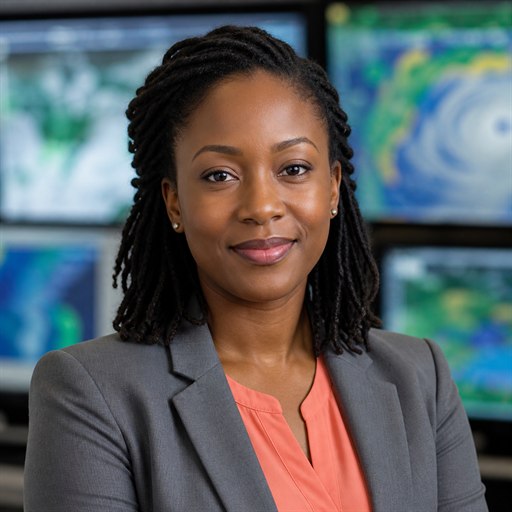

A research team from Penn State’s College of Information Sciences and Technology, under the leadership of assistant professor Romit Maulik, has recently received a significant grant of $1.23 million from NASA. This two-year project aims to enhance the forecasting of atmospheric and oceanic conditions through the innovative integration of artificial intelligence (AI) with satellite data. The initiative is positioned at the intersection of advanced technology and environmental science, reflecting a growing trend towards using computational methods to tackle complex challenges in climate and weather forecasting.
Weather forecasting is a complex discipline that relies strongly on data assimilation, a technique used to combine diverse sources of information to produce more accurate and reliable predictions. Traditionally, this method involves considerable computational demands and can lead to longer processing times, ultimately delaying forecast outputs. Romit Maulik points out that the current methods, while useful, face limitations in speed and efficiency, particularly as the volume of atmospheric data continues to grow. Thus, there is a compelling need to innovate and streamline these processes.
One of the promising avenues the research team plans to explore is computer vision, a subset of AI that empowers machines to interpret and understand visual information. This technology leverages machine learning and neural networks to draw insights from complex datasets, enabling computers to recognize patterns and make predictions. By incorporating computer vision into the forecasting process, Maulik and his team believe they can not only enhance the accuracy of atmospheric predictions but also significantly reduce the time required for data assimilation.
The proposed research involves the utilization of satellite images as a primary input source, which offers a wealth of real-time data on atmospheric conditions and ocean surface dynamics. By employing transformer-based AI algorithms and cutting-edge machine learning models, the team aims to refine existing forecasting approaches. This would enable them to create a more agile and responsive system that can adapt to the evolving requirements of weather predictions in real-time.
A crucial aspect of Maulik’s work entails retraining portions of the current forecasting models to effectively integrate these new datasets. The enhanced algorithms will then be incorporated into the NASA Goddard Earth Observing System. This integration represents a significant advancement, as it will enable the operational data assimilation workflows to incorporate satellite observations more rapidly, thereby improving the overall efficiency of the forecasting process.
The collaboration is not limited to Penn State; the research team also includes experts from Argonne National Laboratory, NASA Goddard Space Flight Center, the National Oceanic and Atmospheric Administration, and the University of Chicago. This diverse team brings together a wealth of expertise across various domains, ensuring that the project benefits from a well-rounded approach to solving complex meteorological challenges. By fostering interdisciplinary collaboration, it enhances the potential for groundbreaking discoveries and innovations in weather forecasting.
Maulik and his colleague Steven Greybush, who also serves as an associate professor of meteorology, are additionally co-hires at the Penn State Institute for Computational and Data Sciences. Their collaboration reflects the importance of computational approaches to modern meteorology and highlights the role that universities play in advancing scientific research. This strategic partnership is expected to yield valuable insights and push the boundaries of what is currently achievable in the field of weather forecasting.
This initiative represents a pivotal moment in the field of atmospheric and oceanic science; as our understanding of these systems continues to evolve, so too does our capacity to predict their behaviors. The implications of this research are vast. Enhanced forecasting capabilities can lead to more accurate warnings about severe weather events, ultimately saving lives and mitigating damage from natural disasters. Furthermore, improved models can assist in the management of natural resources and support environmental conservation efforts.
Furthermore, by deploying AI-driven methodologies, researchers aim to produce more granular forecasts that account for localized weather patterns and anomalies. This could significantly benefit sectors that are highly sensitive to weather conditions, such as agriculture, transportation, and energy management. By providing stakeholders with precise and timely information, the research has the potential to enhance decision-making processes across various industries.
As we look forward to the outcomes of this promising project, the integration of artificial intelligence into meteorological practices signals a transformative shift in how we approach weather forecasting. As data continues to proliferate, harnessing advanced computational techniques will be essential to navigate the complexities of our changing climate. The ongoing collaboration between academic institutions and federal agencies exemplifies the commitment to fostering innovation and addressing some of the most pressing challenges related to climate science today.
In conclusion, this research initiative by Penn State and its partners is set to redefine the landscape of weather forecasting, highlighting the pivotal role that technology plays in enhancing our understanding of atmospheric phenomena. By merging computer vision with established forecasting models, the team aims not only to improve the accuracy of predictions but also to address the time-consuming challenges of data assimilation. The potential applications of this research extend far beyond academia, emphasizing the critical importance of timely and accurate weather information in an era of increasing climate uncertainty.
Keywords
Weather forecasting, artificial intelligence, computer vision, data assimilation, meteorology, satellite data, Penn State, NASA, climate science.
Cite Scienmag News
Rachel Howard. (January 13, 2025). NASA Secures $1.23 Million Grant to Enhance Satellite Weather Forecasting Using AI Technology. Scienmag. https://scienmag.com/nasa-secures-1-23-million-grant-to-enhance-satellite-weather-forecasting-using-ai-technology/
Rachel Howard. "NASA Secures $1.23 Million Grant to Enhance Satellite Weather Forecasting Using AI Technology." Scienmag, 13 January 2025, https://scienmag.com/nasa-secures-1-23-million-grant-to-enhance-satellite-weather-forecasting-using-ai-technology/. Accessed 9 September 2026.
Rachel Howard. "NASA Secures $1.23 Million Grant to Enhance Satellite Weather Forecasting Using AI Technology." Scienmag. January 13, 2025. https://scienmag.com/nasa-secures-1-23-million-grant-to-enhance-satellite-weather-forecasting-using-ai-technology/


