


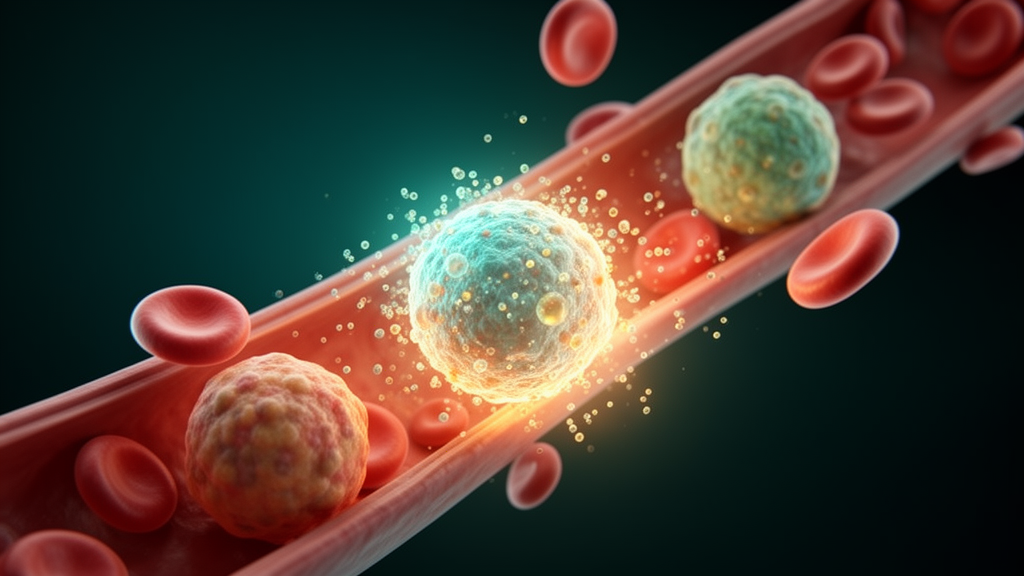
For decades, the central promise of pharmacology has been simple to state and brutally hard to deliver: get the right drug to the right cells, at the right time, in the right dose, and spare everything else. Conventional therapeutics routinely fail that test. They degrade rapidly in the bloodstream, flood healthy organs with toxic payloads, and accumulate poorly at the disease sites where they are needed most. A new review published in Frontiers in Biomaterials Science argues that nanomedicine, the engineering of drug carriers at the scale of billionths of a meter, has matured into the most credible route out of this impasse, and that recent preclinical evidence now supports precision-controlled targeted delivery as a central pillar of next-generation therapeutics.
The review, authored by Ashna Sureshkumar of the University of Virginia and Prakash Balu of Vels Institute of Science, Technology and Advanced Studies in Chennai, synthesizes in vivo preclinical studies published largely between 2020 and 2026 across oncology, central nervous system disease, and vascular medicine. Its unifying framework is unusual: rather than treating passive targeting, active targeting, and stimuli-responsive release as separate tricks, the authors evaluate them as components of a single, coordinated precision-control system operating across tissue, cellular, and subcellular scales. That framing matters, because the field’s most persistent failure mode has been stacking complexity without demonstrating that each added layer earns its keep.
The toolbox itself is diverse. Lipid-based systems, the oldest and most clinically validated family, use phospholipid bilayers roughly 50 to 300 nanometers in diameter to encapsulate both water-soluble and fat-soluble drugs, shielding them from degradation and extending circulation time. Polyethylene glycol coatings create so-called stealth formulations that evade immune surveillance and exploit the enhanced permeability and retention effect, the tendency of leaky tumor vasculature to admit and retain nanoparticles. Polymeric carriers built from biodegradable materials such as PLGA and chitosan, typically spanning 100 to 1,000 nanometers, offer tunable degradation kinetics that enable sustained release of small molecules, proteins, and genetic cargo. Inorganic nanostructures of gold, silica, and iron oxide, generally 10 to 100 nanometers, bring high surface area, structural stability, and built-in imaging or externally triggerable functions.
Perhaps the most striking recent development is the rise of biomimetic platforms. Engineered exosomes, natural extracellular vesicles measuring 30 to 150 nanometers, can cross biological barriers with low immunogenicity and can be decorated with antibodies or peptides to sharpen their targeting. Cell-membrane-coated nanoparticles borrow membranes from red blood cells or cancer cells to achieve immune escape and homotypic binding to matching tissue. Hybrid systems that fuse organic biocompatibility with inorganic functionality round out the portfolio. The review is candid that no single platform is superior: lipid and biodegradable polymeric carriers currently offer the most practical path to the clinic, while biomimetic and hybrid systems promise greater adaptability but struggle with standardization, since variability in cellular source, isolation, and cargo loading complicates reproducible manufacturing.
The targeting story is more sobering than the field’s enthusiasm might suggest. Passive targeting via the enhanced permeability and retention effect has long been the foundational assumption of cancer nanomedicine, but the review highlights clinical imaging data showing just how unreliable it is. In patients with metastatic HER2-positive breast cancer, radiolabeled liposomal nanoparticles accumulated in tumors with roughly 35-fold variation between patients, while substantial uptake appeared in clearance organs such as the liver and spleen. More provocatively, recent experimental work in mouse models and human tumor samples challenges the textbook view that nanoparticles enter tumors mainly through passive gaps between endothelial cells, implicating active transendothelial transport as a major route. The authors conclude that EPR-based accumulation should not be treated as a universal feature of solid tumors, and they call for imaging biomarkers to identify patients whose tumors are actually amenable to nanoparticle delivery.
Active targeting, meanwhile, delivers a subtler lesson. Ligands such as folate, transferrin-binding peptides, integrin binders, and monoclonal antibodies reliably increase receptor-mediated internalization once a carrier reaches its target cell. But a landmark comparison of HER2-targeted immunoliposomes against otherwise identical nontargeted liposomes found that antibody targeting increased tumor cell internalization without increasing total tumor localization. In other words, active targeting sharpens the last step of delivery without fixing the first. Stimuli-responsive systems, which hold cargo stable in circulation and release it in response to acidic pH around 6.5 to 6.9, elevated glutathione, protease activity, or external triggers like light, ultrasound, and magnetic fields, add temporal control, though the review notes that inconsistent trigger conditions in vivo can produce uneven activation.
Where the precision paradigm genuinely shines is in the newest wave of preclinical studies. A theranostic nanoparticle just over 8 nanometers across, carrying gadolinium and bismuth chelates with MRI and radiosensitizing functions and decorated with cRGD peptides targeting lung cancer integrins, produced delayed tumor growth, complete regression in some mice, prolonged survival, and increased infiltration of CD3-positive and CD8-positive T cells with no evident systemic toxicity. A carrier-free peptide-drug nanoparticle combining doxorubicin with an immune adjuvant, guided by an iRGD tumor-homing peptide and an MMP-2-responsive linker, nearly eliminated visible lung metastases in a melanoma model and synergized with immune checkpoint inhibition. Most dramatically, a platelet-hitchhiking polymer conjugate carrying the vascular-disrupting agent DMXAA achieved 2.61-fold greater tumor accumulation than its non-platelet counterpart and an 89.1 percent tumor-suppression rate in colorectal cancer mice, exploiting the natural adhesion of platelets to exposed collagen in tumor vasculature for self-amplifying targeting.
The central nervous system results may be the most consequential for patients. The blood-brain barrier blocks nearly all large-molecule and most small-molecule drugs, and nanocarriers offer one of the few credible routes through it. In one standout study, lipid nanoparticles modified with an ITP peptide that allosterically binds the insulin receptor’s transmembrane domain delivered siRNA against BACE1, an Alzheimer’s-related enzyme, across the barrier in APP/PS1 transgenic mice. After seven tail-vein injections, the treated animals showed improved novel-object-recognition and Morris-water-maze performance, and BACE1 expression in the hippocampus and cortex fell to levels comparable with wild-type controls, without organ toxicity or inflammatory cytokine responses. In vascular disease, a monocyte-membrane-coated nanoghost carrying the anti-diabetic drug gliclazide homed to inflamed endothelium in atherosclerotic rabbits, cutting CD14-positive macrophage abundance in aortic plaques from nearly 47 percent to 7.7 percent, while a platelet-anchored, ROS-responsive protein nanoassembly shrank aortic plaque area 5.82-fold in ApoE-deficient mice.
Yet the review refuses to let enthusiasm outrun evidence. Most oncology studies rely on murine xenograft models with exaggerated EPR effects and simplified immune systems, which may systematically overestimate nanocarrier accumulation in humans. CNS work is constrained by short treatment durations and barrier models that ignore age-related and inflammatory heterogeneity. Vascular targeting benefits from directly accessible endothelial targets but contends with blood flow, shear stress, and rapid clearance. The authors also point to a cautionary tale from the clinic: MM-302, a HER2-targeted liposomal doxorubicin that looked compelling preclinically, saw its randomized HERMIONE trial terminated after a futility analysis indicated it was unlikely to beat standard therapy. Clinically approved successes such as Doxil, Abraxane, and the siRNA therapy Onpattro prove nanocarriers can reach patients, but they achieved that through altered drug disposition and reproducible manufacturing rather than ever-more-elaborate targeting.
The path forward, the review argues, lies in disciplined pragmatism rather than maximal complexity. Artificial intelligence and machine learning are increasingly used to tune nanoparticle size, composition, and surface chemistry against biodistribution and toxicity data, while humanized disease models and organ-on-chip platforms promise more predictive evaluation under physiologically relevant flow. The authors call for standardized characterization and minimum reporting requirements, appropriate free-drug and nontargeted controls in every study, quantitative biodistribution measurements, long-term safety assessment, and quality-by-design manufacturing under Good Manufacturing Practice conditions. The bottom line is bracing: precision-controlled nanomedicine is preclinically feasible and increasingly spectacular in animal models, but the systems most likely to reach patients may be the simpler ones, those that demonstrate measurable benefit over a plain nontargeted carrier, predictable clearance, and batch-to-batch reproducibility. In a field intoxicated by multifunctional design, the most radical idea may be knowing when to stop adding features.
Subject of Research: Preclinical advances in precision-controlled targeted drug delivery using nanomedicine platforms
Article Title: Innovative nanomedicine strategies for precision-controlled targeted drug delivery: recent preclinical progress
Article References: Sureshkumar, A., & Balu, P. (2026). Innovative nanomedicine strategies for precision-controlled targeted drug delivery: recent preclinical progress. Frontiers in Biomaterials Science, 5, Article 1916503. https://doi.org/10.3389/fbiom.2026.1916503
Image Credits: AI Generated
DOI: 10.3389/fbiom.2026.1916503
Keywords: nanomedicine, targeted drug delivery, nanoparticles, liposomes, EPR effect, stimuli-responsive release, blood-brain barrier, theranostics, biomimetic nanocarriers, preclinical studies, precision medicine, drug delivery
Cite Scienmag News
Louis Brooks. (October 16, 2026). Nanomedicine’s Precision Revolution: How Smart Nanoparticles Are Rewriting Drug Delivery. Scienmag. https://scienmag.com/nanomedicines-precision-revolution-how-smart-nanoparticles-are-rewriting-drug-delivery/
Louis Brooks. "Nanomedicine’s Precision Revolution: How Smart Nanoparticles Are Rewriting Drug Delivery." Scienmag, 16 October 2026, https://scienmag.com/nanomedicines-precision-revolution-how-smart-nanoparticles-are-rewriting-drug-delivery/. Accessed 16 October 2026.
Louis Brooks. "Nanomedicine’s Precision Revolution: How Smart Nanoparticles Are Rewriting Drug Delivery." Scienmag. October 16, 2026. https://scienmag.com/nanomedicines-precision-revolution-how-smart-nanoparticles-are-rewriting-drug-delivery/


