Thursday, October 29, 2026
Science
No Result
View All Result
  • Login
  • HOME
  • SCIENCE NEWS
  • CONTACT US
  • HOME
  • SCIENCE NEWS
  • CONTACT US
No Result
View All Result
Scienmag
No Result
View All Result
Home Science News Medicine

Nail Polish Still Has No Place in Clinical Care, Review Concludes

October 29, 2026
in Medicine
Kristina Jarvis
By Kristina Jarvis Scienmag Editorial Profile - Infectious Disease Medicine
Reading Time: 3 mins read
0
Nail Polish Still Has No Place in Clinical Care, Review Concludes

Nail Polish Still Has No Place in Clinical Care, Review Concludes

65
SHARES
587
VIEWS
Share on FacebookShare on Twitter
ADVERTISEMENT

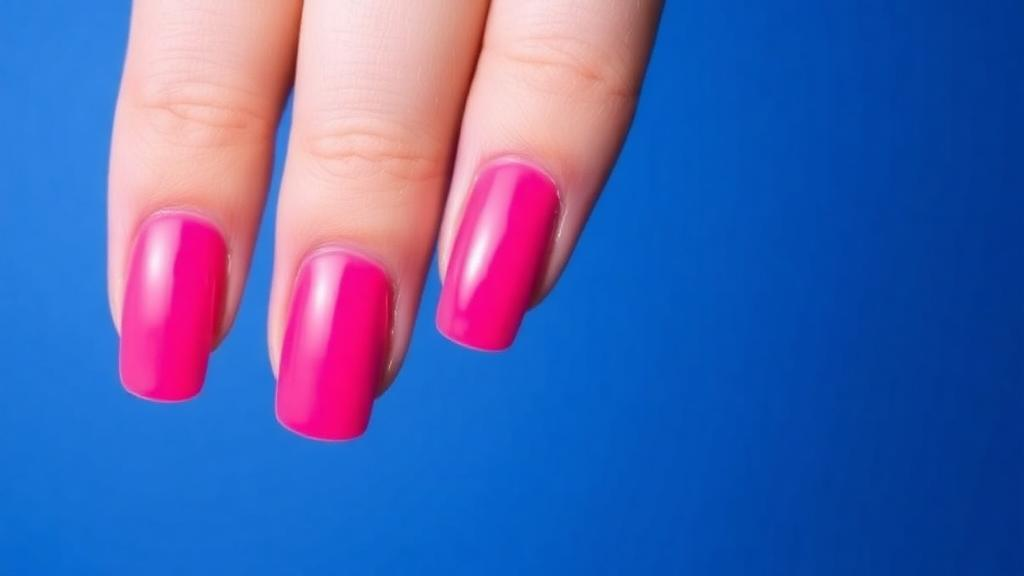
Healthcare workers should continue to keep their nails bare, according to a narrative review published in the journal Antimicrobial Resistance & Infection Control. The review, led by Alexandra Peters and colleagues, examined whether recent laboratory studies could justify changes to long-standing recommendations that prohibit nail polish in clinical settings, and concluded that they cannot.

The authors note that some national guidelines and healthcare practices have recently been relaxed to permit nail polish. These changes were based on a small body of recent laboratory studies that challenged the traditional rule that only unadorned nails are acceptable in healthcare. The review team set out to examine that literature in detail and to determine whether it genuinely supports a change in policy.

The review took a narrative approach, analysing the recent laboratory studies on which the changed recommendations rest. The authors also gathered information on how gel manicures are applied in practice, and on the complications that would arise in implementing and monitoring any rule that allowed only short, freshly painted nails in clinical care.

According to the review, the recent body of literature presents a number of methodological issues as well as practical ones. The authors found that the studies underpinning the relaxed guidance were not sufficient to overturn the existing recommendations, and that the evidence base for allowing polished nails was not adequate.

Beyond the laboratory findings, the review identified practical and implementation problems that would make the use of nail polish in healthcare unacceptable, even if short, freshly polished nails were acceptable from a microbiological standpoint. These problems concern how any such policy would be enforced and maintained in day-to-day clinical practice.

One central concern is visibility. When nails are covered with polish, infection prevention staff cannot see the length or the cleanliness of healthcare workers’ nails.

The review also points to practical difficulties in keeping nails short and in good condition under a polish-permitting policy, as well as potential resource issues for infection prevention and control departments. The review also notes potential resource issues for infection prevention and control departments in ensuring adherence to correct application and nail health among staff.

The authors conclude that there is not enough evidence to change the current recommendations that nail polish should not be allowed in healthcare, and that permitting its use would be a risk to patient safety. In their view, implementation issues must be weighed alongside the microbiological evidence before any policy change could be considered.

As a narrative review, the article synthesises and interprets the existing literature rather than reporting new experimental data.

The review’s message for healthcare institutions is that the traditional rule remains in force: nails used in direct patient care should be short and free of polish. Any future relaxation of this rule would require stronger evidence and a workable plan for monitoring compliance, neither of which the current literature provides.

Subject of Research: Whether nail polish should be permitted in clinical care, based on a narrative review of recent laboratory studies and implementation issues.

Article Title: Nail Polish remains inappropriate for clinical care: a narrative review

Article References: Peters, A., Brois, P., Mocenic, M., Haidegger, T., Bansaghi, S., Maillard, J.-Y., Assadian, O., Teixeira, B., & Boyce, J. M. (2026). Nail Polish remains inappropriate for clinical care: a narrative review. Antimicrobial Resistance & Infection Control. https://doi.org/10.1186/s13756-026-01833-5

Image Credits: AI Generated

DOI: 10.1186/s13756-026-01833-5

Keywords: nail polish, infection prevention, hand hygiene, healthcare workers, narrative review, patient safety, clinical care, guidelines, gel manicures, implementation, Nail, Polish

Cite Scienmag News

Kristina Jarvis. (October 29, 2026). Nail Polish Still Has No Place in Clinical Care, Review Concludes. Scienmag. https://scienmag.com/nail-polish-still-has-no-place-in-clinical-care-review-concludes/

Kristina Jarvis. "Nail Polish Still Has No Place in Clinical Care, Review Concludes." Scienmag, 29 October 2026, https://scienmag.com/nail-polish-still-has-no-place-in-clinical-care-review-concludes/. Accessed 29 October 2026.

Kristina Jarvis. "Nail Polish Still Has No Place in Clinical Care, Review Concludes." Scienmag. October 29, 2026. https://scienmag.com/nail-polish-still-has-no-place-in-clinical-care-review-concludes/

Tags: antimicrobial resistance and nail polishchallenges of implementing nail polish restrictionsclinical careclinical guidelines for nail hygienegel manicuresguidelineshand hygienehealthcare infection controlhealthcare worker nail hygienehealthcare workershospital hygiene guidelinesimpact of nail polish on microbial contaminationimplementationinfection preventioninfection prevention policieslaboratory studies on nail polishnailnail polishNail polish in clinical carenarrative reviewpatient safetyPolishreview of healthcare nail hygiene practicesrisks of gel manicures in healthcare settings
Share26Tweet16
Previous Post

Primordial Black Holes May Have Seeded Globular Clusters Before Galaxies

Next Post

Diamond Laser Sensor Achieves Full Optical Contrast in Magnetic Field Detection

Related Posts

First Scandinavian Case of Equine Neuroborreliosis Confirmed by Spinal Fluid PCR in a Mare
Biology

First Scandinavian Case of Equine Neuroborreliosis Confirmed by Spinal Fluid PCR in a Mare

October 29, 2026
Diffusion Tensor Imaging Shows Strong Performance in Preoperative Endometrial Cancer Assessment
Medicine

Diffusion Tensor Imaging Shows Strong Performance in Preoperative Endometrial Cancer Assessment

October 29, 2026
Edible Exosome-Like Nanoparticles Show Early Promise Against Liver Cancer in Preclinical Studies
Cancer

Edible Exosome-Like Nanoparticles Show Early Promise Against Liver Cancer in Preclinical Studies

October 29, 2026
Deep learning maps ventilator-associated pneumonia on CT and predicts mortality risk
Medicine

Deep learning maps ventilator-associated pneumonia on CT and predicts mortality risk

October 29, 2026
Diabetes, hypertension and dyslipidemia raise kidney disease risk in people with HIV
Medicine

Diabetes, hypertension and dyslipidemia raise kidney disease risk in people with HIV

October 29, 2026
Short Telomeres Fail to Separate Inherited from Acquired Aplastic Anemia
Medicine

Short Telomeres Fail to Separate Inherited from Acquired Aplastic Anemia

October 29, 2026
Next Post
Diamond Laser Sensor Achieves Full Optical Contrast in Magnetic Field Detection

Diamond Laser Sensor Achieves Full Optical Contrast in Magnetic Field Detection

  • Mothers who receive childcare support from maternal grandparents show more optimized

    Mothers who receive childcare support from maternal grandparents show more parental warmth, finds NTU Singapore study

    27656 shares
    Share 11059 Tweet 6912
  • University of Seville Breaks 120-Year-Old Mystery, Revises a Key Einstein Concept

    1061 shares
    Share 424 Tweet 265
  • Bee body mass, pathogens and local climate influence heat tolerance

    682 shares
    Share 273 Tweet 171
  • Researchers record first-ever images and data of a shark experiencing a boat strike

    546 shares
    Share 218 Tweet 137
  • Groundbreaking Clinical Trial Reveals Lubiprostone Enhances Kidney Function

    531 shares
    Share 212 Tweet 133
Science

Embark on a thrilling journey of discovery with Scienmag.com—your ultimate source for cutting-edge breakthroughs. Immerse yourself in a world where curiosity knows no limits and tomorrow’s possibilities become today’s reality!

RECENT NEWS

  • First Scandinavian Case of Equine Neuroborreliosis Confirmed by Spinal Fluid PCR in a Mare
  • Diffusion Tensor Imaging Shows Strong Performance in Preoperative Endometrial Cancer Assessment
  • Review Charts Design of Metal-Free Oxide–Graphene Catalysts for Seawater Electrolysis
  • Edible Exosome-Like Nanoparticles Show Early Promise Against Liver Cancer in Preclinical Studies

Categories

  • Agriculture
  • Anthropology
  • Archaeology
  • Athmospheric
  • Biology
  • Biotechnology
  • Blog
  • Bussines
  • Cancer
  • Chemistry
  • Climate
  • Earth Science
  • Editorial Policy
  • Marine
  • Mathematics
  • Medicine
  • Pediatry
  • Policy
  • Psychology & Psychiatry
  • Science Education
  • Science News
  • Social Science
  • Space
  • Technology and Engineering

Subscribe to Blog via Email

Enter your email address to subscribe to this blog and receive notifications of new posts by email.

Join 5,151 other subscribers

© 2025 Scienmag - Science Magazine

Welcome Back!

Login to your account below

Forgotten Password?

Retrieve your password

Please enter your username or email address to reset your password.

Log In
No Result
View All Result
  • HOME
  • SCIENCE NEWS
  • CONTACT US

© 2025 Scienmag - Science Magazine

Discover more from Science

Subscribe now to keep reading and get access to the full archive.

Continue reading