


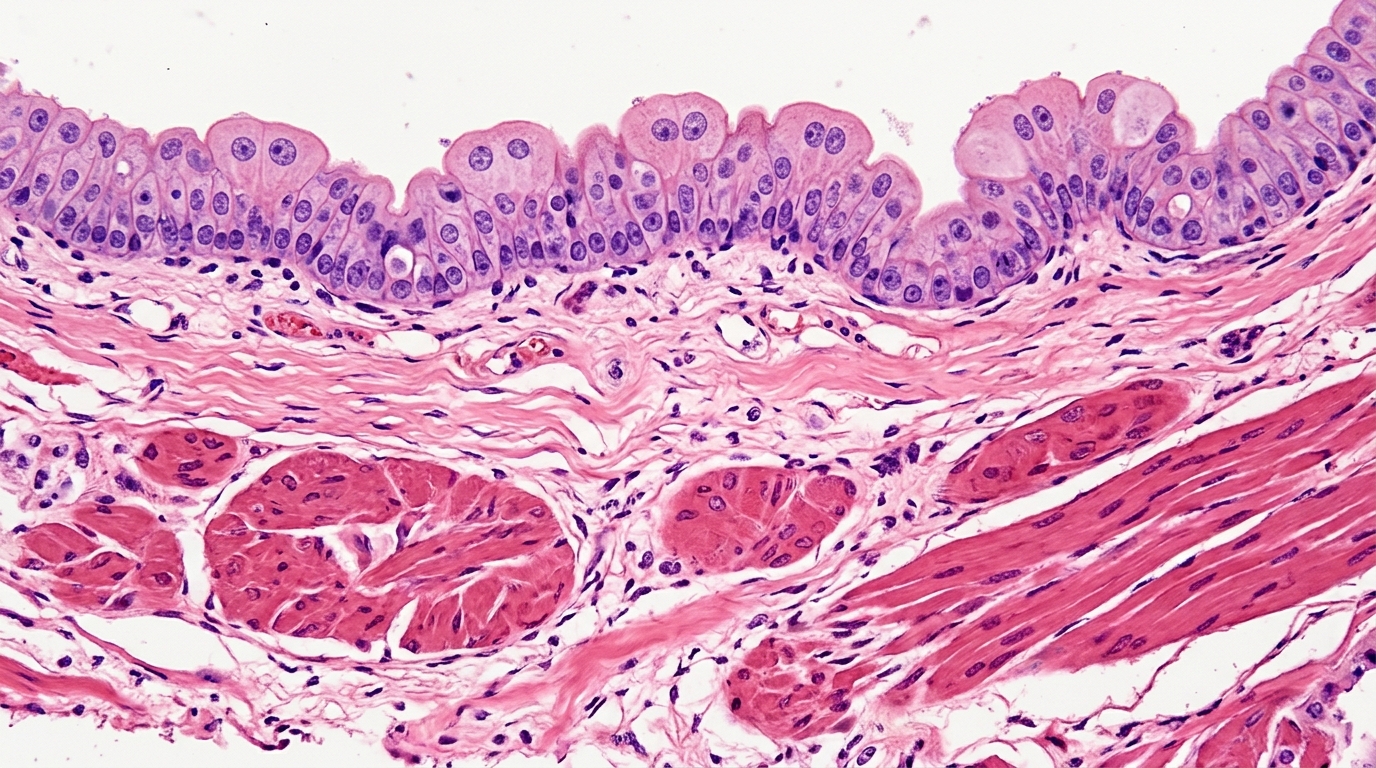
A study published in BMC Urology reports that N-acetylcysteine (NAC) partially attenuates oxidative and inflammatory remodeling associated with high-fat-diet-associated bladder dysfunction. The research, conducted by a team including Qiuyu Li, Quan Wen, and Qiqi He, investigates the mechanisms underlying bladder dysfunction in the context of metabolic stress. The findings suggest that oxidative and inflammatory signaling pathways, particularly those involving NLRP3 and NFκB, may contribute to the development of bladder dysfunction in high-fat diet models.
The study aimed to investigate oxidative and inflammatory remodeling in high-fat-diet-associated bladder dysfunction and to preliminarily assess whether NAC modulates these changes. In the in vitro component, high glucose-treated mouse bladder smooth muscle cells (BSMCs) of C57BL/6 N origin were used. These cells were assigned to four groups: a control group, a high glucose (HG) group, a high glucose plus NAC group, and a mannitol osmotic control group. The high-glucose model was designed to represent one metabolic stimulus rather than the full metabolic syndrome microenvironment. Researchers quantified levels of oxidative stress, inflammation, and fibrosis using spectrophotometry and Western blotting techniques.
In the in vivo portion of the study, forty six-week-old male Sprague–Dawley rats were randomly assigned to four groups, with ten rats per group. The normal control group received a standard diet, while the other groups were fed a high-fat diet. After eight weeks of dietary intervention, the low- and high-concentration NAC groups received NAC in their drinking water at doses of 300 and 900 mg/L, respectively, for four weeks. Blood and bladder tissues were collected when the rats reached 18 weeks of age. Bladder function was assessed using ex vivo detrusor strips, although in vivo urodynamic testing was not performed as part of this study.
The results from the in vitro experiments indicated that high glucose treatment increased the measured reactive oxygen species (ROS), malondialdehyde (MDA), NLRP3 protein abundance, and the p-NFκB/NFκB ratio in the bladder smooth muscle cells. Concurrently, high glucose lowered antioxidant indices. When NAC was added to the high glucose environment, it reduced MDA levels and NLRP3 abundance, as well as the p-NFκB/NFκB ratio. NAC treatment also increased the indices of antioxidant enzymes, including catalase (CAT), superoxide dismutase (SOD), and glutathione peroxidase (GSH-Px). Qualitative transmission electron microscopy (TEM) images suggested mitochondrial morphological alterations in cells exposed to high glucose, with partial attenuation observed in the presence of NAC.
In the animal model, the high-fat-diet group exhibited reduced ex vivo detrusor contractile force and increased spontaneous contraction frequency compared to the normal control group. The low-concentration NAC group partially improved contractile force relative to the high-fat-diet group, whereas the high-concentration NAC group did not show a similar improvement. Notably, the contractile force in both NAC-treated groups remained below that of the normal control group. Regarding spontaneous contraction frequency, the low-concentration NAC group remained above the normal control level, while the high-concentration NAC group had a lower frequency than the high-fat-diet group.
The study concludes that the combined cell and animal findings support a working model in which oxidative and inflammatory signaling, including NLRP3/NFκB-related responses, may contribute to high-fat-diet-associated bladder dysfunction. The data suggest that these pathways may be modulated by NAC. Both NAC regimens modified selected oxidative and inflammatory-related changes in the models tested. However, the functional improvements observed were incomplete. The study notes that the results did not demonstrate a conventional monotonic dose-response relationship, as the higher dose did not consistently outperform the lower dose in all functional metrics.
It is important to note the limitations of this research. The in vitro high-glucose model represents a single metabolic stimulus and does not capture the full complexity of the metabolic syndrome microenvironment. Furthermore, bladder function was assessed using ex vivo detrusor strips, and in vivo urodynamic testing was not performed.
Subject of Research: N-acetylcysteine effects on oxidative-inflammatory remodeling in high-fat-diet-associated bladder dysfunction
Article Title: N-acetylcysteine partially attenuates oxidative-inflammatory remodeling associated with high-fat-diet-associated bladder dysfunction
Article References: Li, Q., Wen, Q., Ren, Y., Su, B., Tan, H., Yang, E., Li, Y., Bao, J., Li, X., Gupta, S., & He, Q. (2026). N-acetylcysteine partially attenuates oxidative-inflammatory remodeling associated with high-fat-diet-associated bladder dysfunction. BMC Urology. https://doi.org/10.1186/s12894-026-02457-y
Image Credits: AI Generated
DOI: 10.1186/s12894-026-02457-y
Keywords: N-acetylcysteine, bladder dysfunction, high-fat diet, oxidative stress, inflammation, NLRP3, NFκB, urology, animal model, metabolic syndrome, partially, attenuates
Cite Scienmag News
Daisy Hatcher. (November 7, 2026). NAC Modifies Bladder Changes in High-Fat Diet Study. Scienmag. https://scienmag.com/nac-modifies-bladder-changes-in-high-fat-diet-study/
Daisy Hatcher. "NAC Modifies Bladder Changes in High-Fat Diet Study." Scienmag, 7 November 2026, https://scienmag.com/nac-modifies-bladder-changes-in-high-fat-diet-study/. Accessed 10 November 2026.
Daisy Hatcher. "NAC Modifies Bladder Changes in High-Fat Diet Study." Scienmag. November 7, 2026. https://scienmag.com/nac-modifies-bladder-changes-in-high-fat-diet-study/




