

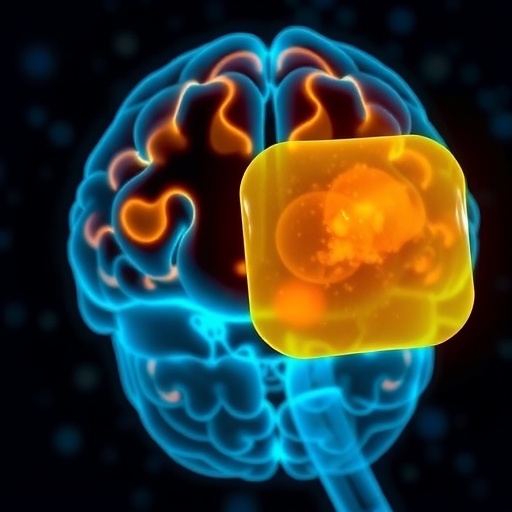
A Revolutionary Approach to Combat Glioblastoma: Mussel-Inspired Bioadhesive Patches Offer New Hope
Glioblastoma, renowned as the most aggressive and lethal brain tumor, presents one of the greatest therapeutic challenges in modern oncology. Characterized by rapid proliferation and invasive growth, this malignancy has consistently defied conventional treatment modalities, resulting in dismal patient prognoses. Current standard protocols—comprising maximal surgical resection followed by radiotherapy and chemotherapy—only modestly delay disease progression, with tumor recurrence typically manifesting within twelve months. In this context, a groundbreaking study emerging from the Institut de Neurociències at the Universitat Autònoma de Barcelona (UAB) heralds a potentially transformative therapeutic innovation, leveraging bioadhesive technology to selectively eradicate residual glioblastoma cells post-surgery.
The interdisciplinary research, published in the esteemed journal Advanced Science, introduces a novel class of bioadhesive patches inspired by the natural adhesive mechanisms of mussels. Mussels employ polyphenol-rich molecules to attach tenaciously to wet and uneven surfaces like submerged rocks, a strategy that researchers have ingeniously replicated to engineer patches capable of robust adhesion to moist brain tissue. This biomimicry ensures the patches remain affixed precisely to the resection cavity following tumor excision, enabling sustained and localized drug delivery that targets infiltrative cancer cells otherwise resistant to systemic therapies.
Central to the patch’s efficacy is its incorporation of catechin, a bioactive natural polyphenol commonly found in green tea, cocoa, and various fruits. Catechin functions as a potent pro-oxidative agent within the microenvironment of the patch, modulating cellular redox states to drastically elevate reactive oxygen species (ROS) levels in glioblastoma cells. The resultant oxidative stress overwhelms malignant cells’ intrinsic defenses, inducing apoptosis and achieving eradication rates approximating 90% in cultured models. Such selective cytotoxicity spares surrounding healthy brain tissue due to the localized nature of the patch’s action, addressing a critical limitation of conventional chemotherapeutic approaches that often induce systemic toxicity.
The study meticulously evaluated multiple formulations, with the catechin-enriched bioadhesive matrix demonstrating superior performance not only in standard cell culture systems but also in ex vivo experiments utilizing freshly excised porcine brain tissue. This choice of model anatomically and physiologically resembles human brain tissue, underscoring the translational potential of the technology. Adhesion strength, drug release kinetics, and biocompatibility were rigorously characterized, revealing excellent integration with cerebral surfaces and sustained catechin delivery sufficient to maintain therapeutic oxidant concentrations over extended periods.
A pivotal advantage of this localized delivery lies in its mitigation of systemic side effects traditionally associated with oral or intravenous administration of pro-oxidant agents. Catechin’s oral bioavailability and systemic metabolism have previously limited its clinical application at therapeutic doses due to off-target cytotoxicity and adverse reactions. By spatially confining catechin activity to the tumor bed, the patch markedly reduces the risk of inadvertent damage to peripheral organs, thereby improving patient safety profiles and potentially enabling higher effective dosages that maximize tumoricidal effects.
Beyond anticancer activity, these bioadhesive patches exhibit impressive antimicrobial properties, a particularly valuable attribute given the elevated risk of postoperative brain infections which complicate recovery. The polyphenol-rich adhesive matrix impedes microbial colonization and biofilm formation, facilitating a sterile healing milieu. Concurrently, excellent biocompatibility and material properties conducive to tissue regeneration were observed, promoting efficient wound healing and minimizing inflammatory responses—a common challenge in neurosurgical procedures.
From a practical perspective, the innovative fabrication process is remarkably cost-effective and straightforward, employing readily available materials and scalable techniques. This manufacturing simplicity streamlines potential clinical translation, reducing barriers related to production expenses and regulatory pathways. The capacity for mass production enhances accessibility, ensuring that effective glioblastoma treatments arising from this platform can reach a broad patient population, not limited by economic constraints or geographic location.
The collaboration spans multiple research centers in Catalonia, exemplifying a multidisciplinary approach integrating neurobiology, materials science, and oncology. These partnerships include the Institut de Neurociències-UAB (INc-UAB), the Catalan Institute of Nanoscience and Nanotechnology (ICN2), and the Bellvitge University Hospital – Catalan Institute of Oncology (ICO) – Bellvitge Biomedical Research Institute (IDIBELL). This collective expertise underpins the robustness of the study design, encompassing rigorous experimental validation and clinical insight that jointly accelerate the trajectory from bench to bedside.
Funding mechanisms supporting this research originate from prominent governmental and international bodies, including the Spanish Ministry of Science, Innovation and Universities (MICIU), the State Research Agency (AEI), and the European Regional Development Fund (ERDF – EU). Such financial backing attests to the strategic significance attributed to novel glioblastoma therapies within public health priorities, fostering an environment conducive to innovative breakthroughs that address unmet medical needs.
While current glioblastoma interventions predominantly focus on systemic chemotherapy and radiotherapy, often accompanied by deleterious side effects and limited efficacy, the mussel-inspired bioadhesive patch paradigm represents a paradigm shift. Its localized mode of action, selective targeting mechanism via oxidative stress induction, and multifunctional material properties collectively position it as a promising adjunct or alternative to existing treatment regimens. Early-stage results evince substantial tumor cell ablation capabilities, illuminating a pathway toward extending patient survival times and enhancing quality of life.
Challenges remain in the form of clinical translation, including comprehensive in vivo studies to evaluate long-term safety, optimal patch degradation kinetics, and synergistic potential with other therapeutic modalities. Furthermore, scaling from preclinical pig brain models to human neurosurgical applications will necessitate addressing anatomical variations and regulatory compliance. Nevertheless, the foundational evidence provides a compelling impetus for further investigation and rapid development.
In summary, the development of a mussel-inspired, catechin-loaded bioadhesive patch heralds a novel frontier in glioblastoma therapy, leveraging nature’s adhesive strategies to achieve localized, potent tumor cell eradication with minimized systemic toxicity. This innovation exemplifies how bioinspired engineering, combined with molecular oncology, can generate transformative solutions for some of the most intractable cancers afflicting humanity. As research progresses, this approach holds the promise of redefining therapeutic norms and offering new hope to patients confronting the daunting diagnosis of glioblastoma.
Subject of Research: Cells
Article Title: A Mussel-Inspired Bioadhesive Patch to Selectively Kill Glioblastoma Cells
News Publication Date: 27-Jan-2026
Web References: 10.1002/advs.202510658
Keywords: Neuroscience, Glioblastoma cells


