


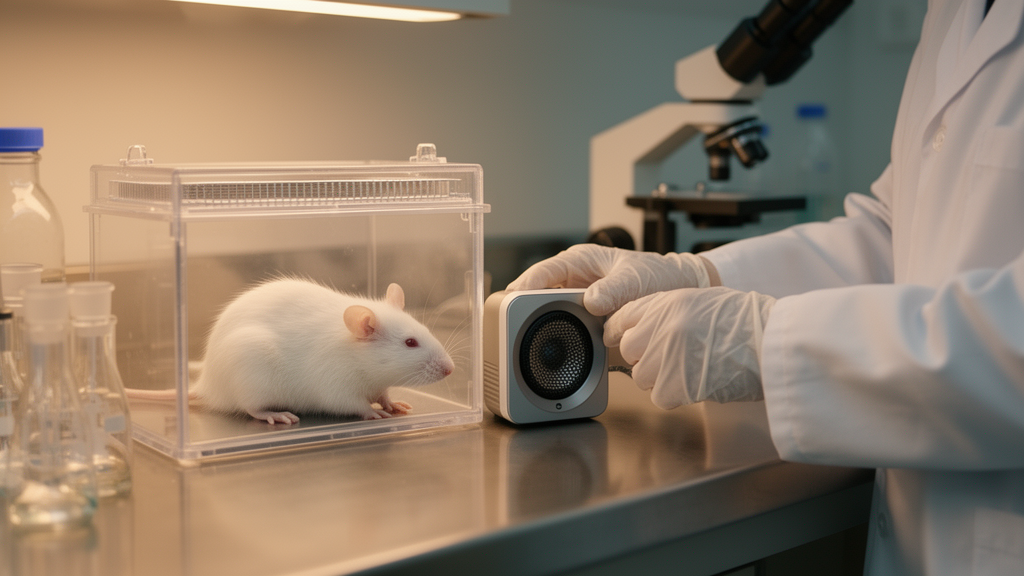
In one of the more unexpected experiments in pharmacology this year, researchers at the University of Alberta have shown that the specific musical elements playing in a room can change how a rat’s liver processes a widely used transplant drug. The team, collaborating with music therapists at Wilfrid Laurier University, exposed Sprague-Dawley rats to carefully controlled compositions and then measured how efficiently enzymes in the animals’ liver microsomes converted mycophenolic acid, a first-line immunosuppressant, into its two principal glucuronide metabolites. The results, published in the Journal of Pharmacy & Pharmaceutical Sciences, reveal a striking selectivity: one particular combination of tempo, rhythm and harmony dramatically suppressed formation of the drug’s minor but toxic metabolite while leaving the major, inactive metabolite untouched.
Mycophenolic acid, usually given as the prodrug mycophenolate mofetil, is a cornerstone of immunosuppressive therapy for kidney, heart, lung and liver transplant recipients. It works by inhibiting inosine monophosphate dehydrogenase, blocking the de novo synthesis of guanosine nucleotides that activated lymphocytes need to proliferate. But the drug is notorious for its pharmacokinetic variability. Blood concentrations swing widely between patients and even within the same patient over time, driven by factors ranging from age, sex and albumin levels to co-administered drugs and comorbidities. Overexposure raises the risk of adverse effects; underexposure raises the risk of acute organ rejection. Identifying previously unrecognized factors that shape this variability is therefore a genuine clinical priority.
The liver disposes of mycophenolic acid through glucuronidation, a reaction catalyzed by UDP-glucuronosyltransferase enzymes that attach glucuronic acid to the drug. The dominant product, MPA glucuronide or MPAG, is pharmacologically inactive and represents the main clearance route. A much smaller fraction is converted to the acyl glucuronide, AcMPAG, which is the problem child: it can stimulate the release of pro-inflammatory cytokines, forms protein adducts in rat liver and colon tissue, and has been linked to the gastrointestinal and hematological toxicities seen with mycophenolate therapy. In humans the two reactions are handled mainly by UGT1A9 and UGT2B7 respectively; in rats, the acyl pathway is attributed largely to UGT2B1, the functional ortholog of the human enzyme.
Music, meanwhile, has well-documented physiological reach. Tempo, rhythm and harmony have been associated in humans with shifts in sympathetic and parasympathetic activity, heart rate, blood pressure, cognition and mood. In rodents, exposure to music has been reported to alter neurochemistry, corticosterone, prolactin, gastric emptying, immune modulators and even sex hormone production. Because those hormones and inflammatory mediators intersect with the same enzyme systems that metabolize xenobiotics, the Alberta team hypothesized that music could act as an extrinsic modifier of drug metabolism, and set out to test the idea systematically rather than anecdotally.
The experimental design was unusually rigorous for a music study. Student composers wrote original pieces in which tempo (fast or slow), rhythm (regular or irregular) and later harmony (tonal or atonal) were varied independently, with the percentages of continuous legato and detached staccato articulation held constant during the initial screening. Groups of eight rats, four of each sex, were exposed for 24 hours in a sound-monitored room at levels between roughly 60 and 80 decibels, played on a loop through a digital speaker. Livers were then removed, microsomes isolated, and the formation of MPAG and AcMPAG quantified under initial velocity conditions using liquid chromatography-tandem mass spectrometry, with enzyme kinetics fitted to the Michaelis-Menten model.
The headline finding concerned the acyl metabolite. Fast tempo combined with irregular rhythm reduced AcMPAG formation by 42.5 percent on average compared with silence, and adding atonal harmony deepened the suppression to 74.4 percent, an effect significant in both sexes. Kinetic analysis showed the mechanism was a collapse in catalytic capacity rather than a change in enzyme affinity: for AcMPAG formation, maximum velocity fell by 89.7 percent and intrinsic clearance by 91.5 percent, while the Km, the substrate concentration at half-maximal rate, was unchanged. Crucially, MPAG formation was unaffected by any music combination, with Vmax and intrinsic clearance comparable to controls and only a modest rise in Km, confirming that the major clearance pathway was preserved. Niflumic acid, a positive-control inhibitor, cut MPAG formation by about 67 percent, demonstrating that the assay could have detected such an effect.
What was happening inside the enzyme? The answer, intriguingly, was not altered expression. Real-time quantitative PCR showed no significant changes in hepatic Ugt2b1, Ugt1a1, Ugt1a5, Ugt1a6, Ugt1a7 or Ugt2b12 mRNA after exposure to the fast-tempo, irregular-rhythm, atonal-harmony music, and an ELISA confirmed that UGT2B1 protein levels in the microsomes were essentially identical to controls. That points the investigators toward other explanations: direct or indirect enzyme inhibition, post-translational modifications such as phosphorylation or acylation, or competition at the active site from endogenous substrates. Music is known to shift rodent sex hormones, and testosterone and estradiol are themselves UGT2B1 substrates, so hormonally driven competition for enzyme binding is one plausible mediator the team intends to test by measuring circulating hormones during exposure.
Perhaps the most curious result was that the effect depended on who composed the music. Pieces with the same fast-tempo, irregular-rhythm, atonal-harmony recipe from two of three student composers reduced AcMPAG formation by roughly 73 to 78 percent, while the third composer’s piece produced only a small, non-significant drop. Among published works, Arnold Schoenberg’s Violin Concerto Op. 36 reduced AcMPAG formation by 32 percent, whereas John Cage’s First Construction (In Metal) had no significant effect. Spectrogram analysis offered a clue: the effective compositions were overwhelmingly legato, with smooth, connected notes, while the weaker ones were dominated by staccato, with short, detached notes and silent gaps. Since staccato music is associated with altered respiratory patterns and higher skin conductance, while legato music tends to lower heart rate and blood pressure, the researchers speculate that articulation may act through autonomic nervous system changes that influence hepatic perfusion or enzyme efficiency.
The authors are careful about scope. The study used a single 24-hour exposure, an in vitro microsomal system that cannot capture drug transporters such as OAT3 or MRP2, and a modest sample size for the sex-stratified analyses, which showed no significant male-female differences. Whether the effect translates to living animals, to humans, or to actual clinical outcomes such as neutropenia or graft rejection remains untested; the team proposes in vivo pharmacokinetic studies with frequent sampling and biomarker monitoring, and eventually preclinical transplant models. Still, the concept is tantalizing: if a precisely defined acoustic environment could selectively dampen formation of a drug’s toxic metabolite without touching its therapeutic clearance, music would graduate from adjunctive comfort therapy to a genuine pharmacokinetic intervention. For now, the study stands as the first quantified demonstration that specific musical elements can reshape the metabolism of a critical immunosuppressant, and as a vivid reminder that the boundaries between sound, physiology and pharmacology are far blurrier than convention assumes.
Subject of Research: Effects of music elements on mycophenolic acid glucuronidation in rat liver microsomes
Article Title: Effects of music elements on mycophenolate glucuronidation in rat liver microsomes
Article References: Adhiya, J., Shalaby, A. H., Al-Dajani, A. R., El-Mahrouk, S. R., Olympus, C., Ahonen, H., El-Kadi, A. O. S., & Kiang, T. K. L. (2026). Effects of music elements on mycophenolate glucuronidation in rat liver microsomes. Journal of Pharmacy & Pharmaceutical Sciences, 29, Article 17260. https://doi.org/10.3389/jpps.2026.17260
Image Credits: AI Generated
Keywords: mycophenolic acid, glucuronidation, UGT2B1, music therapy, enzyme kinetics, transplantation, immunosuppressants, rat liver microsomes, tempo, rhythm, harmony, pharmacokinetics
Cite Scienmag News
Louis Brooks. (October 16, 2026). Music With Fast Tempo, Irregular Rhythm and Atonal Harmony Cuts Toxic Drug Metabolite in Rat Livers. Scienmag. https://scienmag.com/music-with-fast-tempo-irregular-rhythm-and-atonal-harmony-cuts-toxic-drug-metabolite-in-rat-livers/
Louis Brooks. "Music With Fast Tempo, Irregular Rhythm and Atonal Harmony Cuts Toxic Drug Metabolite in Rat Livers." Scienmag, 16 October 2026, https://scienmag.com/music-with-fast-tempo-irregular-rhythm-and-atonal-harmony-cuts-toxic-drug-metabolite-in-rat-livers/. Accessed 16 October 2026.
Louis Brooks. "Music With Fast Tempo, Irregular Rhythm and Atonal Harmony Cuts Toxic Drug Metabolite in Rat Livers." Scienmag. October 16, 2026. https://scienmag.com/music-with-fast-tempo-irregular-rhythm-and-atonal-harmony-cuts-toxic-drug-metabolite-in-rat-livers/


