

Monday, August 31, 2026
Science
No Result
View All Result
  • Login
  • HOME
  • SCIENCE NEWS
  • CONTACT US
  • HOME
  • SCIENCE NEWS
  • CONTACT US
No Result
View All Result
Scienmag
No Result
View All Result
Home Science News Space

Multimessenger Universe Advances Frontier AI Training Techniques

July 10, 2026
in Space
Grant Pearson
By Grant Pearson Scienmag Editorial Profile - Observational Astronomy
Reading Time: 2 mins read
0
Multimessenger Universe Advances Frontier AI Training Techniques

Multimessenger Universe Advances Frontier AI Training Techniques

65
SHARES
587
VIEWS
Share on FacebookShare on Twitter
ADVERTISEMENT

As artificial intelligence (AI) edges toward the limits of learning from purely human-generated data, an extraordinary new frontier is emerging in the cosmos. Multimessenger astronomy (MMA), which combines observations from electromagnetic waves, gravitational waves, neutrinos, and cosmic rays, is stepping into an era defined by overwhelming data flows that surpass traditional analysis methods. The fusion of MMA and AI promises not only to revolutionize our understanding of the universe but also to redefine the capabilities and trustworthiness of AI systems themselves.

The coming decade will witness MMA transform rare and fleeting cosmic phenomena into continuous streams of data measured in petabytes. This enormous and varied dataset spans physics governed by all four fundamental forces—gravitational, electromagnetic, strong, and weak interactions—providing a rich landscape for AI to explore. Unlike conventional AI data that is often heuristic or human-labeled, MMA’s data is steeped in known physical laws, offering a unique framework of “simulability.” This hierarchy allows AI algorithms to differentiate between instrumental noise, simulation artifacts, and truly unprecedented physical signals.

Such a setup makes MMA an unparalleled proving ground for AI systems aimed at scientific discovery. The challenge lies not only in handling the sheer volume of data but also in devising algorithms sensitive enough to spot novel astrophysical processes buried within complex multimessenger signals. This level of discrimination demands the development of physics-informed AI that respects fundamental scientific principles while pushing the boundaries of pattern recognition and anomaly detection.

Discussions at the 2025 workshop “Multimessenger Astronomy in the Era of Foundational AI” underscored the mutual benefits of this convergence. MMA provides AI with a controlled environment to test robustness and explainability, essential for trustworthy AI deployment in research. Concurrently, the surge in data complexity and volume necessitates AI’s indispensable role in future discoveries, from detecting the faint signatures of distant cosmic collisions to unraveling mysteries about dark matter, neutron star interiors, and beyond.

Moreover, the integration of AI with MMA holds transformative potential beyond basic science. The methodologies developed here can guide machine learning applications in other domains reliant on large-scale, noisy, and physically governed datasets, including Earth sciences, climate modeling, and medical diagnostics. The rigorous testing and validation of AI within MMA’s strict physical constraints ensure these systems are not only powerful but also interpretable and reliable.

Industry and national research infrastructures stand to benefit profoundly from this collaboration. By pooling expertise and resources, it will be possible to build AI frameworks that efficiently process multimessenger data in real-time, dramatically accelerating the pace of discovery. This collaborative approach will be critical in managing the unprecedented data surges expected from next-generation observatories and detectors.

In essence, MMA is not merely a data source but a dynamic laboratory for frontier AI innovation. Its union with AI marks a pivotal moment where scientific inquiry and technological advancement become deeply intertwined. The journey ahead promises to unlock secrets of the cosmos while setting new standards for AI in research, driving science and technology hand-in-hand toward new horizons.

Subject of Research: Multimessenger Astronomy and Artificial Intelligence

Article Title: The multimessenger Universe as a training ground for frontier AI

Article References: Petulante, A., Chatterjee, C., Jani, K., Spencer-Smith, J., Taylor, S. R., Miller, A. A., Stassun, K. G., Rau, G., Worden, S. P., Shen, J., Wadekar, D., Roulet, J., Chatterjee, D., Laal, N., Hernandez, I. M., Moyer, D., Johnson-Roberson, M., Vallisneri, M., Deshmukh, S., & Nowicki, R. (2026). The multimessenger Universe as a training ground for frontier AI. Nature Astronomy, 10(7), 938-946. https://doi.org/10.1038/s41550-026-02910-w

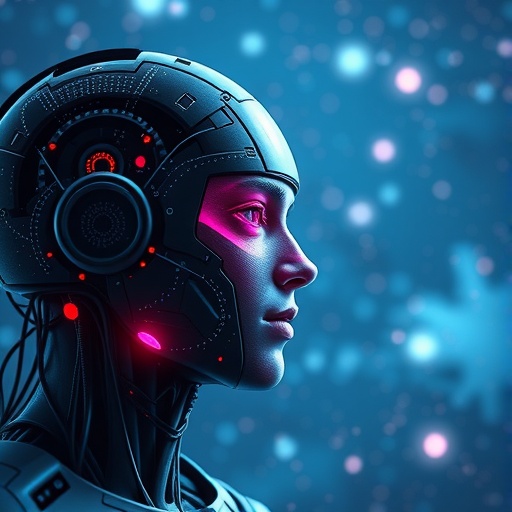
Image Credits: AI Generated

DOI: 10.1038/s41550-026-02910-w

Keywords: advanced algorithms for rare cosmic phenomena, AI-driven cosmic event detection, gravitational and electromagnetic wave data integration, large-scale astrophysical data processing, Multimessenger astronomy data analysis, multimessenger data fusion techniques, neutrino and cosmic ray data analysis, petabyte-scale astronomical datasets, physical law-based AI modeling, physics-informed machine learning, scientific discovery with AI in astronomy, trustworthiness of AI in astrophysics

Cite Scienmag News

Grant Pearson. (July 10, 2026). Multimessenger Universe Advances Frontier AI Training Techniques. Scienmag. https://scienmag.com/multimessenger-universe-advances-frontier-ai-training-techniques/

Grant Pearson. "Multimessenger Universe Advances Frontier AI Training Techniques." Scienmag, 10 July 2026, https://scienmag.com/multimessenger-universe-advances-frontier-ai-training-techniques/. Accessed 31 August 2026.

Grant Pearson. "Multimessenger Universe Advances Frontier AI Training Techniques." Scienmag. July 10, 2026. https://scienmag.com/multimessenger-universe-advances-frontier-ai-training-techniques/


Tags: advanced algorithms for rare cosmic phenomenaAI-driven cosmic event detectiongravitational and electromagnetic wave data integrationlarge-scale astrophysical data processingMultimessenger astronomy data analysismultimessenger data fusion techniquesneutrino and cosmic ray data analysispetabyte-scale astronomical datasetsphysical law-based AI modelingphysics-informed machine learningscientific discovery with AI in astronomytrustworthiness of AI in astrophysics
Share26Tweet16
Previous Post

Inappropriate Prescribing Linked to Drug Interactions in Elderly Patients

Next Post

PFAS Levels Monitored in Great Lakes Sportfish Consumers in Milwaukee

Related Posts

Subauroral Flows and Arcs Rewrite the Rules of Space Electrodynamics
Space

Subauroral Flows and Arcs Rewrite the Rules of Space Electrodynamics

August 30, 2026
Early-type Be stars form via nonconservative mass transfer in close binaries
Space

Early-type Be stars form via nonconservative mass transfer in close binaries

August 30, 2026
Solar-Wind Density Fluctuations Mapped Worldwide via Scintillation Data, 2008–2022
Space

Solar-Wind Density Fluctuations Mapped Worldwide via Scintillation Data, 2008–2022

August 30, 2026
Downsampling speeds up likelihood approximations for simulated LISA data
Space

Downsampling speeds up likelihood approximations for simulated LISA data

August 30, 2026
Physicists Unveil a Broader Version of the Aharonov-Bohm Effect
Space

Physicists Unveil a Broader Version of the Aharonov-Bohm Effect

August 30, 2026
Averaging breaks down near orbital resonances in hierarchical four-body systems
Space

Averaging breaks down near orbital resonances in hierarchical four-body systems

August 30, 2026
Next Post
PFAS Levels Monitored in Great Lakes Sportfish Consumers in Milwaukee

PFAS Levels Monitored in Great Lakes Sportfish Consumers in Milwaukee

  • Mothers who receive childcare support from maternal grandparents show more optimized

    Mothers who receive childcare support from maternal grandparents show more parental warmth, finds NTU Singapore study

    27656 shares
    Share 11059 Tweet 6912
  • University of Seville Breaks 120-Year-Old Mystery, Revises a Key Einstein Concept

    1061 shares
    Share 424 Tweet 265
  • Bee body mass, pathogens and local climate influence heat tolerance

    682 shares
    Share 273 Tweet 171
  • Researchers record first-ever images and data of a shark experiencing a boat strike

    546 shares
    Share 218 Tweet 137
  • Groundbreaking Clinical Trial Reveals Lubiprostone Enhances Kidney Function

    531 shares
    Share 212 Tweet 133
Science

Embark on a thrilling journey of discovery with Scienmag.com—your ultimate source for cutting-edge breakthroughs. Immerse yourself in a world where curiosity knows no limits and tomorrow’s possibilities become today’s reality!

RECENT NEWS

  • Most Australian women wearing shoes that don’t match their feet, study finds
  • Ant colonies show varied disease susceptibility and grooming across social levels
  • Leptospira bacteria detected in cattle and rodents across Papua New Guinea provinces
  • Do Parents and Teachers Agree on Preschool Dual Language Learners’ Social Skills?

Categories

  • Agriculture
  • Anthropology
  • Archaeology
  • Athmospheric
  • Biology
  • Biotechnology
  • Blog
  • Bussines
  • Cancer
  • Chemistry
  • Climate
  • Earth Science
  • Editorial Policy
  • Marine
  • Mathematics
  • Medicine
  • Pediatry
  • Policy
  • Psychology & Psychiatry
  • Science Education
  • Social Science
  • Space
  • Technology and Engineering

Subscribe to Blog via Email

Success! An email was just sent to confirm your subscription. Please find the email now and click 'Confirm Follow' to start subscribing.

Join 5,150 other subscribers

© 2025 Scienmag - Science Magazine

Welcome Back!

Login to your account below

Forgotten Password?

Retrieve your password

Please enter your username or email address to reset your password.

Log In
No Result
View All Result
  • HOME
  • SCIENCE NEWS
  • CONTACT US

© 2025 Scienmag - Science Magazine