


Physics-Informed Graph Network Improves Fatigue Life Prediction for Robotic Arms
A physics-informed graph neural network achieved 92.48% overall accuracy in predicting industrial robotic arm fatigue life across variable-load conditions.
A physics-informed graph neural network achieved 92.48% overall accuracy in predicting industrial robotic arm fatigue life across variable-load conditions.

A physics-informed TS-Mixer neural network predicted measured PEM fuel cell stack power with an R-squared of 0.969 on a 497-hour ...

A hybrid retrieval for China's DaQi-1 satellite uses a random forest to correct blue-band surface reflectance errors, cutting AERONET-validated aerosol ...

A hydropower-oriented AI framework combining physics-based residuals, constrained synthetic data generation, and deep residual networks achieves 98.6 percent accuracy on ...
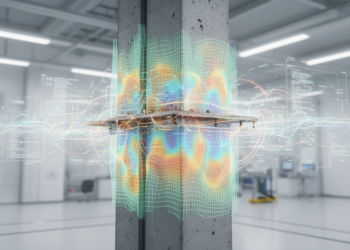
A new physics-informed machine learning framework embeds hysteretic mechanical laws into neural network training, reproducing full seismic load–deformation and energy ...

A Mount Umyeon case study found that a physics-informed recurrent network achieved an 81.20% validation ROC-AUC for annual landslide peak ...
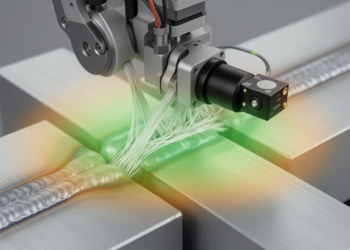
An optimized XGBoost model predicted the tensile strength of CNT–Si₃N₄-reinforced friction-welded aluminum joints from 25 experiments, while feature ablation showed ...
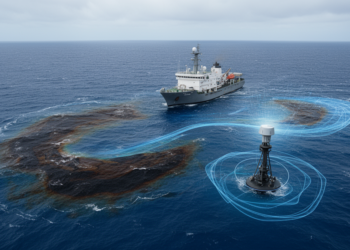
A physics-informed GRU–GNN study estimated marine oil-spill growth and spatial spread over 48 hours, but held-out tests showed limited case-specific ...

A dual-graph deep learning network that hard-codes petroleum physics alongside learned statistics cuts oil production prediction error to about 20 ...
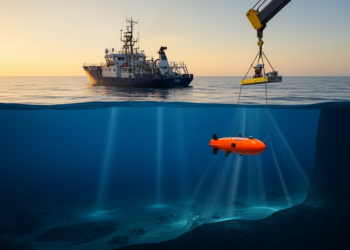
A comprehensive new review maps how artificial intelligence is transforming ocean science from surface currents to deep-sea ecology, while exposing ...


Embark on a thrilling journey of discovery with Scienmag.com—your ultimate source for cutting-edge breakthroughs. Immerse yourself in a world where curiosity knows no limits and tomorrow’s possibilities become today’s reality!