

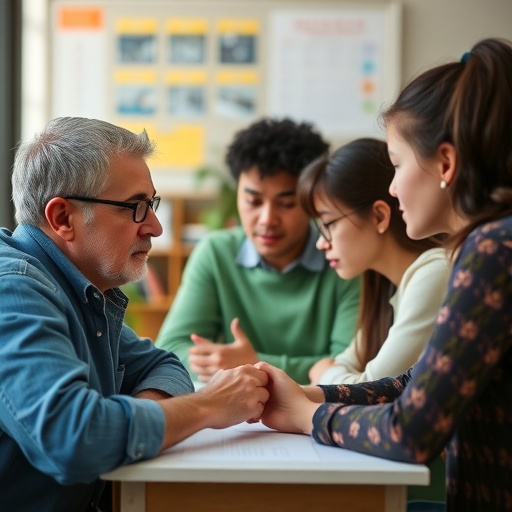
In the ever-evolving landscape of education, understanding the underlying factors that influence collaborative problem-solving capabilities among students has become a focal area of research. Recently, a study authored by He, Ren, and Zhang sheds light on the interplay between personal motivation profiles and collaborative performance. Their findings, published in Large-scale Assess Educ, uncover significant insights that may reshape educational approaches in fostering student collaboration and optimizing learning outcomes.
As educational environments increasingly emphasize dual skills—individual mastery and collaborative abilities—recognizing how personal motivational traits align with group dynamics is essential. The research posits that not all students are driven by the same motivational factors when engaging in collaborative problem-solving. Instead, personal-collaborative motivation profiles can vary widely, affecting students’ overall performance during collaborative tasks. This notion challenges the traditional view that collaboration inherently leads to improved learning outcomes across the board.
Central to the study’s methodology was the segmentation of students into distinct motivational profiles based on their self-reported motivational factors. These profiles were constructed to encapsulate a range of human motivations, such as achievement, social belonging, and task engagement, aligning them with students’ respective performances in collaborative settings. This nuanced understanding allows educators and policymakers to appreciate the diverse motivational landscapes that exist within their classrooms.
What distinguishes this research from previous studies is its analytical depth. The authors employed advanced statistical techniques to assess the impact of these motivational profiles on students’ collaborative performances. By synthesizing qualitative and quantitative data, they provided a comprehensive view of how motivation influences group interactions. Consequently, the study reveals that students whose motivations align well with collaborative goals—those driven by both personal ambition and a desire for collective success—tend to perform significantly better in group tasks compared to those with disjointed motivational drives.
However, the ramifications of these findings extend beyond mere performance metrics. The research poses critical questions about educational equity and inclusivity; it suggests that tailored approaches may be necessary to engage all students effectively. For instance, educators are encouraged to identify and nurture varied motivational profiles among students. This individualized approach not only recognizes diversity in learning styles but also promotes a more equitable collaborative process—the kind that acknowledges each student’s unique strengths and weaknesses.
In practical terms, the implications for classroom strategies are profound. Educators must be aware of the distinctive motivational forces at play within their student populations. By integrating motivational assessment tools into their teaching methodologies, teachers can better facilitate collaboration by grouping students in ways that align with their intrinsic motivations. This means moving beyond a one-size-fits-all approach to cultivate a learning environment that is both responsive and adaptive to the needs of every student.
Furthermore, this study sets the stage for further exploration into how external factors, such as teacher support and peer interactions, can influence motivational profiles. For example, understanding how educators can foster a supportive atmosphere that enhances students’ collaborative motivations could lead to innovative instructional practices that further enrich learning experiences.
The self-reported data collected from the participants holds immense significance. By capturing students’ perceptions of their motivations, the authors highlight the importance of self-awareness in the learning process. Empowering students to understand their motivations could not only enhance their own learning experiences but also their collaborative interactions. If students can articulate what drives their engagement in group activities, they are likely to navigate collaborative tasks more effectively, leading to improved outcomes both academically and socially.
In conclusion, He, Ren, and Zhang’s research underscores the critical need for a nuanced understanding of student motivation within collaborative learning environments. Their findings challenge existing paradigms and advocate for adaptive teaching strategies that align with the diverse motivational profiles of students. As education continues to evolve to meet the needs of a diverse student body, this research paves the way for future inquiries that can refine and redefine collaborative learning practices in classrooms around the world.
In a time when collaboration can no longer be seen as merely an optional educational skill, the insights gleaned from this study are vital for educators, policymakers, and researchers striving to build effective learning ecosystems. The relationship between motivation and collaborative performance forms a vital nexus for achieving educational excellence in the 21st century. As we dig deeper into the dynamics of motivation and collaboration, we pave the way for a more harmonious and effective educational future.
Subject of Research: The relationship between personal-collaborative motivation profiles and students’ performance in collaborative problem solving.
Article Title: The relationship between personal-collaborative motivation profiles and students’ performance in collaborative problem solving.
Article References:
He, J., Ren, S. & Zhang, D. The relationship between personal-collaborative motivation profiles and students’ performance in collaborative problem solving.
Large-scale Assess Educ 12, 34 (2024). https://doi.org/10.1186/s40536-024-00219-6
Image Credits: AI Generated
DOI: https://doi.org/10.1186/s40536-024-00219-6
Keywords: motivation, collaborative learning, student performance, educational strategies, problem-solving.


