


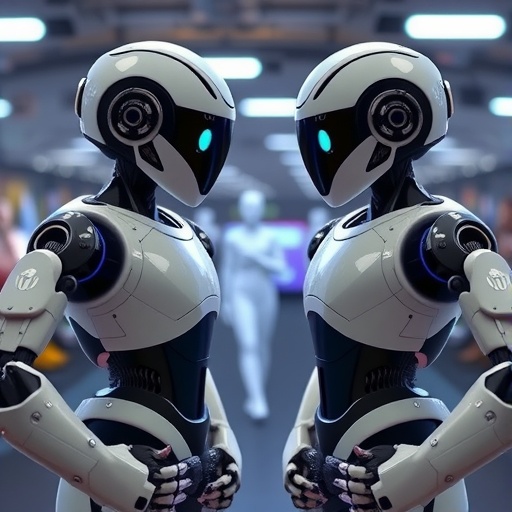
In recent years, the integration of robots into our everyday lives has transformed the way we interact with technology. The study conducted by Yueh, Wang, and Huang explores an intriguing facet of this evolution: the trust dynamics between humans and robots in a multiplayer setting. Their research sheds light on how exclusive robots are perceived in interactive scenarios, particularly within gamified environments that simulate real-life decision-making. This immersive approach to understanding human-robot interaction (HRI) underscores the increasing importance of trust as a factor influencing the acceptance and effectiveness of these advanced machines.
In the gaming context, people’s interactions with robots can reveal a lot about social dynamics. The research conducted by the authors proposes that the alignment of a robot’s actions with human social expectations can significantly enhance trust levels. Trust, as a construct, is foundational in any relationship—be it human-to-human or human-to-robot; the absence of trust can lead to skepticism and resistance. This study, therefore, not only examines the psychological underpinnings of trust but also looks at practical implications for designing more effective robots.
The research team conducted a series of experiments where participants played multiplayer games involving interactions with exclusive robots. These robots were programmed to exhibit varying levels of responsiveness and autonomy. The aim was to evaluate how participants’ trust developed towards these robots as they engaged in cooperative and competitive tasks. As the study revealed, the conditions under which these interactions occurred played a crucial role in trust formation. Participants who experienced a consistent and predictable behavior from their robotic counterparts reported markedly higher trust levels.
One noteworthy finding from the study is that exclusivity, or the unique features that a robot offers, can significantly enhance trust. When robots provide distinctive or personalized interactions, humans perceive them as more reliable. The game scenarios were specifically structured to test how unique features influenced participants’ willingness to place trust in these robots. For instance, robots that could learn from previous interactions were viewed as more trustworthy compared to those with fixed, unchanging behaviors. This insight is essential for future developments in robotics, particularly in designing systems that can adapt to user needs.
In addition to the exclusive capabilities of robots, the research examined how social cues affected trust. These cues included the robot’s communication style, the speed of response, and how well it mimicked human-like behaviors. Robots that could communicate in a manner similar to humans, particularly through body language and vocal intonations, were perceived as more trustworthy. This aspect of the study highlights the importance of social intelligence in robotics, suggesting that manufacturers must focus on creating robots that can effectively engage with humans on an emotional and psychological level.
The implications of Yueh, Wang, and Huang’s findings extend far beyond the context of gaming. This research holds significant relevance for industries increasingly relying on robotics, such as healthcare, education, and customer service. In healthcare environments, for example, robots that can establish trust with patients could enhance the reception of robotic surgical assistance or rehabilitation tools. Similarly, in educational settings, robots that interact with students must be designed to foster trust to effectively support learning outcomes.
Moreover, the findings underscore the need for ethical considerations in robotic design. As robots become more integrated into society, their perceived reliability directly impacts user experiences and acceptance. Trust is particularly critical in sensitive sectors like finance and security, where the stakes of technology failure could be devastating. The research thereby advocates for a more human-centric approach in robotics development whereby trust-building features are prioritized.
Another significant aspect of the study is the examination of the impact of group dynamics on trust in robot interactions. The multiplayer games allowed authors to assess how collective behavior influenced individual perceptions of trust. Results indicated that individuals tended to conform to group attitudes towards robots, biased by the majority’s opinions. This social aspect of trust raises essential questions about collective versus individual trust and how groups may inadvertently shape perceptions of technology.
The findings from this research also contribute to broader discussions about the future of human-robot interactions. As robots become more sophisticated, they will increasingly be expected to navigate complex social environments. The ability to build trust will not only enhance interaction efficiency but also pave the way for deeper emotional connections between humans and robots. This trajectory of development could transform how we perceive companionship and support systems offered by robotic entities.
Looking forward, the study calls for further research into trust dynamics. Varied environments, tasks, and robot designs should be tested to develop a comprehensive understanding of how trust can be manufactured or influenced in human-robot interactions. Addressing these complexities will be essential for fostering acceptance of robots in invasive roles, such as caregiving and in-home assistants, where trust is paramount.
In conclusion, the transformative nature of robotics finds profound roots in the cultivation of trust through interaction. Yueh, Wang, and Huang’s research highlights not only the importance of exclusive robot features but also the broader implications for emotional intelligence and group dynamics in HRI. As we look towards a future where robots will increasingly inhabit our society, understanding and enhancing trust mechanisms will be crucial for ensuring that these innovations are met with enthusiasm and acceptance rather than fear and skepticism.
Trust is a cornerstone of all interactions, and as robotics continues to advance, it will be essential for developers to design machines that can forge genuine connections with users. A future where humans and robots collaborate seamlessly depends on our ability to understand and improve these fundamental trust dynamics.
Yueh, HP., Wang, YR. & Huang, TR. Higher trust toward exclusive robots in a multiplayer human-robot interaction game.
Discov Psychol (2025). https://doi.org/10.1007/s44202-025-00558-7
Cite Scienmag News
Denise Maddox. (December 11, 2025). Exclusive Robots Boost Trust in Multiplayer Human Interaction. Scienmag. https://scienmag.com/exclusive-robots-boost-trust-in-multiplayer-human-interaction/
Denise Maddox. "Exclusive Robots Boost Trust in Multiplayer Human Interaction." Scienmag, 11 December 2025, https://scienmag.com/exclusive-robots-boost-trust-in-multiplayer-human-interaction/. Accessed 3 September 2026.
Denise Maddox. "Exclusive Robots Boost Trust in Multiplayer Human Interaction." Scienmag. December 11, 2025. https://scienmag.com/exclusive-robots-boost-trust-in-multiplayer-human-interaction/


