


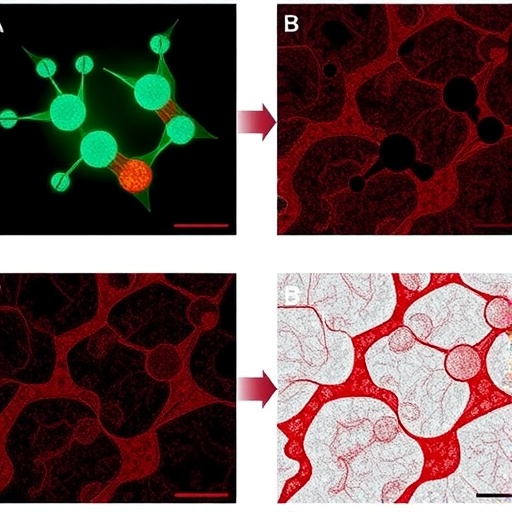
In a groundbreaking advance that could transform our understanding of neurodegenerative processes in vision loss, researchers have uncovered the pivotal roles of MKK4 and MKK7 signaling pathways in the degeneration of retinal ganglion cells (RGCs) after injuries akin to glaucoma. These findings, published in Cell Death Discovery, shed new light on the molecular pathways that drive both the death of RGC somas and the degeneration of their axons—processes that underlie irreversible vision impairment in glaucoma patients worldwide.
Retinal ganglion cells are the essential conduits of visual information from the eye to the brain, and their loss is a hallmark of glaucoma, a leading cause of blindness. Until now, therapeutic strategies have been largely limited to lowering intraocular pressure, with insufficient progress in protecting or regenerating these critical neurons. The research led by Marola, Syc-Mazurek, Yablonski, and colleagues pivots focus to the intracellular signaling cascades that mediate neuronal injury responses, identifying MKK4 and MKK7 as key molecular regulators.
Mitogen-activated protein kinase kinase 4 (MKK4) and MKK7 are integral components of the c-Jun N-terminal kinase (JNK) signaling pathway, which is known to modulate cellular responses to stress and injury. The study meticulously dissects how these kinases govern divergent yet complementary facets of RGC degeneration following glaucoma-relevant insults including elevated intraocular pressure. Such detailed molecular probing provides crucial mechanistic insight that was previously elusive in neurodegenerative eye disease.
What sets this research apart is the precise delineation of the roles of MKK4 and MKK7. The authors demonstrate that while MKK4 predominantly drives the apoptotic death of the RGC soma—the cell body containing the nucleus—MKK7 mainly orchestrates the degradation of the axons, the long projections that transmit neuronal signals to central visual pathways. This functional separation within the same pathway emphasizes a sophisticated regulatory mechanism, suggesting targeted intervention points for therapeutic development.
Employing sophisticated genetic mouse models, the investigators selectively knocked out MKK4 or MKK7 in retinal ganglion cells prior to inducing glaucoma-like injury. Remarkably, deletion of either kinase conferred partial neuroprotection but did not fully prevent degeneration, indicating that both elements act in concert to mediate RGC demise. These elegant experiments highlight the necessity of concurrently targeting both kinases to achieve robust neuroprotection.
Furthermore, downstream effectors in the JNK pathway, particularly c-Jun transcription factors, were analyzed to clarify their contribution to RGC pathology. The researchers found that c-Jun activation patterns correlate strongly with MKK4 and MKK7 activity, confirming their canonical signaling roles in mediating stress responses that trigger programmed cell death and axonal degeneration. This reinforces the model whereby MKK4 and MKK7 serve as critical upstream modulators, modulating c-Jun and other pro-degenerative signals.
The pathological processes studied extend beyond mere cellular death, encompassing axonal injury that impairs neural circuit integrity and visual function. Axonopathy typically precedes and predicts neuronal loss, making MKK7 an especially attractive target for early intervention. By demonstrating that blocking MKK7 activity can preserve axonal integrity despite ongoing soma stress, this work opens a promising therapeutic avenue distinct from classical neuroprotection strategies.
Glaucoma-related degeneration is notoriously complex, involving mechanical stress, neuroinflammation, and metabolic imbalance. By focusing on MKK4 and MKK7, the researchers position themselves at the nexus of these multifactorial mechanisms. Insights into how these kinases integrate stress signals to selectively influence somal and axonal degeneration could critically inform combination therapies that address multiple pathogenic facets of glaucoma.
This study’s rigorous approach combining molecular genetics, histopathology, and functional assessments establishes a new framework for dissecting signaling networks in neurodegenerative disease. Importantly, the findings may transfer beyond glaucoma, as the JNK pathway and its upstream kinases are implicated in neurodegeneration across the central nervous system, including in diseases like Alzheimer’s and Parkinson’s.
Importantly, the team evaluated the temporal expression patterns of MKK4 and MKK7 following injury, revealing dynamic changes that coincide with progression from early axonal damage to later somal apoptosis. This temporal distinction suggests therapeutic windows for intervention tailored to disease stage, maximizing clinical impact by preserving neuronal structure and function before irreversible loss occurs.
The translational potential of these discoveries cannot be overstated. Currently, glaucoma therapies do not address the molecular triggers of neuronal degeneration. Pharmacological inhibitors of MKK4 or MKK7, or modulation of their downstream pathways, could complement existing treatments to halt or even reverse neuronal loss. Such targeted strategies could revolutionize clinical outcomes for millions suffering from vision loss worldwide.
While the data compellingly position MKK4 and MKK7 as central mediators of RGC degeneration, further research is needed to translate these findings into human therapies. Challenges include developing selective, safe inhibitors capable of penetrating ocular tissues, and clarifying potential off-target effects. Nevertheless, this work sets a crucial foundation for future drug development initiatives.
In summation, Marola and colleagues provide an unparalleled view into the intracellular orchestration of retinal ganglion cell degeneration, illuminating the distinct yet overlapping functions of MKK4 and MKK7 kinases in mediating the dual pathologies of soma and axon loss. This dual targeting approach represents a paradigm shift in understanding and potentially treating glaucoma and other neurodegenerative diseases.
As research progresses, integration of these molecular insights with advanced imaging, biomarker discovery, and gene therapy holds promise to finally overcome the longstanding challenge of protecting vision in glaucoma. The discovery that MKK4 and MKK7 control separate facets of neuronal degeneration provides a tangible starting point for innovative therapies aimed at preserving sight and quality of life for patients worldwide.
This landmark study underscores the profound power of molecular neuroscience in unraveling complex disease mechanisms, and stands as a testament to the ongoing evolution of vision science in tackling one of the world’s most pervasive sources of blindness. The ability to decode and selectively modulate such key signaling pathways opens exhilarating new horizons for neuroprotection and regenerative medicine in ophthalmology and beyond.
Cite Scienmag News
Ophelia Keating. (December 15, 2025). MKK4 and MKK7 Regulate Retinal Cell Degeneration. Scienmag. https://scienmag.com/mkk4-and-mkk7-regulate-retinal-cell-degeneration/
Ophelia Keating. "MKK4 and MKK7 Regulate Retinal Cell Degeneration." Scienmag, 15 December 2025, https://scienmag.com/mkk4-and-mkk7-regulate-retinal-cell-degeneration/. Accessed 3 September 2026.
Ophelia Keating. "MKK4 and MKK7 Regulate Retinal Cell Degeneration." Scienmag. December 15, 2025. https://scienmag.com/mkk4-and-mkk7-regulate-retinal-cell-degeneration/


