


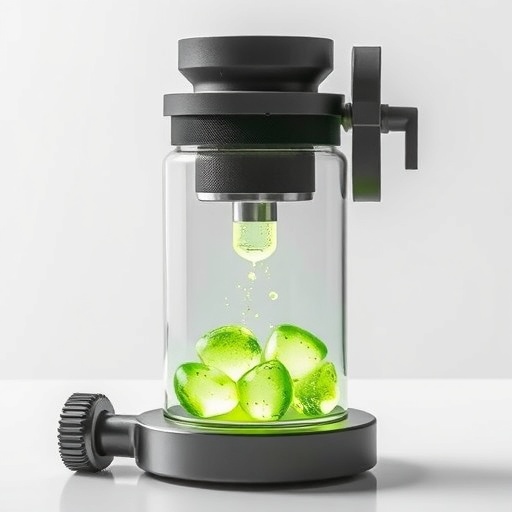
The global demand for lithium has skyrocketed in recent years, driven by the rapid expansion of lithium-ion batteries that power a wide array of technologies, from electric vehicles to portable electronics. Despite the abundance of lithium resources in countries like the United States, Europe, and Australia, refining capabilities remain heavily concentrated in China. This discrepancy largely stems from the technical and economic challenges involved in extracting lithium from hard rock minerals, which exist in solid, less readily accessible forms requiring intensive processing to convert into battery-grade materials.
Traditional lithium extraction from hard rock minerals involves roasting the ore at temperatures exceeding 1,000 degrees Celsius, followed by chemical leaching to separate lithium. This energy-intensive method produces significant waste, as the majority of the rock is discarded after lithium removal, raising both environmental and cost concerns. In contrast, lithium recovered from brine involves pumping mineral-rich salt water from underground reservoirs, but this approach is also burdened by substantial environmental issues, including water consumption and land use.
Recent research led by a team at MIT has introduced a groundbreaking low-temperature process designed to efficiently extract lithium from spodumene—one of the most commonly encountered lithium-bearing minerals in hard rock form. The innovation pivots on the use of a specialized liquid reagent composed primarily of ammonium fluoride combined with water. This reagent selectively dissolves the mineral matrix at ambient temperatures, liberating not only lithium in forms suitable for battery applications but also valuable co-products such as smelter-grade alumina and cement-ready silica, turning what used to be industrial waste into marketable commodities.
One of the distinctive advantages of this method is its closed-loop design, where the solvent and chemical reagents used to break down the ore are recovered and recycled continuously. This circular approach drastically reduces waste production and the need for fresh inputs, positioning the process as a sustainable and eco-friendly alternative to conventional lithium extraction techniques. It simultaneously lowers operating costs by approximately 50 percent compared to traditional hard rock extraction, potentially making lithium recovery from spodumene cost-competitive with brine extraction.
The inspiration for this innovative process traces back to a seemingly unrelated source: a common glass etching cream containing ammonium fluoride used in home renovations. Professor Yet-Ming Chiang, whose curiosity about this material initially sparked the concept, applied related chemical principles to the unique challenge of breaking down the strong silicon-oxygen bonds that comprise the majority of spodumene’s mineral matrix. Unlike typical ore processing that leaves behind silica as a residue, the ammonium fluoride reagent preferentially dissolves silica, reversing the conventional extraction pattern and enabling a more comprehensive recovery of valuable mineral components.
The initial step of dissolving silica at room temperature represented a significant breakthrough, circumventing the need for energy-intensive high-temperature roasting. However, the researchers had to further develop subsequent steps to fully separate and purify the constituent elements—lithium, aluminum, and silica—into usable industrial products. This involved isolating lithium fluoride, lithium hydroxide, and lithium carbonate, all essential precursors for lithium-ion battery cathodes and electrolytes. The team incorporated carbon dioxide and sodium carbonate in innovative ways to precipitate lithium salts meeting rigorous battery-grade purity standards.
Aluminum recovery was tackled through precise high-temperature separation techniques yielding smelter-grade alumina, while silica was recovered by controlled precipitation methods producing materials fit for cement additive applications. Extensive testing was conducted to validate these products’ performance characteristics, including industrial-strength cement testing for silica and market purity specifications for lithium and aluminum products. Any deviation from specifications would have resulted in waste streams, underscoring the importance of rigorous quality control within the process design.
Integral to the system’s sustainability is the recovery of ammonium fluoride and water used in the initial reaction. Ammonia gas, released during dissolution, is reincorporated to precipitate silica, effectively regenerating the ammonium fluoride reagent. This recycling closes the extraction loop, substantially diminishing environmental impact and resource consumption. The process was tested successfully across 17 distinct spodumene samples sourced globally, demonstrating robust applicability and the potential to harness widespread lithium hard rock deposits.
The researchers dubbed their approach “nose-to-tail mining,” drawing an analogy to the culinary practice of utilizing every part of an animal to minimize waste. This philosophy contrasts sharply with traditional mining methods that discard significant portions of processed rock. Through iterative experimentation and problem-solving, the MIT team systematically addressed each stage of refining, from rock dissolution through to product standardization, driven by a practical and solution-oriented research ethos encouraged by Professor Chiang.
Commercial prospects were rigorously evaluated alongside laboratory success. Economic modeling assessed the global availability of spodumene sufficient to supply the projected 100 terawatt-hours of battery demand by 2040, aligning with estimates to quadruple lithium production globally. Co-product market analyses ensured the volumes of alumina and silica produced would integrate effectively into existing commodity markets without oversupply. Cost assessments factored in reagent expenses, energy demands, and capital outlay for equipment, signaling this technology’s potential for disruptive impact in the lithium supply chain.
This pioneering work has now transitioned from academia to industry through the founding of Rock Zero, an MIT spinout headquartered at The Engine, a venture firm specializing in scaling technologies for intensive energy and climate challenges. The company is advancing prototype development and scaling efforts with the goal of delivering the lowest-energy, least costly lithium extraction method for hard rock deposits worldwide. Its success could dramatically enhance onshore lithium production capacity in regions previously hampered by processing complexities.
The significance of this breakthrough extends well beyond technology alone. By reducing reliance on foreign refining hubs, the process facilitates the localization of critical mineral supply chains, addressing geopolitical and economic vulnerabilities. It supports the broader energy transition by underpinning the sustainable expansion of battery storage capacity essential for electric vehicles and grid-scale renewable integration. Fundamentally, this development exemplifies how material science and chemical innovation can collaboratively drive impactful environmental and industrial progress.
Supported by funding from the U.S. Department of Energy’s Advanced Research Projects Agency-Energy (ARPA-E), the MIT Climate Grant Challenges program, and the National Science Foundation, the project also leveraged MIT.nano’s cutting-edge research facilities. Disseminated through a recent publication in the prestigious journal Science, the findings are poised to reshape lithium extraction paradigms while inspiring further advancements in sustainable mineral processing.
Ultimately, this pioneering approach promises to revolutionize how one of the world’s most vital energy transition metals is recovered, fostering a cleaner and more resilient supply chain for lithium-ion batteries. As the global economy pivots toward decarbonization, the ability to sustainably and cost-effectively harness lithium from abundant hard rock deposits will be a critical determinant shaping the future of energy storage and clean transportation technologies.
Cite Scienmag News
Bethany Barker. (May 28, 2026). MIT Researchers Create Affordable Method to Extract Lithium from Rocks. Scienmag. https://scienmag.com/mit-researchers-create-affordable-method-to-extract-lithium-from-rocks/
Bethany Barker. "MIT Researchers Create Affordable Method to Extract Lithium from Rocks." Scienmag, 28 May 2026, https://scienmag.com/mit-researchers-create-affordable-method-to-extract-lithium-from-rocks/. Accessed 3 September 2026.
Bethany Barker. "MIT Researchers Create Affordable Method to Extract Lithium from Rocks." Scienmag. May 28, 2026. https://scienmag.com/mit-researchers-create-affordable-method-to-extract-lithium-from-rocks/


