


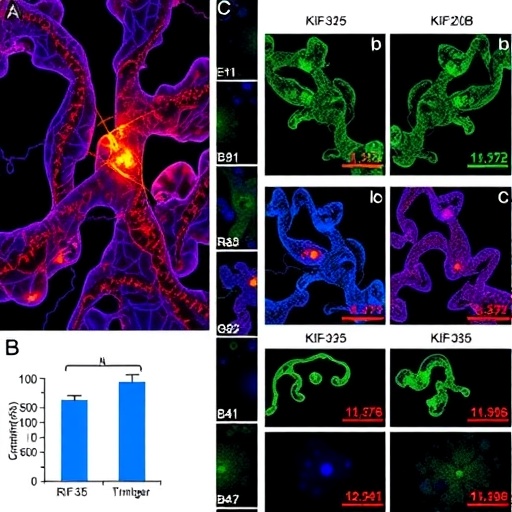
Recent research has made significant strides in understanding the role of microRNAs in cancer biology, particularly focusing on miR-325 and its implications in colorectal cancer. A pivotal study has elucidated how the inhibition of miR-325 impacts the expression of KIF20B, a protein that plays a critical role in cellular functions, and how this relationship affects the invasive and proliferative behaviors of colorectal cancer cells. This comprehensive investigation sheds light on potential therapeutic avenues that may be harnessed in the treatment of colorectal cancer, which continues to be a significant health burden worldwide.
Colorectal cancer remains one of the leading causes of cancer-related mortality, necessitating the urgent need for advanced therapeutic strategies. There is an increasing body of evidence suggesting that microRNAs are crucial regulators of various cellular processes, including proliferation, apoptosis, and migration. miR-325 has emerged as a key player in the modulation of cancer-related pathways, prompting researchers to explore its functional roles in colorectal cancer pathogenesis.
The study at hand focuses on colorectal cancer cell line HCT116, a widely used model for such investigations due to its capacity to mimic the complexities of human colorectal cancer. By transfecting these cells with a miR-325 inhibitor, the researchers aimed to determine the downstream effects on KIF20B expression levels. The methodology employed includes rigorous techniques such as quantitative polymerase chain reaction (qPCR) and western blotting, both of which are gold standards in molecular biology for quantifying gene expression and protein levels.
Notably, the results indicated a significant reduction in KIF20B expression upon miR-325 inhibition. This finding is pivotal as KIF20B is known to contribute to various cellular mechanisms, including cell division and migration, both of which are key processes in cancer progression. The correlation established between miR-325 and KIF20B suggests that targeting this microRNA could provide a novel approach for cancer therapy.
Cell proliferation, an essential characteristic of cancer, was assessed using the Cell Counting Kit-8 (CCK8) assay. This assay allows for the quantification of viable cells, offering insights into the proliferative capacity of cancer cells following the inhibition of miR-325. The outcomes revealed a marked decrease in cell proliferation, reinforcing the idea that miR-325 plays a significant role in promoting colorectal cancer cell growth.
In addition to proliferation, the invasive capabilities of the cancer cells were evaluated using both Transwell assays and scratch wound healing assays. These methodologies are instrumental in studying the metastatic potential of cancer cells, providing a functional readout of how cells can invade through extracellular matrices. The results illustrated that the inhibition of miR-325 led to a suppression of invasive behavior, further implicating this microRNA in the metastatic progression of colorectal cancer.
Furthermore, the study also explored the expression levels of Matrix Metalloproteinases (MMPs), specifically MMP-2 and MMP-9. These proteins are well-known mediators of extracellular matrix degradation, facilitating cancer cell invasion and metastasis. The findings revealed that miR-325 inhibition resulted in reduced expression of these MMPs, thereby linking miR-325 to the modulation of extracellular matrix remodeling in the tumor microenvironment.
The implications of these findings are profound. Not only do they suggest that miR-325 functions as a promoter of colorectal cancer cell invasion and proliferation through its regulatory effects on KIF20B, but they also point towards miR-325 as a potential biomarker and therapeutic target in colorectal cancer. The ability to modulate this microRNA could potentially lead to innovative strategies aimed at curbing tumor growth and metastatic spread.
As the field of cancer research continues to evolve, the exploration of microRNAs offers a promising frontier, opening new pathways for targeted therapy that could personalize treatment options for patients with colorectal cancer. The investigation of miR-325 in the context of KIF20B expression indeed sets the stage for future studies aimed at elucidating the complex interplay between microRNAs and oncogenes.
These findings necessitate further exploration into the mechanistic pathways by which miR-325 influences KIF20B expression and the broader implications on colorectal cancer cell biology. As researchers delve deeper into the intricacies of this relationship, the potential for novel therapeutic strategies that harness the power of microRNA modulation could revolutionize the landscape of colorectal cancer treatment.
In summary, the inhibition of miR-325 reveals a critical mechanism by which KIF20B expression is regulated, ultimately affecting the proliferation and invasiveness of colorectal cancer cells. This study not only enhances our understanding of the molecular underpinnings of colorectal cancer but also paves the way for future research aimed at exploiting miR-325 as a therapeutic target. The journey towards effective cancer therapeutics is long, but insights gained from this research signify meaningful progress in combating colorectal cancer, which continues to challenge patients and clinicians alike.
Zheng, QQ., Lin, WF. Inhibition of miR-325 inhibits KIF20B expression and the colorectal cancer cells’ invasion & proliferation.
BMC Cancer 25, 680 (2025). https://doi.org/10.1186/s12885-025-13759-z
Cite Scienmag News
Nathaniel Bowman. (April 14, 2025). miR-325 Inhibition Reduces KIF20B and Cancer Progression. Scienmag. https://scienmag.com/mir-325-inhibition-reduces-kif20b-and-cancer-progression/
Nathaniel Bowman. "miR-325 Inhibition Reduces KIF20B and Cancer Progression." Scienmag, 14 April 2025, https://scienmag.com/mir-325-inhibition-reduces-kif20b-and-cancer-progression/. Accessed 3 September 2026.
Nathaniel Bowman. "miR-325 Inhibition Reduces KIF20B and Cancer Progression." Scienmag. April 14, 2025. https://scienmag.com/mir-325-inhibition-reduces-kif20b-and-cancer-progression/


