


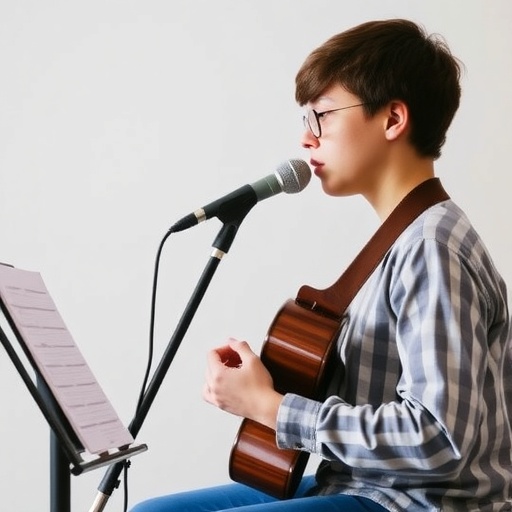
Mindfulness Linked to Better Practice Habits and Lower Anxiety in Student Musicians
For student musicians, the hours spent alone with an instrument can be a pathway to mastery—or a daily reminder of every missed note, technical limitation and looming performance. A new study suggests that one psychological trait may be connected to both sides of that experience. Undergraduate instrumentalists who reported higher levels of trait mindfulness also reported using more deliberate-practice techniques and experiencing fewer symptoms of anxiety and depression. The findings, published in Mindfulness, do not show that mindfulness causes better practice or protects musicians from mental-health problems, but they identify a potentially important relationship between attention, musical training and psychological well-being.
The study focused on a population that frequently faces intense academic and artistic pressure. Music students may contend with perfectionistic expectations, long periods of solitary rehearsal, public evaluation, competitive environments, uncertain career prospects and physical strain related to repetitive playing. Previous research cited by the investigators has found substantial levels of anxiety and depression among music students, alongside poorer general health than some non-music peers. In the new work, Sally S. Wynn and colleagues at Brigham Young University and the University of Louisville examined whether students’ everyday tendency to remain attentive and nonjudgmental was related to how they practiced and how they felt.
The researchers analyzed survey data from 128 undergraduate instrumental musicians at a large religiously affiliated university in the United States. To qualify, students needed at least six years of instrumental training and at least one hour of practice during the preceding week. The final sample included 42 woodwind players, 29 brass players, 23 bowed-string players, 21 keyboard players, seven plucked-string players and six percussionists. Participants had completed an average of 11.25 years of training and reported practicing for approximately 11.17 hours during the previous week. Vocalists were excluded because vocal practice involves different physiological demands and because the practice-quality inventory used in the study was designed primarily for instrumental contexts.
Mindfulness was measured with the Five Facet Mindfulness Questionnaire, a widely used instrument that assesses five related capacities: acting with awareness, observing, describing, non-judging and non-reactivity. In practical terms, the scale is intended to capture whether people notice their experiences, remain engaged with what they are doing and respond without immediately being swept away by distraction or emotion. The students also completed the Deliberate Practice in Music Inventory, which measures practice quality rather than simply duration. Its components include process improvement, practice competencies, reduced mindless practice and task decomposition—the ability to break difficult musical goals into manageable tasks.
Mental-health symptoms were assessed with two screening instruments: the Generalized Anxiety Disorder-7 questionnaire, which asks about anxiety during the previous two weeks, and the Patient Health Questionnaire-9, which measures depressive symptoms over the same period. These tools do not by themselves establish clinical diagnoses, but they provide standardized symptom scores that allow researchers to compare patterns across participants. The investigators used analysis of variance to test differences between instrument groups and linear regression to examine relationships among mindfulness, practice behavior and symptoms. They also repeated key analyses after adjusting for age, gender and years of training, and after removing the “observing” facet from the overall mindfulness score.
The strongest practice-related result was a positive association between mindfulness and deliberate practice. The regression coefficient was β = 0.29, with a probability value of p = 0.001, indicating that students with higher mindfulness scores tended to report greater use of structured, feedback-oriented practice methods. The model’s R² was 0.08, meaning that mindfulness alone accounted for about 8 percent of the variation in deliberate-practice scores. That is a modest proportion, but meaningful in behavioral research, where complex outcomes are shaped by many influences. The relationship remained statistically significant when the observing facet was removed, although it became smaller, β = 0.22, p = 0.013. This suggests that the connection was not simply an artifact of students who are especially inclined to notice sensations, sounds or details.
Deliberate practice differs from repeatedly playing a piece from beginning to end. It involves identifying weaknesses, setting specific goals, concentrating on challenging passages, monitoring errors and using feedback to modify performance. The researchers argue that this process overlaps conceptually with mindfulness because both require sustained attention to present-moment experience. A mindful student might notice tension in the hands, rushing in a difficult passage or an unhelpful thought about failure, then return attention to the immediate task rather than practicing automatically or avoiding the problem. Exploratory analyses supported this interpretation: overall mindfulness significantly predicted less mindless practice, greater process improvement and stronger practice competencies, although the researchers cautioned that these secondary tests involved multiple comparisons.
The mental-health associations were considerably stronger. Higher trait mindfulness predicted lower anxiety scores, with β = −0.49, p < 0.001, and lower depressive-symptom scores, with β = −0.48, p < 0.001. The models explained approximately 24 percent of the variation in anxiety and 23 percent of the variation in depressive symptoms. These findings are consistent with broader research linking mindfulness to psychological functioning and with earlier intervention studies involving conservatory and university music students. Yet the study also delivered an important negative result: deliberate practice itself was not significantly associated with either anxiety or depressive symptoms. Nor were weekly practice hours, instrument category or the amount of training significantly related to mindfulness or mental distress.
That distinction prevents an overly simple interpretation. The results show two separate statistical relationships—a link between mindfulness and practice quality, and another between mindfulness and lower symptom levels—but they do not show that better practice improves mental health. Structured practice may help students solve musical problems while leaving emotional distress unchanged. Alternatively, its psychological effects may depend on factors the survey did not measure, such as perfectionism, self-criticism, performance anxiety, teacher behavior, social comparison or the degree of pressure surrounding practice. More practice was associated with more deliberate practice, suggesting that students who spent longer at their instruments also tended to use more strategic methods, but additional hours alone were not linked to lower anxiety or depression.
The authors emphasize that the study cannot establish causation. Because all variables were collected at one time, the data cannot determine whether mindfulness encourages deliberate practice, whether the experience of structured practice cultivates mindful attention, or whether a third factor—such as supportive teaching, personality, sleep or socioeconomic circumstances—influences both. Every measure was also self-reported, leaving room for memory errors, socially desirable answers and common-method bias, in which correlations are inflated because the same person reports all variables in the same format. Objective practice logs, teacher evaluations, recordings, behavioral attention tests and longitudinal symptom assessments could provide a more robust test of the relationships.
The sample presents additional limits. It came from a single university, was relatively homogeneous and contained very small numbers of plucked-string and percussion players, reducing the ability to detect subtle differences between instrument groups. The survey response rate was 46 percent, so students who completed it may have differed systematically from those who did not. The findings also cannot automatically be generalized to vocalists, professional musicians, conservatory students in other countries or students working in different cultural and institutional environments. The study was not preregistered, although its sensitivity analyses produced the same overall pattern after accounting for demographic and training variables.
Even with those qualifications, the findings point toward a practical research direction for music education. Mindfulness training, deliberate-practice instruction or a combination of the two could be tested in randomized trials to determine whether they improve practice quality, performance, well-being or some combination of these outcomes. Such studies could examine whether mindfulness helps students approach difficult passages without avoidance, recognize unproductive self-criticism, regulate physical tension or remain engaged during repetitive technical work. They could also determine whether training changes measurable behaviors rather than only questionnaire scores.
For now, the study’s central message is less that musicians should simply practice meditation than that practice quality and psychological health may share an attentional foundation. A student who can observe an error without panic, divide a demanding task into smaller steps and return attention to the present may be better equipped to practice deliberately. That same ability may also make anxiety and depressive thoughts less overwhelming, although the current evidence cannot prove it. In an educational culture often dominated by hours logged and flawless performance, the results suggest that how musicians attend to their work may matter as much as how long they remain in the practice room.
Cite Scienmag News
Glenn Wilkins. (August 28, 2026). Mindful Student Musicians Report Less Anxiety and Depression Through Deliberate Practice. Scienmag. https://scienmag.com/mindful-student-musicians-report-less-anxiety-and-depression-through-deliberate-practice/
Glenn Wilkins. "Mindful Student Musicians Report Less Anxiety and Depression Through Deliberate Practice." Scienmag, 28 August 2026, https://scienmag.com/mindful-student-musicians-report-less-anxiety-and-depression-through-deliberate-practice/. Accessed 3 September 2026.
Glenn Wilkins. "Mindful Student Musicians Report Less Anxiety and Depression Through Deliberate Practice." Scienmag. August 28, 2026. https://scienmag.com/mindful-student-musicians-report-less-anxiety-and-depression-through-deliberate-practice/


