


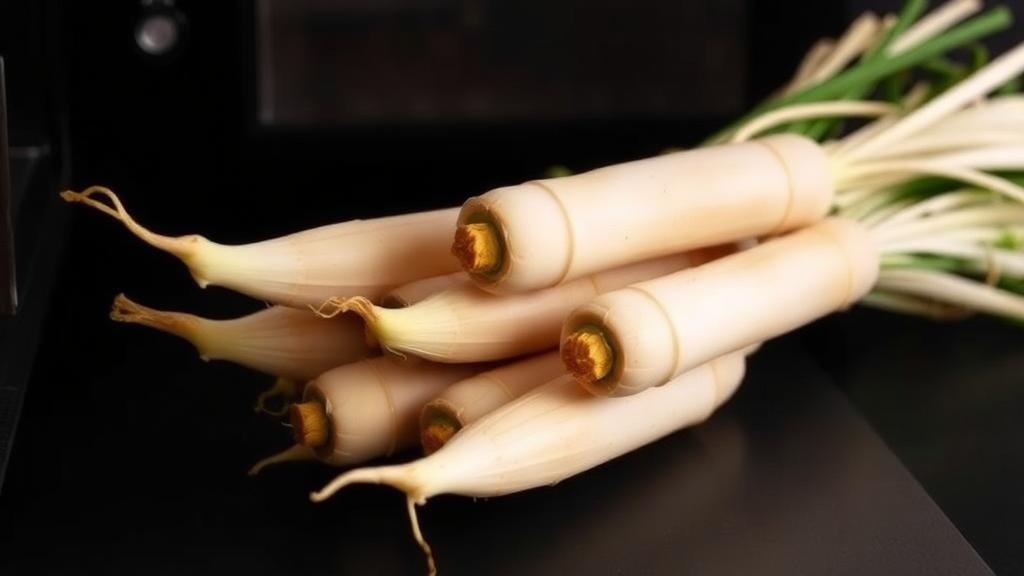
The humble rhizome of Acorus calamus, the aromatic plant better known as sweet flag, has been prized for centuries in traditional medicine systems across Asia and Europe. Yet the journey from freshly harvested underground stem to shelf-stable medicinal product hinges on a deceptively simple step: drying. A new study published in Food Science and Biotechnology has now shown that this step is far more consequential than many producers assume, with both the drying method and the physical size of the rhizome slices dramatically shaping how much energy is consumed and which volatile compounds survive the process. The research, led by Pallavi Nautiyal of the High Altitude Plant Physiology Research Centre at H.N.B. Garhwal University in India, together with colleagues at Graphic Era University and the University of Pisa, offers one of the most detailed portraits yet of how post-harvest handling rewrites the chemistry of this ancient medicinal plant.
The team set out to answer a question that matters enormously to growers of medicinal and aromatic plants: which drying strategy preserves the valuable chemistry of A. calamus while keeping energy bills and carbon footprints manageable? To do so, they cut rhizomes into slices of two distinct thicknesses, five millimetres and eight millimetres, and subjected each batch to four different drying treatments: shade drying, solar drying, conventional hot-air drying, and microwave drying. This factorial design allowed the researchers to disentangle the effects of slice geometry from the effects of heat delivery, a distinction that most earlier studies had blurred by testing only one size class at a time.
The energy results were striking. Microwave drying outperformed hot-air drying on every efficiency metric the team measured. The specific moisture extraction rate, which describes how many kilograms of water can be removed per kilowatt-hour of energy input, reached values between 0.559 and 0.746 kilograms per kilowatt-hour under microwave treatment. Correspondingly, the specific energy consumption of microwave drying fell to between 1.34 and 1.79 kilowatt-hours per kilogram of moisture removed, and the total electrical energy consumed per batch ranged from just 0.114 to 0.152 kilowatt-hours. Perhaps most importantly for commercial operations, microwave drying slashed the drying duration to a fraction of the time required by conventional methods, which rely on slow convective heat transfer from the surface inward.
Size mattered in ways that cut against intuition. In microwave drying, the smaller five-millimetre slices delivered better energy performance than their thicker counterparts, simply because they lost moisture faster and therefore spent less time drawing power. Yet the article highlights note a subtler pattern: larger rhizome slices exhibited higher effective moisture diffusivity and higher efficiency in certain analyses, reflecting the complex interplay between internal water migration, heat penetration depth, and the geometry of the plant tissue. This size sensitivity means that processors cannot simply scale recipes from one slice thickness to another; the drying kinetics, and the energy demand that follows from them, shift measurably with every change in cutting protocol.
To make sense of the drying curves, the researchers fitted their data to mathematical thin-layer drying models, and the Midilli–Küçük model emerged as the best description of the moisture-loss behaviour across treatments. Such models are more than academic exercises. They allow engineers to predict drying times under different conditions, optimize dryer design, and scale laboratory findings to industrial operations without repeating every experiment at full scale. The finding that a single model describes the behaviour across methods and sizes gives the industry a practical tool for planning microwave and conventional drying schedules for calamus rhizomes and, by extension, for similar dense rhizomatous materials.
Energy efficiency alone would be meaningless if the dried product lost the compounds that make it medicinally valuable. The team therefore turned to gas chromatography–mass spectrometry, or GC–MS, to profile the volatile and semi-volatile constituents of the dried rhizomes. The analysis identified 23 such compounds, and the drying treatments significantly reshaped their relative abundances. This is where the study delivers its most intriguing twist: gentle drying methods tended to preserve the monoterpenoid fraction of the volatile profile, while more intense heat treatments raised the relative levels of phenylpropanoids, the class of aromatic compounds that includes beta-asarone, the signature constituent of calamus oil.
This divergence has real pharmacological consequences. Monoterpenoids and phenylpropanoids contribute different aromatic and biological properties, and the balance between them determines the character and potency of the final product. A processor choosing shade drying will obtain a rhizome chemically closer to the fresh plant, rich in delicate monoterpenoid notes, whereas a processor using hot-air or microwave drying will steer the chemistry toward the phenylpropanoid-dominated profile. Neither outcome is inherently superior; the right choice depends on whether the target market values fresh-like aroma or the heavier, longer-lasting constituents. What the study makes clear is that drying is not a neutral preservation step but an active chemical intervention.
The mechanism behind these shifts lies in the volatility and thermal stability of the compounds themselves. Monoterpenoids are small, highly volatile molecules that evaporate readily during prolonged exposure to air and moderate heat, which explains why slow methods such as shade and solar drying, despite their long durations, can retain them better than expected, and why intense heat can strip them away. Phenylpropanoids, by contrast, are bulkier and less volatile, and some may even form or accumulate as heat drives off lighter neighbours or triggers mild oxidative transformations within the tissue. Similar drying-induced metabolomic shifts have been documented in other medicinal plants by the same research group, including ashwagandha and the Himalayan rhododendron Rhododendron anthopogon, suggesting a general principle at work across aromatic species.
For the medicinal plant industry, the practical message is twofold. First, microwave drying offers a compelling route to sustainability: it cuts energy consumption dramatically, shortens processing from hours or days to minutes, and requires only electrical power that can increasingly come from renewable sources. Second, the choice of slice thickness is a controllable lever that processors can use to fine-tune both energy demand and product chemistry. Combined with the growing toolkit of cultivation optimizations, the same group has previously published life-cycle and techno-economic analyses of hydroponic, aeroponic, and geoponic cultivation of A. calamus, the new findings support an integrated approach in which every step from field to finished rhizome is designed with both efficiency and chemistry in mind.
As global demand for plant-based medicines and natural aroma ingredients continues to climb, studies of this kind fill a critical gap between agronomy and pharmacology. They remind producers that the quality of a herbal product is decided not only in the field but in the dryer, and that seemingly mundane engineering choices, the thickness of a slice, the hum of a microwave magnetron, the angle of a solar collector, reverberate all the way into the molecular composition of the medicine. For Acorus calamus, a plant whose fragrant rhizomes have travelled through millennia of human use, the future of its post-harvest processing now looks faster, leaner, and considerably more precise.
Subject of Research: Effects of drying method and rhizome slice size on drying kinetics, energy consumption, and volatile compound profile of Acorus calamus
Article Title: Size-sensitive post-harvest drying behavior, energy demand, and volatile profile in Acorus calamus rhizomes
Article References: Nautiyal, P., Trivedi, V. L., Negi, A., Landi, M., & Nautiyal, M. C. (2026). Size-sensitive post-harvest drying behavior, energy demand, and volatile profile in Acorus calamus rhizomes. Food Science and Biotechnology. https://doi.org/10.1007/s10068-026-02309-3
Image Credits: AI Generated
DOI: 10.1007/s10068-026-02309-3
Keywords: Acorus calamus, microwave drying, hot-air drying, solar drying, shade drying, energy efficiency, post-harvest processing, volatile compounds, monoterpenoids, phenylpropanoids, GC-MS, medicinal plants
Cite Scienmag News
Drew Townsend. (September 30, 2026). Microwave Drying Emerges as the Energy-Saving Winner for Sweet Flag Rhizomes. Scienmag. https://scienmag.com/microwave-drying-emerges-as-the-energy-saving-winner-for-sweet-flag-rhizomes/
Drew Townsend. "Microwave Drying Emerges as the Energy-Saving Winner for Sweet Flag Rhizomes." Scienmag, 30 September 2026, https://scienmag.com/microwave-drying-emerges-as-the-energy-saving-winner-for-sweet-flag-rhizomes/. Accessed 4 October 2026.
Drew Townsend. "Microwave Drying Emerges as the Energy-Saving Winner for Sweet Flag Rhizomes." Scienmag. September 30, 2026. https://scienmag.com/microwave-drying-emerges-as-the-energy-saving-winner-for-sweet-flag-rhizomes/


