


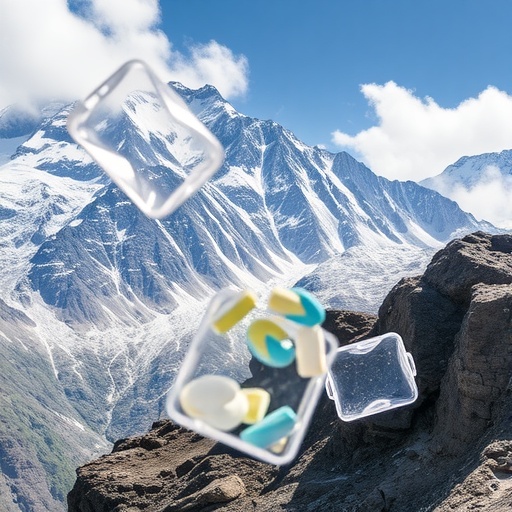
In an unprecedented examination of microplastic contamination, the research conducted by Ayoub, Ara, and Lone provides a comprehensive overview of the pervasive presence of microplastics in the Himalayan environment. These minuscule plastic particles, often less than five millimeters in diameter, are emerging as serious pollutants, affecting the most pristine ecosystems on Earth. This report details how microplastics infiltrate this mountainous region through various sources and pathways, creating a complex challenge for environmental monitoring and public health.
As temperatures rise and weather patterns shift due to climate change, the Himalayan region—the ‘third pole’ of the planet—has become increasingly vulnerable to anthropogenic influences. The apex of the world’s tallest peaks is not immune to the adverse effects of plastic pollution, a phenomenon predominantly associated with urban areas. The authors highlight that microplastics are transported from urban centers to remote locations through both atmospheric and hydrological processes, underscoring the vast reach of human-induced pollution.
The review scrutinizes the sources of microplastics that infiltrate the Himalayas, including industrial waste, improper disposal of consumer products, and even the breakdown of larger plastics in various environments. The proximity of river systems that descend from glaciers also plays a pivotal role. These waterways can carry microplastics from populated areas downstream into the pristine mountain ecosystems, thus amplifying the distribution of these contaminants far beyond their source.
One alarming factor outlined in the study is the increasing prevalence of atmospheric deposition as a critical input pathway for microplastics in the Himalayan region. Wind, precipitation, and other meteorological phenomena can transport these particles over vast distances. Consequently, even isolated or remote mountain areas can become repositories for microplastics, raising serious concerns about ecological integrity and potential health risks for local populations.
The authors also emphasize a crucial aspect of microplastic research—the unknowns surrounding the long-term ecological impacts of these pollutants on fragile Himalayan ecosystems. The unique flora and fauna that inhabit these regions may express varying susceptibility to microplastic exposure, leading to unpredictable ecological dynamics. As microplastics are often mistaken for food by smaller organisms, they could enter the food chain, consequently impacting larger terrestrial and aquatic animals, and raising concerns regarding biomagnification and its effects on human health.
Additionally, the review sheds light on the potential pathways for microplastic transport through subsurface mechanisms. The groundwater systems that permeate the Himalayas may serve as conduits for these materials, yet this aspect remains largely understudied. Investigating the subsurface mechanisms for microplastic transport could unveil new dimensions of how these pollutants infiltrate even the most secluded areas.
The societal implications of microplastic pollution cannot be understated. As tourism becomes a vital economic driver in the Himalayan region, the presence of microplastics may pose a threat to local livelihoods. Authentic experiences of nature, which are integral to tourism, are jeopardized by environmental degradation. This calls for urgent actions that prioritize sustainable management of waste and pollution to protect not only the natural beauty of the Himalayas but also the economic and social structures reliant on it.
Research efforts must be steered toward interdisciplinary collaborations, combining atmospheric science, hydrology, and toxicology to devise comprehensive strategies for mitigating microplastic pollution. Policies encouraging reduction, recycling, and proper disposal of plastics are paramount, as they could curtail the continued influx of microplastics into these vulnerable ecosystems.
Moreover, enhancing public awareness is crucial for tackling microplastic pollution. Community engagement in protection and preservation initiatives could empower local populations and foster stewardship over their environment, prompting collective action to combat the issues at hand. Involving local stakeholders in research not only advances understanding but also ensures that the solutions devised are culturally and contextually tailored.
In conclusion, the findings of Ayoub, Ara, and Lone represent a clarion call for action. The research illuminates the urgent need to comprehend the mechanisms, sources, and effects of microplastics in the Himalayan environment. Their review encapsulates the increasing realization that even the highest peaks of the planet are not impervious to human impact.
The gravity of microplastic pollution must transcend scientific discourse and enter public consciousness, propelling policymakers into decisive action. Innovative approaches, community involvement, and rigorous research are vital to safeguard the Himalayan environment, ensuring that its ecological health and biodiversity are preserved for generations to come.
As the global community confronts the daunting implications of plastic pollution, the study serves as a pivotal contribution to our understanding of how even the most remote areas of the world are affected. It reminds us that environmental stewardship must extend to all corners of the globe, advocating for a future where pristine ecosystems can thrive free from human-induced pollutants.
Ayoub, I.B., Ara, S. & Lone, S.A. Microplastics in the Himalayan environment: a review of sources, atmospheric inputs, and subsurface pathways.
Environ Monit Assess 197, 1020 (2025). https://doi.org/10.1007/s10661-025-14447-y
Cite Scienmag News
Violet Maxwell. (August 26, 2025). Microplastics in the Himalayas: Sources and Pathways. Scienmag. https://scienmag.com/microplastics-in-the-himalayas-sources-and-pathways/
Violet Maxwell. "Microplastics in the Himalayas: Sources and Pathways." Scienmag, 26 August 2025, https://scienmag.com/microplastics-in-the-himalayas-sources-and-pathways/. Accessed 4 September 2026.
Violet Maxwell. "Microplastics in the Himalayas: Sources and Pathways." Scienmag. August 26, 2025. https://scienmag.com/microplastics-in-the-himalayas-sources-and-pathways/


