


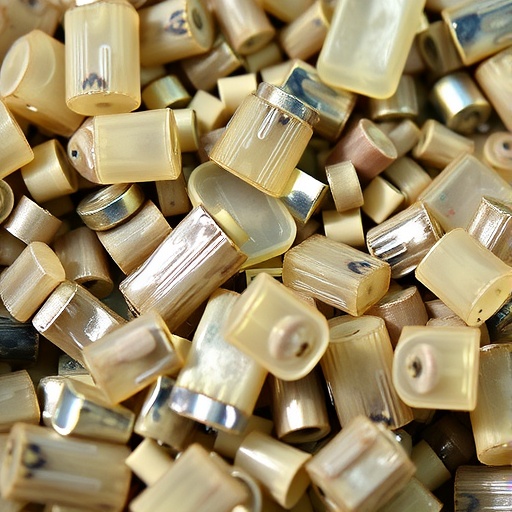
Microplastics have been found buried at every depth sampled in the mangrove sediments of Northern Aceh, Indonesia, according to a new study that provides one of the most detailed pictures yet of how plastic pollution is distributed vertically through tropical mangrove soils and how that distribution is governed by the physical texture of the sediment itself. The research, published in Environmental Science and Pollution Research, documents microplastic concentrations ranging from 210 to 440 items per kilogram of dry sediment across eight mangrove areas, with the highest loads concentrated in the topmost 10 centimeters of the sediment column.
Mangrove forests occupy a unique and precarious position at the land–sea interface. Their tangled root systems trap sediments, dissipate wave energy, and provide nursery habitat, food sources, and spawning grounds for a vast array of aquatic organisms, from juvenile fish to commercially important crabs and bivalves. Because mangrove sediments are simultaneously depositional and retentive, these forests act as natural traps for particles carried in by tides and rivers, and plastics are no exception. Previous work has established that mangrove ecosystems can sequester enormous quantities of plastic debris, but comparatively few studies have examined how microplastics, particles smaller than five millimeters, are distributed with depth, and fewer still have linked that vertical distribution to sediment grain size in a rigorous statistical framework.
The research team, led by Ilham Zulfahmi of Prince of Songkla University in Thailand and Universitas Syiah Kuala in Indonesia, together with Siriporn Pradit and colleagues from institutions in Thailand, China, Bangladesh, and Australia, set out to fill that gap. The team collected a total of 40 sediment samples from eight mangrove sites across Northern Aceh, a province on the northern tip of Sumatra whose coastline was reshaped by the 2004 Indian Ocean tsunami and whose mangroves have since been the focus of extensive restoration efforts. At each site, samples were taken from five distinct sediment layers, allowing the researchers to construct depth profiles of contamination rather than relying solely on surface grab samples, which capture only the most recent layer of deposition.
The analytical workflow followed established protocols for microplastic extraction and identification. Organic matter in the sediment was digested, microplastics were separated by density, and the recovered particles were examined under a microscope for counting and morphological characterization. Polymer identification was carried out using Fourier-transform infrared spectroscopy, or FTIR, a technique that matches the infrared absorption fingerprint of each particle against reference spectra of known polymers. The authors acknowledge support from the Science and Technology Research Partnership for Sustainable Development in Japan and the Japan International Cooperation Agency, which provided access to the FTIR equipment used in the measurements.
The results paint a consistent and in some respects troubling picture. Microplastic abundance across the sampling areas ranged from 210 to 440 items per kilogram of dry weight, confirming that even relatively remote mangrove forests in Northern Aceh carry a substantial contamination burden. Statistically significant differences emerged between sediment layers: concentrations were markedly higher in the upper layer, between 0 and 10 centimeters, than in the deeper strata below, a pattern the authors report as significant at the p < 0.05 level. This surface enrichment is consistent with ongoing, active deposition of plastics, suggesting that inputs have accelerated in recent decades in step with global plastic production and regional waste management challenges. Indonesia is among the world’s largest sources of plastic entering the ocean, and the archipelago has also become a destination for international plastic waste trade, compounding domestic generation.
The physical characteristics of the recovered particles offered clues to their origins. The majority of microplastics were smaller than 500 micrometers, and most were black in color and fragment-shaped rather than fiber-like or film-like. Black fragments of this size are typically secondary microplastics, produced when larger plastic items break apart under mechanical abrasion, ultraviolet radiation, and thermal stress. Their dark coloration may reflect weathered material, tire wear particles, or carbon-pigmented plastics. The polymer composition was dominated by polyethylene and polypropylene, the two most widely produced plastics on Earth and the mainstays of packaging, bags, containers, and fishing gear. Nylon and polystyrene were also identified in smaller quantities, pointing to contributions from fishing lines, nets, and expanded foam products.
Perhaps the most novel contribution of the study lies in its analysis of the relationship between microplastic abundance and sediment grain size. Using standard granulometric classification, the researchers measured the proportions of different particle size fractions in each sample, from coarse granules down through very fine sand and clay. Microplastic abundance showed significant correlations with several of these fractions, particularly with granules, very fine sand, and clay. The relationship with clay was notably inverse: a significant negative correlation was observed between microplastic concentration and the percentage of clay in the sediment.
This pattern carries mechanistic weight. In hydrodynamic terms, microplastics behave much like sediment particles of comparable size and density, and their settling and retention depend on local flow energy and substrate texture. Coarser sediments, such as those rich in granules and sand, typically accumulate in higher-energy zones where fragments and buoyant polymers that have been fouled or biofouled can become lodged between grains. Fine clay, by contrast, tends to dominate quiet, low-energy mudflats where the organic-rich, cohesive matrix may influence particle capture differently, and where microbial and geochemical conditions can alter microplastic surface properties. The negative correlation with clay suggests that in these Acehnese mangroves, the finest, most cohesive sediments are not the primary reservoirs of microplastic contamination, a finding that runs counter to some assumptions drawn from other coastal systems and underscores the importance of site-specific sedimentology when assessing pollution hotspots.
The ecological implications are considerable. Mangrove sediments are intensively bioturbated by crabs, mudskippers, and burrowing invertebrates, organisms that ingest sediment particles as they feed and excavate. Particles smaller than 500 micrometers fall squarely within the size range that many benthic and suspension-feeding animals can readily ingest, and studies elsewhere have documented microplastic uptake by mangrove crabs, bivalves, and fish, with consequences for growth, filtration rates, immune function, and reproduction. Because mangroves serve as nursery grounds for commercially harvested species, contamination lodged in the upper sediment layers, where biological activity is most intense, represents a direct pathway into coastal food webs. Microplastics can also act as vectors for other pollutants, adsorbing heavy metals, polycyclic aromatic hydrocarbons, and persistent organic contaminants from seawater and releasing them in the gut environments of the animals that swallow them.
The vertical dimension of the findings also matters for how mangrove carbon storage and pollution are managed together. Mangroves are celebrated as blue carbon ecosystems, burying organic carbon in their sediments over centuries. The same depositional processes that sequester carbon also sequester plastics, effectively archiving the history of plastic pollution in layered strata. Deep layers in similar studies elsewhere in Southeast Asia have contained microplastics consistent with the onset of industrial plastic production, and Aceh’s sediments are likely no different. As mangrove restoration accelerates across Indonesia as part of climate mitigation and coastal protection programs, the new results suggest that restored forests will continue to intercept and bury plastics, making sediment contamination a long-term legacy issue rather than a transient one.
The authors emphasize that the correlation between grain size and microplastic abundance provides a practical tool for monitoring. Rather than sampling every mangrove stand exhaustively, managers could use sediment texture maps to predict where microplastics are most likely to accumulate, focusing surveillance and cleanup efforts on coarser, sandy or granular substrates near population centers and river mouths. The study also adds Northern Aceh to a growing map of microplastic research across Southeast Asian mangroves, from southern Thailand and Malaysia to Vietnam and the Philippines, where comparable depth profiles and polymer signatures have been documented.
For now, the message from the Acehnese mud is unambiguous: plastics are not merely floating on the water’s surface or snagged in the roots above it. They have worked their way into the very fabric of the forest floor, layered into sediments that will hold them for decades or centuries. With surface concentrations still rising and the smallest, most bioavailable particles predominating, the study’s authors and colleagues in the field argue that reducing plastic inputs at the source, through improved waste management, restrictions on single-use plastics, and better handling of fishing gear, remains the only intervention that can slow the steady burial of plastic in one of the ocean’s most productive and protective ecosystems.
Cite Scienmag News
Violet Maxwell. (September 9, 2026). Microplastics in Northern Aceh mangrove sediments: abundance, distribution, and grain size links. Scienmag. https://scienmag.com/microplastics-in-northern-aceh-mangrove-sediments-abundance-distribution-and-grain-size-links/
Violet Maxwell. "Microplastics in Northern Aceh mangrove sediments: abundance, distribution, and grain size links." Scienmag, 9 September 2026, https://scienmag.com/microplastics-in-northern-aceh-mangrove-sediments-abundance-distribution-and-grain-size-links/. Accessed 9 September 2026.
Violet Maxwell. "Microplastics in Northern Aceh mangrove sediments: abundance, distribution, and grain size links." Scienmag. September 9, 2026. https://scienmag.com/microplastics-in-northern-aceh-mangrove-sediments-abundance-distribution-and-grain-size-links/


