


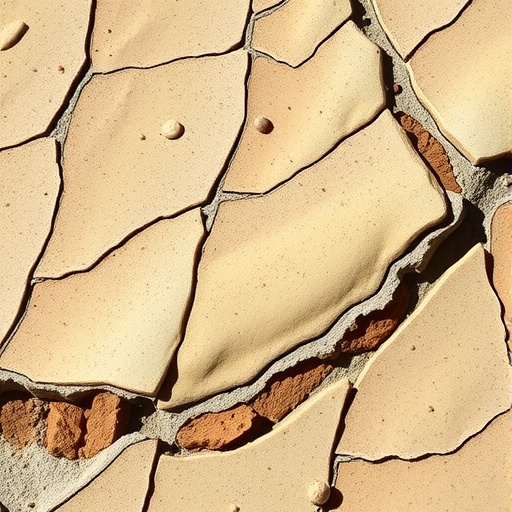
In the arid expanses of Syria, a groundbreaking study has offered unprecedented insights into ancient human behavior, specifically focusing on resource utilization and plaster manufacturing during the final stages of the Pre-Pottery Neolithic B (PPNB) period. Researchers led by Sisa-López de Pablo and colleagues turned their attention to the site of Qdeir, where micromorphological analysis of floor sequences presents a fascinating glimpse into the lives of those who inhabited this region thousands of years ago. The findings revelate not just the materials available to these early agricultural communities but also their innovative techniques and social behaviors.
The investigation centers on the importance of plaster as both a building material and a decorative medium in the PPNB era. This study meticulously examines floor sequences at the Qdeir site, where remnants of plastered surfaces provide clues about the manufacturing processes and the resources that were available to the inhabitants. By employing micromorphological techniques, the researchers could analyze the composition and structure of the plaster used, revealing critical information about how these early people interacted with their environment.
One of the most intriguing aspects of the study is the juxtaposition of the technological advancements in plaster production with the challenges posed by the arid steppe environment. The researchers found that the inhabitants displayed remarkable adaptability, sourcing local raw materials effectively to create plaster suitable for various applications. This suggests a sophisticated understanding of resource management and craft specialization that could have had significant social implications within their communities.
The study also highlights the sheer variety of materials utilized in plaster manufacture. Fine-grained clays, calcite, and other minerals were identified as key components, showcasing a diverse palette that early humans in the region exploited. This not only speaks to their environmental knowledge but also to their ability to manipulate these materials to meet their functional and aesthetic needs. The analytical techniques employed, including thin section petrography, provide solid evidence of the craftsmanship behind plaster production.
Plaster has long been recognized as an important marker of social status and cultural identity in various ancient societies. In the context of Qdeir, the study raises questions about the social hierarchy and communal activities surrounding plaster production. Could the process have involved collective effort? The evidence suggests that the production of plaster was not merely a mundane task but could have played a role in social cohesion and community identity during the PPNB.
Moreover, the micromorphological analysis extended beyond plaster to encompass the environmental context in which these materials were sourced. Soil compositions were investigated, detailing how the inhabitants may have altered their immediate environment to facilitate the extraction and preparation of plaster. Such adaptive strategies could shed light on broader environmental management practices among prehistoric communities in arid conditions.
The significance of these findings extends beyond the specifics of plaster manufacture. It illustrates a more complex narrative of how early humans thrived in challenging environments, showcasing their resilience and ingenuity. Particularly, the awareness of calcification processes and those employed in the plaster-making uniquely positions the community at Qdeir as sophisticated users of their environment, pushing the boundaries of survival and cultural expression.
Furthermore, the intricate relationships between resource availability, technological advancement, and social dynamics form a critical area of understanding in archaeological sciences. The research team has opened pathways for future studies, suggesting that other PPNB sites across the region may yield similar insights. Exploring these relationships in various contexts can refine our understanding of early human societies and their developments.
As the study continues to echo through the fields of archaeology and anthropology, it emphasizes the importance of interdisciplinary methodologies. Implementing advanced techniques such as micromorphology allows for a nuanced exploration of archaeological materials, often revealing stories hidden in the minutiae of ancient artifacts. This is vital not only for reconstructing past environments and societies but also for preserving our understanding of human history.
Moving forward, this research serves as a reminder of the profound interconnectedness between humanity and the environment, a relationship that has significantly shaped our societies. The application of scientific inquiry to archaeological questions can lead us to rediscover the influences of geography and resources on cultural evolution. The story of plaster and its manufacture, therefore, becomes a focal point for wider discussions about human adaptability and resilience.
In summary, the study conducted at the Qdeir site in Syria highlights the intricate relationships between resource utilization, craftsmanship, and community identity in ancient societies. The micromorphological analysis offers vital insights into plaster manufacture and its implications for understanding early agricultural communities. As these researchers delve into the past, they unravel narratives that connect us to our ancestors, shedding light on the developmental arcs that have framed human civilization over millennia. The findings serve as an important piece of the puzzle that illustrates how our predecessors navigated the complexities of their environment, leaving an indelible mark on the story of human progress.
Cite Scienmag News
Courtney Benton. (December 14, 2025). Micromorphological Insights on Plaster Use in Arid Steppe. Scienmag. https://scienmag.com/micromorphological-insights-on-plaster-use-in-arid-steppe/
Courtney Benton. "Micromorphological Insights on Plaster Use in Arid Steppe." Scienmag, 14 December 2025, https://scienmag.com/micromorphological-insights-on-plaster-use-in-arid-steppe/. Accessed 4 September 2026.
Courtney Benton. "Micromorphological Insights on Plaster Use in Arid Steppe." Scienmag. December 14, 2025. https://scienmag.com/micromorphological-insights-on-plaster-use-in-arid-steppe/


