


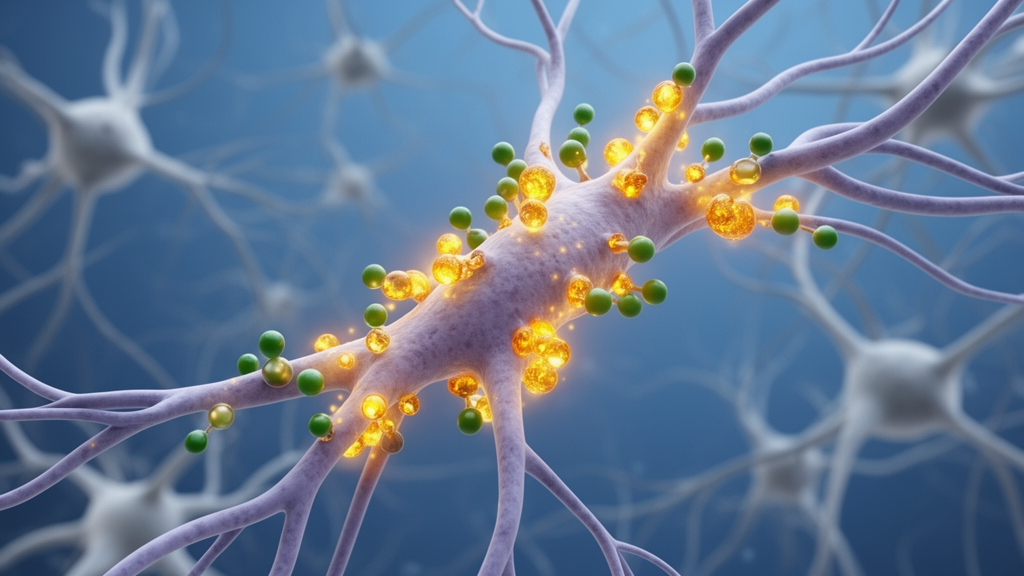
In the middle of a global opioid epidemic, cannabis is winning medical and recreational approvals at a remarkable pace, and scientists are racing to understand how the body’s opioid and cannabinoid systems actually interact. A new study published in Advances in Drug and Alcohol Research has taken one of the most direct approaches yet, genetically removing key receptors from specific cell types in the mouse brain and measuring what happens to pain sensitivity and inflammatory signaling. The results reveal that microglia, the brain’s resident immune cells, may be far more important for pain processing through the CB2 cannabinoid receptor than researchers had fully appreciated, and that deleting the mu-opioid receptor triggers a distinctive pro-inflammatory shift in two critical brain regions.
The research team, led by Berhanu Kibret of the University of Maryland Baltimore and Emmanuel S. Onaivi of William Paterson University, set out to test a deceptively simple hypothesis: that the mu-opioid receptor (MOR) and the CB2 cannabinoid receptor (CB2R) produce distinct behavioral and cytokine alterations tied to their roles in inflammation. Both receptors belong to the G protein-coupled receptor superfamily and share strikingly similar signaling machinery. When activated, each inhibits cyclic AMP production through Gi-alpha coupling, activates MAP kinase pathways, and suppresses neurotransmitter release by curbing calcium influx while promoting potassium efflux. Yet despite this pharmacological kinship, the two systems occupy different cellular niches, and the new work demonstrates that those niches matter enormously for how pain and neuroimmune signals are processed.
To disentangle the contributions of each receptor, the researchers used an elegant panel of genetically modified mice. Alongside ordinary wild-type C57BL/6J animals, they studied MOR knockout mice lacking the mu-opioid receptor entirely, plus two conditional knockout lines engineered in their own laboratory. In the DAT-Cnr2 conditional knockouts, CB2 receptors were deleted specifically from dopamine neurons, while in the CX3CR1-Cnr2 conditional knockouts the same receptor was removed from microglia. The deletions were confirmed by genotyping and RNAscope in situ hybridization, ensuring that the receptor loss occurred precisely where intended. All experiments used adult male mice housed under standardized conditions, with behavioral testing performed by experimenters blinded to genotype and cage labels coded by an independent laboratory member until all measurements were complete.
Pain sensitivity was assessed with the tail-flick test, a classic assay in which radiant heat is applied near the tip of the tail and the latency to withdrawal is recorded, with a 12-second cutoff to prevent tissue damage. The results produced a clear standout. Mice lacking CB2 receptors in microglia showed significantly longer tail-flick latencies than both wild-type controls and the dopamine-neuron conditional knockouts, indicating reduced nociceptive sensitivity. The MOR knockout mice also displayed elevated latency, though the effect did not reach the same statistical strength. Because the genotype effect was significant overall, the findings underscore just how much targeted Cnr2 expression in different cell types can reshape pain perception.
The authors are careful to note that the increased latency in microglial CB2 knockouts should not be interpreted purely as enhanced analgesia. The tail-flick response is a spinally mediated reflex that can be modulated by factors beyond the nociceptive threshold itself, including motor responsiveness, stress reactivity, and microglial influences on sensorimotor integration. Given that CB2 receptors regulate microglial activation and cytokine signaling, the altered latency may reflect broader neuroimmune effects rather than a clean analgesic phenotype. Still, the contrast between the two conditional knockout lines is telling: microglial CB2 signaling appears to play a more pivotal role in thermal nociception than CB2 expression in dopaminergic neurons, a distinction that had not been systematically examined before.
After the behavioral testing, the team quantified inflammatory signaling molecules in two brain regions, the prefrontal cortex and the cerebellum, using enzyme-linked immunosorbent assays for the cytokines IL-1α, IL-1β, IL-6, IL-10, and IFN-γ, along with the chemokine CXCL10. Brain tissue was flash-frozen, dissected, homogenized, and analyzed in duplicate with absorbance read at 450 nanometers. Statistical analysis employed one-way ANOVA for the behavioral data and two-way ANOVA for the cytokine assays, with genotype and brain region as factors, followed by Tukey’s post hoc comparisons where appropriate.
The cytokine results painted a picture of genotype- and region-specific immune dynamics. In MOR knockout mice, levels of IL-1β and IL-6 were significantly elevated compared with wild-type animals, a pro-inflammatory shift consistent with prior reports that MOR deletion enhances glial activation and cytokine release. These two cytokines are key mediators of neuroimmune responses, and their rise may represent compensatory immune activation in the absence of MOR-mediated inhibitory signaling. Significant differences between the cerebellum and prefrontal cortex also emerged for IL-1α, IFN-γ, IL-10, and CXCL10, highlighting the spatial heterogeneity of neuroimmune regulation across the brain. Notably, CX3CR1-Cnr2 mice showed increased tail-flick latency without a parallel increase in the classical pro-inflammatory cytokines, suggesting that microglial CB2 deletion influences nociception through mechanisms other than straightforward cytokine upregulation.
The regional findings carry their own significance. The prefrontal cortex is well established as a hub for pain modulation, and the cerebellum, long known for motor coordination, is increasingly recognized as a participant in pain processing, with activation in specific lobules linked to nociceptive signaling, fear conditioning, and sensory integration. CXCL10, an interferon-gamma-inducible chemokine known to recruit T cells and modulate neuroinflammation, showed differential expression between regions, which the authors interpret as possible region-specific immune surveillance or vulnerability. Meanwhile, elevations of IL-10, an anti-inflammatory cytokine, in certain regions may represent a homeostatic counterbalance to pro-inflammatory signals, a dynamic supported by literature showing that brain cytokine expression is shaped by neural activity and regional microglial phenotypes.
The study arrives at a moment when the therapeutic stakes are unusually high. CB2 receptors have emerged as promising analgesic targets precisely because, unlike CB1 receptors, their activation does not produce psychotropic side effects. In chronic pain states, CB2 expression is upregulated in activated microglia, where it modulates inflammatory responses and dampens nociceptive signaling, and selective CB2 agonists have shown efficacy in preclinical models of neuropathic pain. On the opioid side, MORs are the principal mediators of analgesia for drugs like morphine and fentanyl, but they are also the engine of dependence and overdose risk. Evidence that endogenous opioids and cannabinoids can interact synergistically, with CB2 activation capable of modulating opioid receptor signaling and vice versa, has fueled interest in combination therapies that enhance pain relief while minimizing adverse effects.
The authors acknowledge important limitations. Nociception was assessed only with the tail-flick test, which primarily measures a spinal reflexive withdrawal, so additional assays such as hot-plate, von Frey, or Hargreaves tests would be needed to determine whether the effects generalize to supraspinal or mechanical pain modalities. The cytokine analyses used small group sizes of three mice per genotype per brain region, which elevates the risk of both false positives and false negatives, and the team urges that the genotype-specific immune patterns be considered preliminary until confirmed in larger, adequately powered studies. No formal correlation between cytokine levels and behavioral outcomes was performed. Even so, the study’s strengths are substantial: multiple genetically modified mouse lines allowing cell-type-specific dissection of CB2 function, direct comparison with MOR deletion, and integration of behavioral measures with cytokine profiling across two brain regions. Together, the findings deepen understanding of how neuroimmune interactions shape pain physiology and bolster the case that targeting components of the endocannabinoidome and opioid systems could yield a new generation of more effective, more selective analgesics for inflammation-linked chronic pain.
Subject of Research: Cell-type-specific roles of mu-opioid and CB2 cannabinoid receptors in pain behavior and neuroimmune signaling in mice
Article Title: Distinct contributions of mu opioid and CB2 cannabinoid receptors to neuroimmune and behavioral responses
Article References: Kibret, B., Onaivi, E. S., & Sharma, V. (2026). Distinct contributions of mu opioid and CB2 cannabinoid receptors to neuroimmune and behavioral responses. Advances in Drug and Alcohol Research, 6, Article 16646. https://doi.org/10.3389/adar.2026.16646
Image Credits: AI Generated
Keywords: mu-opioid receptor, CB2 cannabinoid receptor, microglia, neuroinflammation, cytokines, tail-flick test, knockout mice, chronic pain, endocannabinoid system, prefrontal cortex, cerebellum, analgesia
Cite Scienmag News
Cassandra Pierce. (October 15, 2026). Microglial Cannabinoid Receptors Emerge as Key Players in Pain and Brain Inflammation. Scienmag. https://scienmag.com/microglial-cannabinoid-receptors-emerge-as-key-players-in-pain-and-brain-inflammation/
Cassandra Pierce. "Microglial Cannabinoid Receptors Emerge as Key Players in Pain and Brain Inflammation." Scienmag, 15 October 2026, https://scienmag.com/microglial-cannabinoid-receptors-emerge-as-key-players-in-pain-and-brain-inflammation/. Accessed 15 October 2026.
Cassandra Pierce. "Microglial Cannabinoid Receptors Emerge as Key Players in Pain and Brain Inflammation." Scienmag. October 15, 2026. https://scienmag.com/microglial-cannabinoid-receptors-emerge-as-key-players-in-pain-and-brain-inflammation/


