


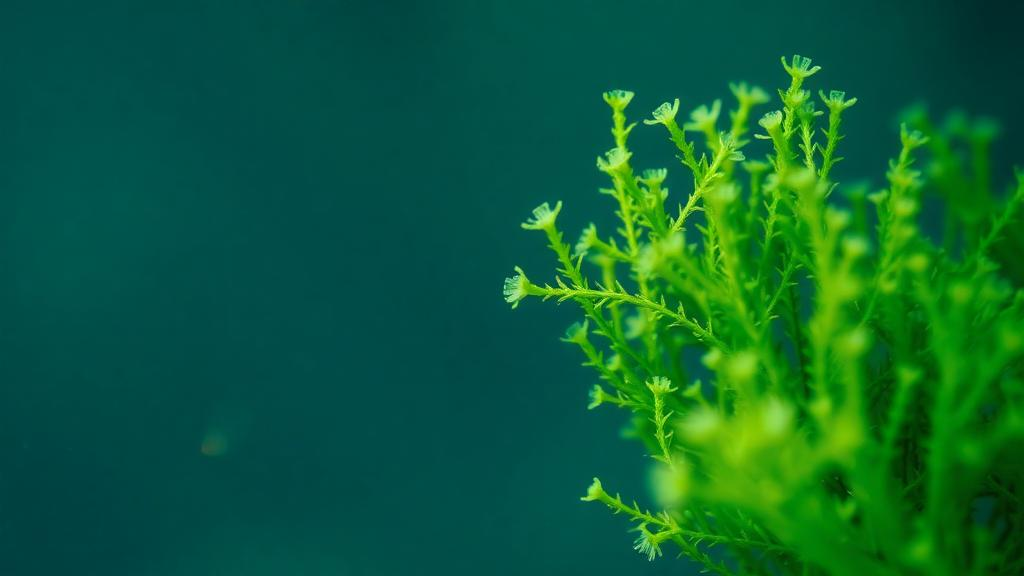
Earth is often called the Blue Planet for good reason: oceans and seas cover 71 percent of its surface and hold 96.5 percent of its water. A comprehensive review published in the journal Blue Biotechnology argues that this vast aquatic realm, and the microscopic organisms living in it, could reshape how humanity produces food, fuel, medicine and clean water. The review, authored by Doris Ying Ying Tang, Cendy Ooi and Pau Loke Show of Khalifa University and the University of Nottingham Malaysia, maps the current state of the microalgae industry and charts a path toward a sustainable blue bioeconomy in which renewable aquatic resources replace fossil-based production. The timing is significant, because the rapid depletion of natural resources and rising carbon dioxide emissions from industrialisation are severely exacerbating climate pressures, and the authors position microalgae biotechnology as a promising approach for ecosystem protection, carbon sequestration and wastewater treatment.
Microalgae are microscopic, usually unicellular or filamentous photosynthetic organisms that thrive in diverse and often harsh aquatic habitats. Compared with terrestrial crops, they offer striking advantages: short multiplication times, no need for arable land, and dry biomass productivity exceeding 100 tonnes per hectare per year. They convert sunlight into chemical energy with an efficiency of around 10 percent, far above the roughly 4.6 percent maximum estimated for C3 terrestrial plants, and they are highly efficient at fixing carbon dioxide. Wild-type algae species have been estimated to reach a maximum photosynthetic efficiency of 8.3 percent, and outdoor cultures supplemented with carbon dioxide have reported annual average efficiencies above 5 percent. Because microalgae contain more chlorophyll per unit area than land plants, they can remove 10 to 50 times more CO2, making them a compelling candidate for carbon capture and storage with high photosynthetic rates, rapid growth, superior environmental adaptation and low operating costs.
The global algae industry has already expanded dramatically, surging from 0.56 million tonnes in 1950 to 35.82 million tonnes in 2019, with more than 97 percent of production coming from Asia. China leads with 57 percent of global output, followed by Indonesia at 27 percent, South Korea at 5 percent and the Philippines at 4 percent. Europe, by contrast, produced 287,390 tonnes in 2019, just 0.8 percent of global output, and less than 1 percent of that came from microalgae. European microalgae are primarily produced on land, with photobioreactors accounting for 71 percent of production, ponds for 19 percent and fermenters for 10 percent. A survey of 447 manufacturing units across 23 countries found that over half produce microalgae or Spirulina, with Germany, Spain, France and Italy leading the sector. The most frequently cultivated species in Europe are Chlorella, Nannochloropsis and Haematococcus pluvialis, and the industry is uniquely positioned to supply high-value products such as nutraceuticals.
The food and health nexus is where microalgae have made their most visible commercial inroads. These organisms are among the healthiest sustainable functional food sources, rich in polyunsaturated fatty acids, vitamins, proteins, minerals, amino acids, pigments and phenolic compounds, with documented antibacterial, antioxidant, anti-inflammatory, antiviral, anti-obesity and anticancer activities. Spirulina, a prokaryotic cyanobacterium grown commercially for over 30 years, has been classified by the World Health Organisation as a health food, and both NASA and the European Space Agency recognise it as a candidate food for long-term space missions. Indigenous populations in Mexico and Africa have consumed it for centuries, crafting cakes known as tecuitlatl and dihe from lakeside harvests. Recent studies show that enriching pasta with 2 to 15 percent Spirulina powder increased protein, antioxidants, iron and calcium without harming texture, while biscuits fortified with 4 percent Spirulina saw protein content rise by 57 percent, and Spirulina-based white chocolate outscored conventional chocolate in sensory acceptance.
Chlorella vulgaris, another green microalga, contains 50 to 60 percent protein by dry weight, with an amino acid profile that meets or surpasses WHO and FAO nutritional standards. Approved species vary by country, reflecting a complex regulatory landscape: in the United States, the FDA grants GRAS status after rigorous testing, while in the European Union, foods not widely consumed before May 1997 are classified as novel foods requiring an EFSA safety assessment. One consumer hurdle is the intense green colour microalgae impart to foods, which the EFSA has addressed by approving two pale-coloured, low-chlorophyll Chlorella powders that are more visually neutral. Meanwhile, Dunaliella salina, a halophilic alga whose beta-carotene content can reach 14 percent of dry weight, supports the world’s largest commercial microalgae facilities, two Australian sites covering nearly 900 hectares. Haematococcus pluvialis supplies astaxanthin, a carotenoid valued at more than USD 240 million annually with a market price around USD 2,000 per kilogram, prized for neutralising singlet oxygen and scavenging free radicals.
Beyond human nutrition, microalgae are reshaping animal feeding and agriculture. Livestock farming demands extensive land and water while emitting considerable greenhouse gases, and algae can partially substitute traditional feed proteins while improving immune function, lipid metabolism, stress resistance and gut health. Over half of all Spirulina produced worldwide is used as a feed additive. In poultry, a 5 to 10 percent algae incorporation can partially replace conventional proteins, and chickens fed with Porphyridium showed egg yolk cholesterol reduced by 10 percent alongside darker, carotenoid-rich yolks. In ruminant studies, supplementing diets with Chlorella vulgaris or Nannochloropsis oculata reduced methane emissions while improving nutrient degradability. In aquaculture, microalgae feed larvae and juvenile fish, raise zooplankton, improve water quality through nutrient removal, and deliver natural omega-3 fatty acids and immunostimulants; shrimp fed with Phaeodactylum tricornutum and Tetraselmis showed significantly lower mortality after pathogen exposure. Microalgae also serve as biofertilisers and biostimulants, a market projected to reach USD 5,377.8 million by 2029 with a compound annual growth rate of 15.2 percent, as companies from Spain to India commercialise algal formulations that fix nitrogen and solubilise phosphorus.
The environmental services of microalgae may prove even more transformative. With global water demand expected to rise 20 to 30 percent by 2050, microalgae-based wastewater treatment offers low cost, low energy consumption, minimal sludge formation and nutrient recovery. One study using seven microalgae species in urban wastewater removed more than 80 percent of dissolved nitrogen and 87 percent of phosphorus. Recent innovations include membrane microalgal-bacterial coupling systems that remove antibiotic residues, a semi-transparent photovoltaic bioreactor that simultaneously treats wastewater, produces lipids and generates over 37 kWh per square metre of electricity, and a modular phototrophic biofilm reactor that cut phosphate by 92 percent and nitrate by 62 percent at an operating aquaculture facility. The French company ZENI is installing photobioreactors at factory wastewater outlets to strip nitrates and phosphates, while researchers at the University of Almería developed the ABACO-2 application to simulate algae-bacteria consortia for economical, odour-free treatment. On the carbon side, modelling studies suggest microalgae could reduce annual CO2 emissions by up to 2.35 gigatonnes, equivalent to 5.31 to 8.01 percent of the global reduction needed in 2020, and artificial intelligence tools such as GA-ANFIS models are being deployed to predict and optimise fixation rates.
Biofuels remain the most contentious frontier. The field spans four generations, from edible crop feedstocks to bioengineered organisms, with microalgae anchoring the third generation as a theoretically carbon-neutral fuel requiring little or no additional land. The US Department of Energy’s Aquatic Species Programme invested roughly USD 25 million between 1978 and 1995, and a subsequent report estimated the United States could produce 152 million tonnes of microalgae biomass annually using 268 million tonnes of CO2, with algal fuel potentially costing less than USD 4 per gallon gasoline equivalent when co-produced with algal protein. Yet the sector’s history is cautionary: Japan invested over USD 117 million in enclosed bioreactors that failed on inaccurate cost forecasts, and ExxonMobil eventually withdrew from its high-profile partnership. New momentum is building around sustainable aviation fuel, with Viridos securing USD 25 million from Breakthrough Energy Ventures, United Airlines Ventures and Chevron, Malaysia planning a 10,000-acre biorefinery in Sarawak targeting 100,000 barrels of crude algae oil per day by 2030, and Cepsa partnering with the Instituto Tecnológico de Canarias on a project aiming for 2.5 million tonnes of annual biofuel capacity with up to 90 percent lower CO2 emissions than conventional fuels.
Bioplastics complete the portfolio. Packaging accounts for roughly 40 percent of plastic use, and an estimated 24 to 34 million metric tonnes of plastic waste enter aquatic ecosystems each year. Microalgae synthesise starch, cellulose and polyhydroxyalkanoates that can be processed into biodegradable materials without competing with food crops. Researchers have produced antimicrobial films from Scenedesmus obliquus extracts blended with polyurethane and converted high-purity Chlorella starch into softer, more ductile thermoplastic starch than commercial potato-based equivalents. Startups and consortia from Indonesia to Sweden, including the EU-funded NENU2PHAR project and Umeå University’s Waste2Plastic initiative, are pushing toward industrial scale, though extensive life cycle assessment work is still needed. The review’s authors are candid about the obstacles: biomass production costs range from EUR 290 to EUR 587 per kilogram dry weight, microalgae-based carbon capture costs USD 800 to 1,600 per tonne, and a survey of 3,048 Spanish consumers found that roughly 85 percent lacked information about microalgae as food. Their prescription combines artificial intelligence and machine learning for cultivation optimisation, genetic engineering of high-value strains, biorefinery concepts that valorise every fraction of biomass, workforce training through initiatives such as the Algae Technology Educational Consortium, and coordinated policy support under the European Green Deal. If those pieces align, the authors conclude, these ancient photosynthetic cells could anchor a circular economy that feeds people, powers aircraft and cleans the planet’s water simultaneously.
Subject of Research: The role of microalgae biotechnology in advancing a sustainable blue bioeconomy
Article Title: Blue bioeconomy and biotechnology: towards a sustainably growing microalgae industry
Article References: Tang, D. Y. Y., Ooi, C., & Show, P. L. (2025). Blue bioeconomy and biotechnology: towards a sustainably growing microalgae industry. Blue Biotechnology, 2(1), Article 13. https://doi.org/10.1186/s44315-025-00036-8
Image Credits: AI Generated
DOI: 10.1186/s44315-025-00036-8
Keywords: microalgae, blue bioeconomy, biotechnology, carbon capture, wastewater treatment, biofuels, nutraceuticals, animal feed, bioplastics, circular economy, photobioreactors, sustainability
Cite Scienmag News
Sloane Callahan. (October 2, 2026). Microalgae emerge as the engine of a sustainable blue bioeconomy. Scienmag. https://scienmag.com/microalgae-emerge-as-the-engine-of-a-sustainable-blue-bioeconomy/
Sloane Callahan. "Microalgae emerge as the engine of a sustainable blue bioeconomy." Scienmag, 2 October 2026, https://scienmag.com/microalgae-emerge-as-the-engine-of-a-sustainable-blue-bioeconomy/. Accessed 4 October 2026.
Sloane Callahan. "Microalgae emerge as the engine of a sustainable blue bioeconomy." Scienmag. October 2, 2026. https://scienmag.com/microalgae-emerge-as-the-engine-of-a-sustainable-blue-bioeconomy/


