


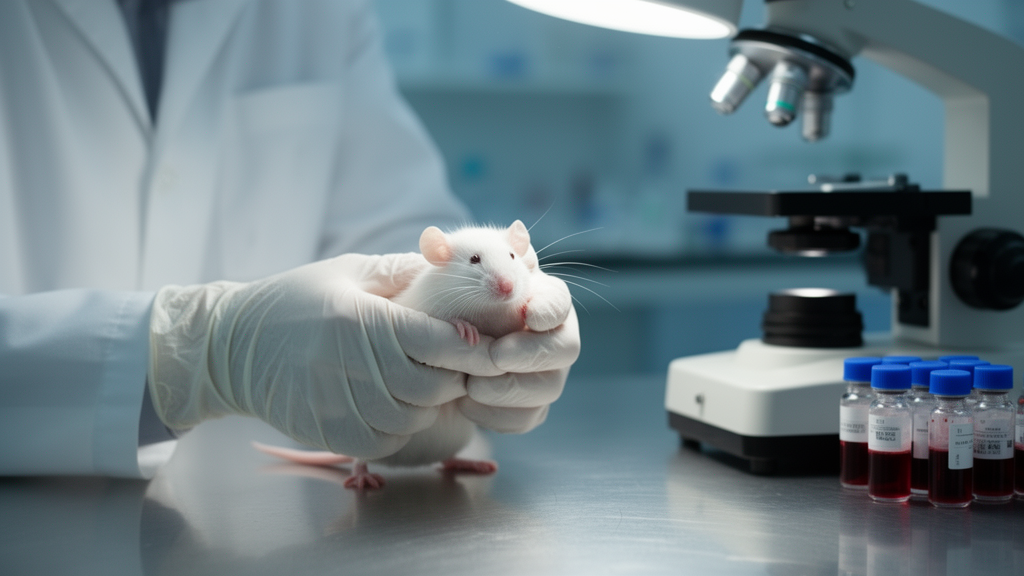
Malaria still kills roughly 600,000 people every year, most of them children under the age of five, and a large share of those deaths are caused by cerebral malaria, a devastating complication of Plasmodium falciparum infection. Even when anti-malarial drugs are administered promptly, cerebral malaria proves fatal in about 18 percent of cases, and a quarter of survivors are left with permanent neurological damage. Now, a team at New York University School of Medicine has shown that two proteins previously identified as candidate biomarkers of cerebral malaria in children behave in mice much as they do in humans, a finding that could accelerate the search for an early diagnostic test for one of tropical medicine’s most elusive killers.
The challenge that the researchers, led by Ana Rodriguez, set out to address is deceptively simple to state: cerebral malaria cannot currently be diagnosed before neurological signs appear. The clinical criteria used by the World Health Organization require a Blantyre coma score of two or less together with detectable parasites in peripheral blood, but malaria coma is clinically indistinguishable from other lethal infections such as bacterial meningitis. The consequences of this diagnostic uncertainty are stark. An autopsy study found that 23 percent of children diagnosed with cerebral malaria according to WHO criteria lacked the characteristic sequestration of infected erythrocytes in brain vessels, and an alternative cause of death was identified for each of them. Meanwhile, as many as half of children in endemic areas carry circulating parasites without any symptoms, further muddying the picture.
This diagnostic fog has a direct biological cost. Because cerebral malaria is only identified after the presentation of neurological signs, treatment success drops dramatically, and more than half of children with severe malaria die at the community level without ever reaching adequate healthcare. It also precludes the collection of early patient samples, which is precisely what would be needed to identify biomarkers that predict which children with apparently uncomplicated malaria will go on to develop the cerebral complication. The identification of such prognostic markers would require the analysis of thousands of samples from the early, uncomplicated stage of infection, a logistical burden that has so far proved insurmountable.
To work around this obstacle, the NYU team turned to the mouse. Infection of C57BL/6J mice with Plasmodium berghei ANKA induces experimental cerebral malaria, or ECM, with severe neurological signs appearing six to seven days after infection, while infection with the related P. berghei NK65 strain produces steadily rising parasitemia without neurological complications. The researchers infected four-to-six-week-old mice by intraperitoneal inoculation of 3.5 x 10^5 infected erythrocytes, scored them daily for signs of cerebral malaria using a modified Waknine-Grinberg chart, and collected tiny 12-microliter blood samples by tail vein puncture at intervals throughout the infection. Parasitemia was quantified microscopically from Giemsa-stained smears, and plasma concentrations of the two candidate biomarkers, Angiopoietin-2 and Angiopoietin-like 4, were measured by commercial ELISA at dilutions of 1/40 and 1/100 respectively.
The two proteins were not chosen arbitrarily. Angiopoietin-2 is the most solidly established candidate biomarker for cerebral malaria in humans and has already been used in clinical trials, though it still fails to meet requirements for adequate sensitivity, specificity, and reproducibility between different cohorts. Angiopoietin-like 4 emerged from a different search strategy: the team previously screened for proteins secreted by human brain endothelial cells exposed to P. falciparum in vitro, and identified ANGPTL4 as a protein that was elevated in a cohort of African children with cerebral malaria compared to other severe malaria complications. The logic was that a biomarker secreted specifically by brain endothelial cells in response to the parasite, rather than by the general inflammatory response to infection, would be more specific for cerebral malaria than broad markers of endothelial activation.
The results confirmed that both proteins are significantly elevated in the plasma of infected mice, mirroring findings in human malaria patients. But the more revealing analysis came when the researchers compared the two parasite strains. In mice infected with P. berghei NK65, the non-cerebral strain, the levels of both ANG2 and ANGPTL4 correlated directly with parasitemia, suggesting that the sheer burden of infection drives the increase in these biomarkers during uncomplicated malaria. In mice infected with P. berghei ANKA, however, no such correlation with parasitemia was observed for either biomarker. Instead, ANGPTL4 levels correlated directly with the severity of cerebral malaria as measured by clinical scores, with a Spearman coefficient of 0.41 and a p-value below 0.05, while ANG2 showed a weaker, non-significant association.
The kinetics of ANGPTL4 in the cerebral malaria model were particularly striking. Levels of the protein progressively increased in the plasma of 50 percent of P. berghei ANKA-infected mice after day four, while remaining at lower levels throughout the infection in mice carrying the non-cerebral NK65 strain. Twelve of the fourteen mice infected with the cerebral strain developed severe signs of ECM by days six to eight and were euthanized. The two mice that developed less severe disease and survived past day ten presented low levels of ANGPTL4 over the course of infection, together with lower parasitemia. When the researchers analyzed day-six samples, they found that all mice with ANGPTL4 levels above the maximum value observed in NK65-infected mice, 3,900, died within the next two days. Similar trends were observed for both male and female mice.
The researchers also assessed the prognostic value of the biomarkers by determining whether their levels rose before clinical signs appeared. Using the maximum level of each biomarker in NK65-infected mice as a threshold, they found that three mice for ANG2 and five mice for ANGPTL4 had increased levels at least one day before cerebral malaria scores rose, out of thirteen mice analyzed. The calculated predictive values were 23 percent for ANG2 and 38 percent for ANGPTL4, both below 50 percent. The authors suggest that these moderate predictive values indicate the biomarkers may be most useful for early identification of cerebral malaria in combination with other markers, rather than as standalone diagnostic tools. A broader kinetic screen of human candidate biomarkers in the mouse model could help identify proteins that rise early enough in cerebral infections to serve as true prognostic markers.
The biology underlying ANGPTL4’s association with cerebral malaria severity is consistent with what is known about the protein’s regulation. ANGPTL4 is upregulated in response to hypoxia through the activation of HIF-1, and promotes vascular permeability. Since cerebral malaria is characterized by loss of blood-brain barrier integrity and brain swelling, and hypoxia is a hallmark of the condition, it is plausible that the increase in plasma ANGPTL4 during cerebral malaria is triggered by tissue hypoxia rather than by parasite burden. ANG2, by contrast, is a broad biomarker for diseases with a dysfunctional endothelial component, including cancer and various infections, and is readily released upon endothelial activation induced by inflammatory stimuli, a common feature of multiple infections. ANGPTL4 has also been identified as a candidate biomarker for other endothelial-centered conditions such as sepsis, severe COVID-19, and acute respiratory distress syndrome.
The authors acknowledge several caveats. Mice infected with P. berghei ANKA can develop overlapping lung pathology that could contribute to the elevation of both candidate biomarkers, and ANGPTL4 has been shown to induce pulmonary tissue leakiness in a model of influenza pneumonia. A more significant comparison of mice infected with the cerebral strain that did or did not develop cerebral pathology was not possible because only 14 percent of mice escaped the condition. The authors also note that the weak association between ANG2 and clinical scores in mice, in contrast to strong correlations reported in human studies, may simply reflect the low number of mouse samples compared to human cohorts. Nevertheless, the overall pattern of results, with ANGPTL4 elevated specifically in mice developing cerebral malaria, correlated with disease severity, and independent of parasitemia, closely mirrors previous findings in African children with cerebral malaria. The study, published in Frontiers in Malaria, provides a technical foundation for using mice to investigate the early kinetics and specificity of potential biomarkers for human severe and cerebral malaria, and opens the possibility of screening large panels of candidate proteins in a model where early samples from individual animals that later develop the complication can be readily obtained.
Subject of Research: Specificity and kinetics of human candidate cerebral malaria biomarkers in mice
Article Title: Specificity and kinetics of human candidate cerebral malaria biomarkers in mice
Article References: Gomes, C., Chicas, L., Crotty, K. A., Salzano, I., Tawfiles, D., & Rodriguez, A. (2025). Specificity and kinetics of human candidate cerebral malaria biomarkers in mice. Frontiers in Malaria, 3, Article 1553466. https://doi.org/10.3389/fmala.2025.1553466
Image Credits: AI Generated
DOI: 10.3389/fmala.2025.1553466
Keywords: Specificity, kinetics, human, candidate, cerebral, malaria, biomarkers, mice, scientific research
Cite Scienmag News
Ophelia Keating. (October 17, 2026). Mice Mirror Human Cerebral Malaria Biomarkers in New Study. Scienmag. https://scienmag.com/mice-mirror-human-cerebral-malaria-biomarkers-in-new-study/
Ophelia Keating. "Mice Mirror Human Cerebral Malaria Biomarkers in New Study." Scienmag, 17 October 2026, https://scienmag.com/mice-mirror-human-cerebral-malaria-biomarkers-in-new-study/. Accessed 17 October 2026.
Ophelia Keating. "Mice Mirror Human Cerebral Malaria Biomarkers in New Study." Scienmag. October 17, 2026. https://scienmag.com/mice-mirror-human-cerebral-malaria-biomarkers-in-new-study/


