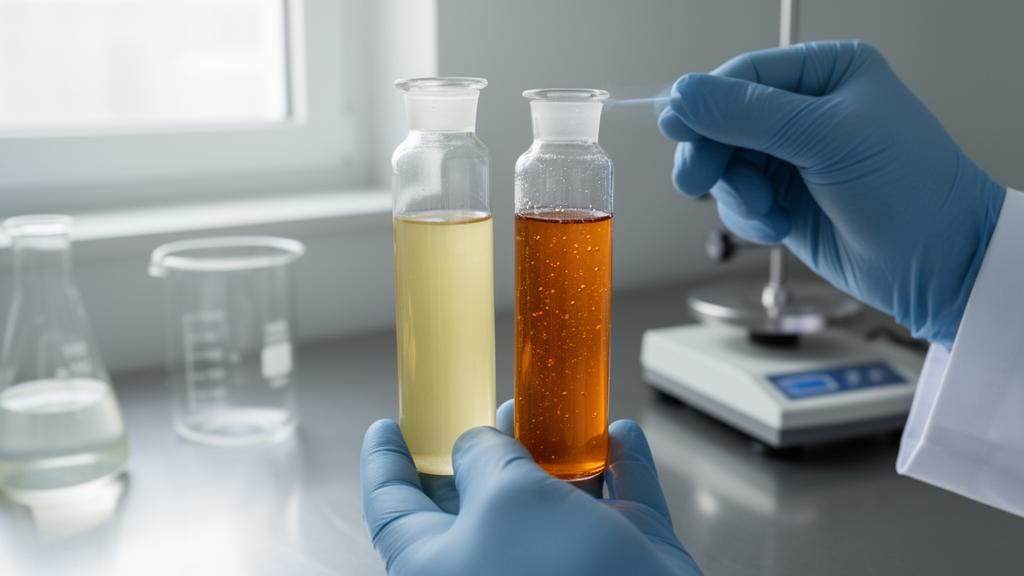
Food emulsions are notoriously fragile mixtures. The vast oil-water interface they contain makes them thermodynamically unstable, so droplets drift toward flocculation, coalescence and sedimentation, while the exposed lipids oxidize and erode flavor and shelf life. Egg white peptides, the enzymatic hydrolysates of egg white protein, have long been considered promising emulsifiers because they adsorb quickly at oil-water interfaces and carry antioxidant and other bioactivities. Yet their small molecular size, low molecular weight, high surface charge density and limited steric bulk restrict how well they pack at the interface, leaving droplets vulnerable to breakdown during storage and gravitational separation.
A study published on 5 February 2026 in the open-access journal Agricultural Products Processing and Storage reports a systematic attempt to fix that weakness. Shanglin Li, Yang Liu and Zhiyang Du constructed assemblies of egg white peptides regulated by a metal-phenolic network, or MPN, formed from zinc ions and the dietary polyphenol quercetin, and then dissected how the network stabilizes oil-in-water emulsions. The team argues that this is the first systematic investigation of MPN-mediated peptide assemblies for emulsion stabilization, addressing a gap the authors identify in interfacial materials research.
The fabrication relied on anti-solvent co-precipitation. Egg white peptide powder was dissolved to 20 mg/mL, while quercetin was dissolved in 75% ethanol and mixed with a zinc solution to form the Zn2+-Que coordination assembly. That solution was added dropwise, at 0.5 mL/min under stirring, into the peptide solution in a 1:1 volume ratio at pH 7.0. Four formulations resulted: the peptide assembly alone (E1), a Zn2+-peptide assembly (E2), a quercetin-peptide assembly (E3), and the full Zn2+-quercetin-peptide assembly (E4). The peptides themselves came from papain hydrolysis of a heat-denatured 5% egg white protein solution held at pH 6.5 and 60 °C for 120 minutes.
Dynamic light scattering showed that the MPN profoundly reshaped the colloidal properties. Hydrodynamic diameters across the series ranged from 150 to 270 nm with polydispersity indices of 0.10 to 0.25, indicating narrow, homogeneous distributions. E4 carried the largest particles at 270 nm, and all assemblies carried negative zeta potentials between −12 and −35 mV, with the plain peptide assembly the most negative at −34.2 mV. The authors attribute the reduced magnitude in E4 to charge shielding by adsorbed Zn2+ and to coordination neutralization, in which zinc bonds to negatively charged peptide groups and to quercetin’s phenolic hydroxyls, shifting the complexes toward their isoelectric point.
Spectroscopy filled in the structural picture. Intrinsic fluorescence at excitation wavelengths of 258, 275 and 295 nm rose for E3 and E4, signaling altered aromatic residue environments and heightened hydrophobicity, while E2’s fluorescence fell, consistent with tighter zinc-induced packing. The ANS probe confirmed that E2, E3 and E4 all had higher surface hydrophobicity than the unmodified peptides. Thioflavin T fluorescence, a diagnostic for β-sheet-rich structures, increased markedly in the composite assemblies, and in E4 the elevated signal plus a red shift near 485 nm pointed to well-ordered β-sheets rather than loose, disordered aggregates. Chemical denaturation assays with NaCl, SDS, DTT and urea traced the assembly forces to coordinated contributions from electrostatic, hydrophobic and hydrogen-bond interactions, with hydrogen bonding contributing minimally to the stability of the zinc-containing assemblies.
Antioxidant performance followed the same pattern. In the DPPH assay, E4 reached 74.2% radical scavenging, exceeding even the ascorbic acid positive control, while E3 managed 56.9% and the peptide and Zn2+-peptide assemblies were comparatively weak. The ABTS assay agreed: E4 cleared 64.3% of the radical. The authors attribute this synergy to quercetin’s phenolic hydroxyl groups donating hydrogen atoms or electrons to terminate radical chain reactions, with Zn2+ modulating quercetin’s electron-transfer activity and acting as a coordination bridge that locks the polyphenol and peptides into a stable architecture.
Those structural gains translated directly into interfacial function. E4 posted the highest emulsifying activity index of all four assemblies, with plain egg white peptides the lowest, and it also showed a markedly higher emulsion stability index. Optical microscopy revealed why: emulsions stabilized by unmodified peptides showed heterogeneous droplets and heavy aggregation, whereas E4-stabilized emulsions displayed markedly smaller, uniform droplets. The proposed mechanism centers on an MPN-like two-dimensional interfacial film in which zinc coordinates with amino acid residues such as histidine and glutamic acid as well as quercetin’s catechol hydroxyls, producing a dense, cohesive membrane reinforced by coordination bonds, hydrogen bonds and π–π stacking that suppresses coalescence and Ostwald ripening.
Stress testing underscored the practical payoff. Fresh E1-stabilized emulsions creamed badly, with a creaming index of 66.7%, while E3 and E4 initially showed no visible phase separation. Only the E4 system maintained negligible creaming over extended storage, registering a creaming index of zero. The E4 emulsion also withstood heating at 70 °C for 60 minutes, freeze-thaw cycling between −20 °C and 37 °C, pH values from 6 to 9, and sodium chloride concentrations up to 150 mmol/L. Under alkaline conditions the β-sheet proportion in the E4 interfacial film increased, yielding a more ordered and robust boundary layer that held up through thermal and freeze-thaw stress.
In vitro digestion added a further twist. Emulsions stabilized by plain egg white peptides were rapidly hydrolyzed in simulated gastric fluid at pH 2.0 and 37 °C, releasing free amino groups quickly as measured by the OPA assay against an L-leucine standard. The MPN-stabilized emulsion showed the greatest resistance to pepsin, with the lowest free amino acid release, which the authors attribute to the dense interfacial film shielding cleavage sites and adding steric hindrance. They note this could suit targeted delivery of acid-sensitive bioactives, though the finding comes from a simulated gastric model rather than human feeding studies.
The authors frame the work as a blueprint for next-generation small-molecule peptide emulsifiers that pair enhanced interfacial activity with steric hindrance, with potential applications in salad dressings, plant-based creams and foods for special medical purposes. As with all in vitro colloid research, the results establish mechanisms and formulation principles at laboratory scale; translating them into commercial products will require validation under real processing and consumption conditions. Still, the demonstration that a simple zinc-quercetin coordination network can simultaneously boost emulsification, antioxidant capacity and digestive resistance gives food colloid scientists a compact, food-grade toolkit worth watching.
Subject of Research: Metal-phenolic network-regulated egg white peptide assemblies for stabilizing food emulsions
Article Title: Construction of egg white peptide assembly regulated by metal-phenolic networks: mechanistic insights into the stabilization of emulsion
Article References: Li, S., Liu, Y., & Du, Z. (2026). Construction of egg white peptide assembly regulated by metal-phenolic networks: mechanistic insights into the stabilization of emulsion. Agricultural Products Processing and Storage, 2(1), Article 31. https://doi.org/10.1007/s44462-026-00067-3
Image Credits: AI Generated
DOI: 10.1007/s44462-026-00067-3
Keywords: egg white peptides, metal-phenolic networks, quercetin, zinc ions, emulsion stability, food colloids, antioxidant activity, interfacial film, in vitro digestion, anti-solvent co-precipitation, beta-sheet assembly, cream index
Cite Scienmag News
Alan Morgan. (October 30, 2026). Metal-Phenolic Networks Turn Egg White Peptides Into Ultra-Stable Emulsifiers. Scienmag. https://scienmag.com/metal-phenolic-networks-turn-egg-white-peptides-into-ultra-stable-emulsifiers/
Alan Morgan. "Metal-Phenolic Networks Turn Egg White Peptides Into Ultra-Stable Emulsifiers." Scienmag, 30 October 2026, https://scienmag.com/metal-phenolic-networks-turn-egg-white-peptides-into-ultra-stable-emulsifiers/. Accessed 4 November 2026.
Alan Morgan. "Metal-Phenolic Networks Turn Egg White Peptides Into Ultra-Stable Emulsifiers." Scienmag. October 30, 2026. https://scienmag.com/metal-phenolic-networks-turn-egg-white-peptides-into-ultra-stable-emulsifiers/