


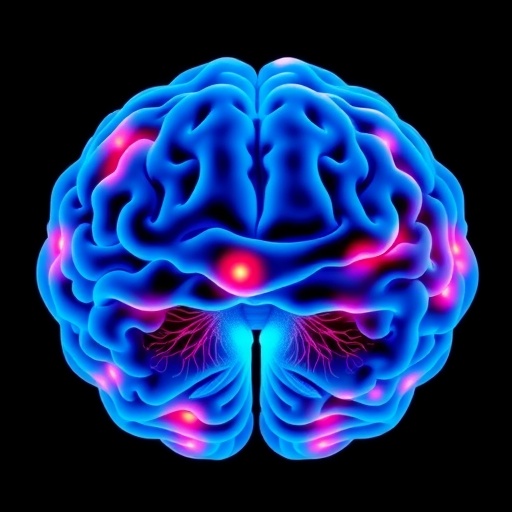
Irritable bowel syndrome has long been described as a disorder of the digestive system, but a new multimodal analysis is strengthening a far more complex view: IBS is also associated with distributed changes across the brain. The study, published in Translational Psychiatry by V.M. Tahamata, T.T. Liao, Y.T. Fan and colleagues, brings together evidence from structural and functional neuroimaging to examine how the brains of people with IBS differ from those without the condition. Rather than locating the disorder in a single “IBS center,” the research points toward a broad brain network involved in sensing the body, processing pain, regulating emotion and predicting internal states.
IBS affects millions of people worldwide and is characterized by recurrent abdominal pain, bloating and altered bowel habits, including diarrhea, constipation or alternating patterns of both. Although the symptoms arise in the gastrointestinal tract, the intensity of discomfort often cannot be explained by visible tissue damage alone. This mismatch has helped drive the development of the “brain-gut axis” concept, which describes continuous two-way communication between the digestive system and the central nervous system. Signals travel through neural pathways, hormones, immune mediators and the gut microbiome, while the brain simultaneously shapes how intestinal sensations are interpreted.
The new study uses a coordinate-based multimodal meta-analysis, a method designed to combine results from multiple neuroimaging investigations. Individual brain-imaging studies often involve relatively small groups of participants and may report different anatomical locations, statistical thresholds or experimental tasks. Instead of simply averaging images, coordinate-based methods collect the three-dimensional locations of significant findings—usually reported in standardized brain spaces—and determine whether these locations converge more often than would be expected by chance. This approach can reveal reproducible patterns that may be difficult to detect in any single experiment.
The “multimodal” aspect is especially important because brain structure and brain function provide different kinds of information. Structural techniques, such as voxel-based morphometry, can identify regional differences in gray-matter volume or concentration. Functional imaging, including task-based or resting-state methods, measures changes related to neural activity or communication between brain regions. A structural alteration does not necessarily mean that a region is working less or more efficiently, and functional differences do not automatically imply anatomical damage. By examining both forms of evidence, the researchers sought to identify areas where the architecture and activity of the brain may be linked to the experience of IBS.
The findings, as indicated by the study’s title, describe IBS-related alterations as distributed rather than isolated. The affected patterns involve systems that help the brain monitor internal bodily signals, evaluate the significance of sensations and coordinate responses to discomfort. These functions are often associated with interoception—the perception of the body’s internal condition—as well as pain processing, emotional regulation and attention. In IBS, ordinary intestinal activity may be detected as unusually threatening or painful, a phenomenon commonly discussed in relation to visceral hypersensitivity. The brain’s interpretation of gut signals may therefore be as important as the signals themselves.
This framework helps explain why the same degree of intestinal stretching or movement can produce very different experiences in different people. The nervous system continuously filters incoming information, compares it with previous experiences and generates predictions about what is likely to happen next. Stress, anxiety, sleep disruption and prior episodes of pain can influence this predictive process. If the brain becomes more vigilant toward bodily sensations, normal digestive events may receive amplified attention and trigger stronger discomfort. The meta-analysis does not reduce IBS to a psychological condition; instead, it supports a biological model in which neural, gastrointestinal and emotional processes interact.
The study’s broader significance lies in its attempt to move the field beyond isolated brain regions and inconsistent imaging results. Previous research has reported changes in areas involved in sensory processing, motivation, executive control and affective responses, but findings have not always agreed. Differences in patient populations, symptom profiles, medication use, disease duration and imaging protocols can produce apparently conflicting outcomes. A coordinate-based synthesis offers a statistical way to identify convergent evidence while also showing that IBS may involve several interconnected systems operating together. Such distributed organization is consistent with the complexity of the condition itself.
The results could eventually influence how IBS is diagnosed and treated, although brain imaging is not yet ready to serve as a routine clinical test for individual patients. A group-level pattern does not automatically provide a reliable biomarker for one person. Even when average differences are statistically significant, there may be substantial overlap between patients and healthy individuals. Future research will need to determine whether the identified neural signatures can predict symptom severity, distinguish IBS subtypes, track treatment response or identify people at risk of persistent symptoms. Longitudinal studies will also be essential for determining whether brain alterations precede IBS, arise as a consequence of chronic symptoms or change in response to treatment.
Clinically, the findings reinforce the value of integrated care. Treatments that target the gut, including dietary strategies and medications, may be most effective when combined with approaches that influence pain regulation and stress physiology. Psychological therapies such as cognitive behavioral therapy, gut-directed hypnotherapy and mindfulness-based interventions are not evidence that symptoms are imaginary; they are tools capable of modifying attention, threat appraisal and communication across the brain-gut network. Physical activity, sleep improvement and carefully selected pharmacological treatments may also affect overlapping pathways. By presenting IBS as a disorder involving distributed brain-body communication, the study could help reduce stigma while encouraging more personalized treatment.
The research ultimately offers a scientific explanation for a frustrating reality experienced by many patients: severe symptoms can exist even when routine gastrointestinal examinations appear normal. The absence of visible structural damage in the intestine does not mean that the disorder lacks a biological basis. Instead, the relevant changes may be distributed across networks that govern sensation, prediction, emotion and bodily regulation. Tahamata, Liao, Fan and their colleagues’ analysis adds weight to the idea that IBS is not confined to the bowel, but emerges from a dynamic conversation between the digestive system and the brain. Understanding that conversation may be one of the most promising routes toward better therapies for a condition that remains common, complex and frequently misunderstood.
Cite Scienmag News
Cassandra Pierce. (August 14, 2026). Meta-analysis reveals widespread brain changes linked to irritable bowel syndrome. Scienmag. https://scienmag.com/meta-analysis-reveals-widespread-brain-changes-linked-to-irritable-bowel-syndrome/
Cassandra Pierce. "Meta-analysis reveals widespread brain changes linked to irritable bowel syndrome." Scienmag, 14 August 2026, https://scienmag.com/meta-analysis-reveals-widespread-brain-changes-linked-to-irritable-bowel-syndrome/. Accessed 4 September 2026.
Cassandra Pierce. "Meta-analysis reveals widespread brain changes linked to irritable bowel syndrome." Scienmag. August 14, 2026. https://scienmag.com/meta-analysis-reveals-widespread-brain-changes-linked-to-irritable-bowel-syndrome/


