

Friday, August 21, 2026
Science
No Result
View All Result
  • Login
  • HOME
  • SCIENCE NEWS
  • CONTACT US
  • HOME
  • SCIENCE NEWS
  • CONTACT US
No Result
View All Result
Scienmag
No Result
View All Result
Home Science News Medicine

Merlin Deficiency Promotes Immunosuppression in Breast Cancer Environment

July 10, 2026
in Medicine
Reading Time: 2 mins read
0
Merlin Deficiency Promotes Immunosuppression in Breast Cancer Environment

Merlin Deficiency Promotes Immunosuppression in Breast Cancer Environment

65
SHARES
587
VIEWS
Share on FacebookShare on Twitter
ADVERTISEMENT

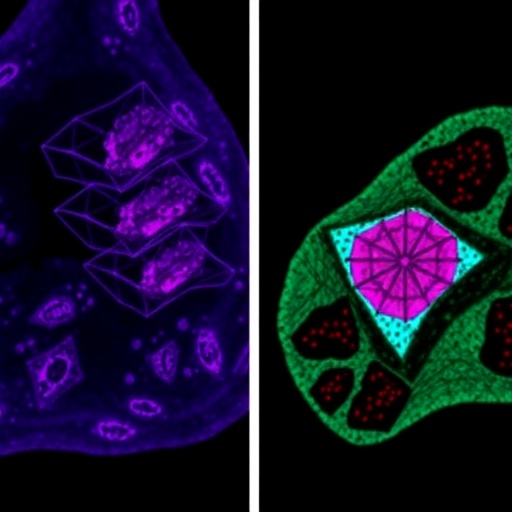
A newly published study from Elbahoty et al. in Cell Death Discovery reveals a compelling connection between Merlin protein deficiency and the creation of an immunosuppressive environment in breast cancer. This groundbreaking insight sheds light on how alterations at the molecular level in tumor cells may actively manipulate the immune system, favoring cancer progression.

Merlin, encoded by the NF2 tumor suppressor gene, has been largely studied in nervous system tumors, but its role in breast cancer has remained relatively unexplored—until now. The research team used advanced molecular and cellular assays to delineate how the loss of Merlin disrupts tumor-immune interactions. Their findings indicate that Merlin deficiency triggers a cascade of immunomodulatory changes contributing to an immune microenvironment less capable of mounting an effective anti-tumor response.

Mechanistically, the absence of functional Merlin appears to encourage the upregulation of specific immune checkpoint molecules and the secretion of cytokines that recruit and activate immunosuppressive cell types. These immune cells, including regulatory T cells and myeloid-derived suppressor cells, create a protective niche for breast tumor cells, effectively shielding them from immune attack. This immunosuppressive milieu not only facilitates tumor survival but could also underlie resistance to conventional immunotherapies.

The study employed sophisticated in vitro and in vivo models to convincingly link Merlin loss with increased tumor aggressiveness and immune evasion. Importantly, reconstitution of Merlin expression reinstated immune sensitivity, highlighting a potential therapeutic avenue. Targeting pathways downstream of Merlin or combining checkpoint blockade with strategies to restore Merlin function might reinvigorate anti-tumor immunity in resistant breast cancers.

These discoveries hold significant clinical implications. Breast cancer remains one of the leading causes of cancer mortality worldwide, and immune evasion is a hallmark of treatment failure. Understanding the molecular determinants that tip the immune balance towards suppression is vital for developing next-generation immunotherapies. Merlin’s role as a central modulator underscores the complexity of tumor-immune dynamics and offers a novel biomarker for patient stratification.

Further exploration is warranted to map out the precise signaling networks and to evaluate whether Merlin deficiency correlates with specific breast cancer subtypes or clinical outcomes. Additionally, integrating Merlin status into existing immunotherapeutic regimens could optimize efficacy and minimize therapeutic resistance.

This study not only deepens our comprehension of breast cancer biology but also propels the field toward more personalized and mechanistically informed treatments. By revealing how the loss of a single tumor suppressor reprograms the immune landscape, it opens exciting avenues for research and therapeutic innovation.

As investigations continue, Merlin emerges not merely as a tumor suppressor but as a pivotal immune modulator, highlighting the intertwined fate of cancer progression and immune regulation.


Subject of Research: The role of Merlin deficiency in shaping the immunosuppressive environment of breast cancer.

Article Title: Merlin deficiency supports an immunosuppressive milieu in breast cancer.

Article References:
Elbahoty, M.H., Metge, B.J., Elhamamsy, A.R. et al. Merlin deficiency supports an immunosuppressive milieu in breast cancer. Cell Death Discov. (2026). https://doi.org/10.1038/s41420-026-03223-7

Image Credits: AI Generated

DOI: https://doi.org/10.1038/s41420-026-03223-7

Tags: breast cancer progression and immune interactionscytokine secretion in cancerimmune checkpoint molecule upregulationimmune evasion in breast cancerimmunosuppressive tumor environmentMerlin protein deficiency in breast cancermolecular mechanisms of tumor immune modulationmyeloid-derived suppressor cellsNF2 tumor suppressor generegulatory T cells in tumor progressionresistance to breast cancer immunotherapytumor immune microenvironment
Share26Tweet16
Previous Post

Key Factors Influencing Depression in Older Adults Revealed by National Study

Next Post

Early-Life Tobacco Exposure Impacts Mental Health and Brain Development Differently by Stage

Related Posts

Deep Learning Precisely Grades Schistosoma japonicum Liver Fibrosis Using Ultrasound Images
Medicine

Deep Learning Precisely Grades Schistosoma japonicum Liver Fibrosis Using Ultrasound Images

August 21, 2026
Study Finds Family Engagement Improves Follow-Up Participation Among High-Risk Infants
Medicine

Study Finds Family Engagement Improves Follow-Up Participation Among High-Risk Infants

August 21, 2026
Insilico’s Alex Aliper to Attend Two Hong Kong Summits on AI Healthcare
Medicine

Insilico’s Alex Aliper to Attend Two Hong Kong Summits on AI Healthcare

August 21, 2026
Nationwide Study Examines Comorbidity Burden Predicting Three-Year Neurodevelopment in Extremely Preterm Infants
Medicine

Nationwide Study Examines Comorbidity Burden Predicting Three-Year Neurodevelopment in Extremely Preterm Infants

August 21, 2026
AI model predicts which patients benefit most from exercise-based cardiac rehabilitation
Medicine

AI model predicts which patients benefit most from exercise-based cardiac rehabilitation

August 21, 2026
Proteomic Atlas Maps Obesity Reversal Across Organs in Male Mice
Medicine

Proteomic Atlas Maps Obesity Reversal Across Organs in Male Mice

August 21, 2026
Next Post
Early-Life Tobacco Exposure Impacts Mental Health and Brain Development Differently by Stage

Early-Life Tobacco Exposure Impacts Mental Health and Brain Development Differently by Stage

  • Mothers who receive childcare support from maternal grandparents show more

    Mothers who receive childcare support from maternal grandparents show more parental warmth, finds NTU Singapore study

    27656 shares
    Share 11059 Tweet 6912
  • University of Seville Breaks 120-Year-Old Mystery, Revises a Key Einstein Concept

    1061 shares
    Share 424 Tweet 265
  • Bee body mass, pathogens and local climate influence heat tolerance

    682 shares
    Share 273 Tweet 171
  • Researchers record first-ever images and data of a shark experiencing a boat strike

    546 shares
    Share 218 Tweet 137
  • Groundbreaking Clinical Trial Reveals Lubiprostone Enhances Kidney Function

    531 shares
    Share 212 Tweet 133
Science

Embark on a thrilling journey of discovery with Scienmag.com—your ultimate source for cutting-edge breakthroughs. Immerse yourself in a world where curiosity knows no limits and tomorrow’s possibilities become today’s reality!

RECENT NEWS

  • How Climate Change Tests the Long-Term Resilience of Power Systems
  • Deep Learning Precisely Grades Schistosoma japonicum Liver Fibrosis Using Ultrasound Images
  • Atopic Dermatitis Phenotypes Linked to Long-Term Body Mass Index Trajectories
  • Study Finds Family Engagement Improves Follow-Up Participation Among High-Risk Infants

Categories

  • Agriculture
  • Anthropology
  • Archaeology
  • Athmospheric
  • Biology
  • Biotechnology
  • Blog
  • Bussines
  • Cancer
  • Chemistry
  • Climate
  • Earth Science
  • Editorial Policy
  • Marine
  • Mathematics
  • Medicine
  • Pediatry
  • Policy
  • Psychology & Psychiatry
  • Science Education
  • Social Science
  • Space
  • Technology and Engineering

Subscribe to Blog via Email

Enter your email address to subscribe to this blog and receive notifications of new posts by email.

Join 5,150 other subscribers

© 2025 Scienmag - Science Magazine

Welcome Back!

Login to your account below

Forgotten Password?

Retrieve your password

Please enter your username or email address to reset your password.

Log In
No Result
View All Result
  • HOME
  • SCIENCE NEWS
  • CONTACT US

© 2025 Scienmag - Science Magazine

Discover more from Science

Subscribe now to keep reading and get access to the full archive.

Continue reading
