


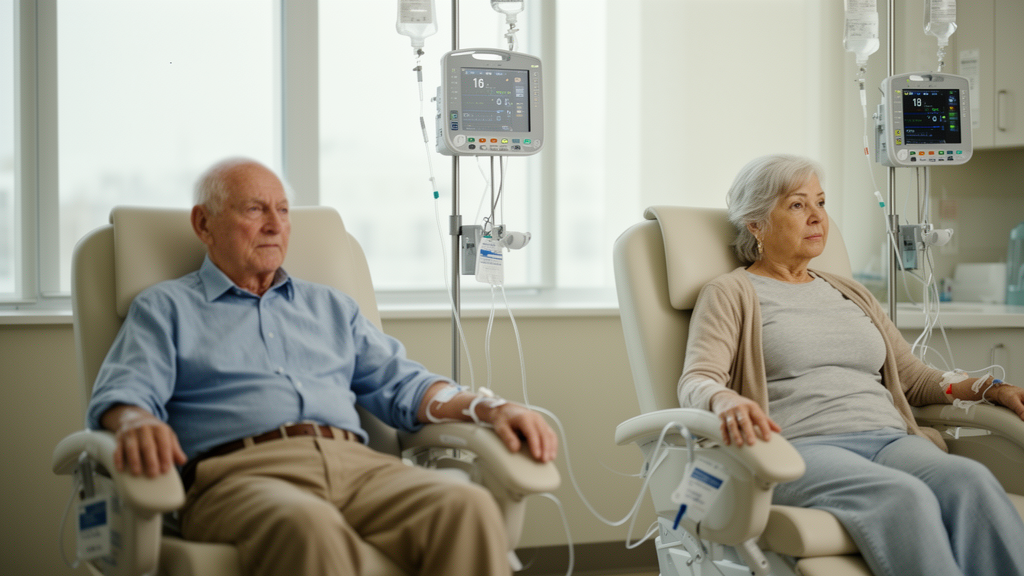
Male patients with metastatic urothelial carcinoma treated with the antibody-drug conjugate enfortumab vedotin showed significantly longer median overall survival and longer time on treatment than female patients, according to a retrospective, international real-world analysis published in Nature Communications on 27 October 2026. The study, led by Tarek Taha and Ithai Waldhorn with an international team of investigators, examined whether sex-based differences documented across other cancer treatments extend to antibody-drug conjugates, a question the authors note had remained unclear.
To explore whether sex differences in the drug’s target might contribute to the outcome gap, the researchers analyzed NECTIN-4 expression in urothelial cancer samples from the TCGA database. They found significantly higher NECTIN-4 expression in tumors from male patients than in those from female patients.
The difference in NECTIN-4 expression remained significant after the researchers adjusted for molecular subtype of the tumor. The analysis further showed that the expression difference was modulated by smoking status and was associated with estrogen pathway activity, suggesting that sex-related hormonal signaling may influence how much of the drug target is present on tumor cells.
The authors caution that these findings are correlational. The clinical results come from a retrospective analysis of real-world patients rather than a randomized trial designed to test sex differences, and the expression findings come from database samples rather than from measurements in the treated patients themselves. The study therefore suggests, but does not prove, that differences in target expression and hormonal signaling contribute to the survival gap.
The researchers conclude that prospective studies should incorporate sex as a biological variable in antibody-drug conjugate research, so that treatment strategies can be optimized for both male and female patients. Because the article is being shared early as a peer-reviewed accepted manuscript, it remains subject to further edits before the final version of record is published.
Subject of Research: Sex-based differences in survival on enfortumab vedotin and NECTIN-4 expression in metastatic urothelial carcinoma
Article Title: Sex-based differences in clinical outcomes of enfortumab vedotin and NECTIN-4 expression in urothelial cancer
Article References: Taha, T., Alpert, A., Baranseh, J., Rizzo, A., Ciccimarra, F., Grande, E., Bellmunt, J., Buti, S., Massari, F., Gupta, S., Monteiro, F. S. M., Kanesvaran, R., Roviello, G., Lolli, C., Ürün, Y., Takeshita, H., Peer, A., Bamias, A., Santoni, M., & Waldhorn, I. (2026). Sex-based differences in clinical outcomes of enfortumab vedotin and NECTIN-4 expression in urothelial cancer. Nature Communications. https://doi.org/10.1038/s41467-026-78988-7
Image Credits: AI Generated
DOI: 10.1038/s41467-026-78988-7
Keywords: enfortumab vedotin, NECTIN-4, urothelial carcinoma, antibody-drug conjugate, sex differences, overall survival, TCGA, estrogen pathway, smoking status, molecular subtype, real-world analysis, metastatic cancer
Cite Scienmag News
Nathaniel Bowman. (October 27, 2026). Men live longer on enfortumab vedotin than women, retrospective analysis finds. Scienmag. https://scienmag.com/men-live-longer-on-enfortumab-vedotin-than-women-retrospective-analysis-finds/
Nathaniel Bowman. "Men live longer on enfortumab vedotin than women, retrospective analysis finds." Scienmag, 27 October 2026, https://scienmag.com/men-live-longer-on-enfortumab-vedotin-than-women-retrospective-analysis-finds/. Accessed 27 October 2026.
Nathaniel Bowman. "Men live longer on enfortumab vedotin than women, retrospective analysis finds." Scienmag. October 27, 2026. https://scienmag.com/men-live-longer-on-enfortumab-vedotin-than-women-retrospective-analysis-finds/


