


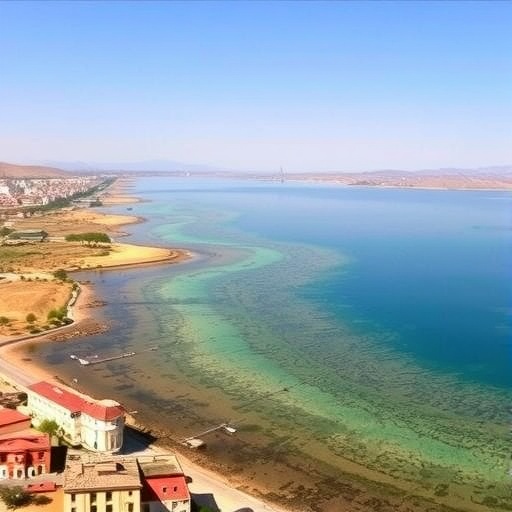
The smallest wetlands may be doing two apparently contradictory things at once: locking away carbon through vigorous plant growth while producing methane, a greenhouse gas far more potent than carbon dioxide over a century. A study of 17 shallow lakes and ponds across Spain’s Mediterranean region has found that these easily overlooked ecosystems generally acted as potential net carbon sinks when their marginal vegetation was included in the accounting, yet several also showed substantial potential for methane production in their sediments. The findings reveal why small inland waters, which make up the overwhelming majority of the world’s lakes and ponds, can complicate efforts to assess the climate value of wetlands. Their effect depends not only on how much carbon they capture, but also on what happens to carbon buried underwater, how long the basins remain flooded, and whether methane is oxidized before it escapes to the atmosphere.
The research, led by Daniel Morant and Antonio Camacho of the University of Valencia’s Cavanilles Institute of Biodiversity and Evolutionary Biology, compared three broad ecological types: water bodies connected to rivers or formed by fluvial processes, non-saline hardwater systems associated mainly with carbonate-rich geology, and soft-water ponds formed on less soluble rocks or sandy substrates. The Mediterranean climate gives these systems a pronounced seasonal rhythm. Many fill during autumn and winter, reach their ecological optimum in early spring, and shrink or dry during the hot summer. Across two consecutive hydrological cycles, the team measured water chemistry, sediment properties, planktonic and benthic metabolism, vegetation growth and the potential rate at which sediment generated methane. The sites varied from oligotrophic ponds with very little algal biomass to eutrophic basins with high chlorophyll-a concentrations, suspended solids and nutrients.
To track carbon metabolism, the researchers separated the water-column and bottom communities rather than relying on a single whole-ecosystem measurement. They measured gross primary production and aerobic respiration through changes in dissolved oxygen inside transparent and opaque incubation bottles. In transparent bottles, photosynthesis added oxygen; in dark bottles, respiration consumed it. The difference between these processes provided an estimate of net primary production, while the combination of oxygen production and dark respiration yielded gross primary production. Benthic measurements used larger glass enclosures that isolated the sediment, overlying water and organisms living at the bottom. The investigators also estimated production by helophytes—emergent wetland plants such as reeds and cattails—by repeatedly harvesting vegetation from standardized quadrats, drying the biomass and converting it to carbon using a plant-specific conversion factor.
These measurements showed that plankton and benthic communities usually behaved heterotrophically, meaning that aerobic respiration exceeded photosynthetic carbon fixation. That pattern indicates a tendency for the water and sediment communities, considered alone, to release more carbon than they captured. Metabolism was generally most active during the spring optimum, when water bodies were full and light and temperature supported biological growth. Average planktonic production and respiration exceeded 1,200 milligrams of carbon per square metre per day in this period, while benthic rates surpassed 500 milligrams in some cases. Activity declined during the summer drying phase and was lowest during the autumn-winter filling period. Despite these broad seasonal patterns, statistical tests did not detect significant seasonal differences for all planktonic and benthic processes, reflecting the strong variability among individual ponds.
The carbon balance changed when marginal vegetation was included. In several systems, helophyte production was an order of magnitude greater than the net balance of plankton and benthos. Dense stands of common reed, Phragmites australis, in particular, accumulated large amounts of biomass and transferred carbon into plant tissues and eventually into sediments. As a result, all three categories of ecosystem could be interpreted as having potential net autotrophic metabolism when emergent vegetation was counted. The strongest apparent carbon retention occurred during the spring growth period and the warmer drying season, when helophytes accumulated biomass most rapidly. Non-saline hardwater systems displayed especially high vegetation production, while soft-water ponds often supported smaller amphibious plants with less capacity to build up carbon-rich biomass.
The methane results added a more troubling dimension. Methane forms when microorganisms break down organic matter under oxygen-poor conditions, a process known as methanogenesis. It can then move through the sediment and water by diffusion or as bubbles, while methane-oxidizing microbes may consume part of it before it reaches the surface. To estimate the sediment’s production potential, the researchers collected intact cores containing sediment, overlying water and an air headspace. Twelve cores from each site and season were sealed and incubated for two to four days at temperatures matching field conditions. The methane accumulating in the headspace was measured with a trace-gas analyzer and converted to a sediment-area-normalized rate using the ideal gas law. These were controlled incubation estimates, not direct measurements of atmospheric emissions.
The highest potential methane production occurred in fluvial and soft-water systems, particularly when they remained flooded during the warmest months. During the drying season, fluvial sites averaged 143 milligrams of carbon in methane per square metre per day, while soft-water sites averaged 197 milligrams. Converted into carbon-dioxide equivalents using a 100-year methane warming factor of 28, those rates corresponded to approximately 5,339 and 7,355 milligrams of carbon-dioxide equivalent per square metre per day. Non-saline hardwater ponds, by contrast, had far lower potential rates, reaching an average maximum of only about 2.1 milligrams of methane carbon per square metre per day during the spring optimum. Temporary ponds that had already dried in summer also showed sharply reduced methane production, because exposure to air raises sediment redox conditions and suppresses methanogenesis.
The clearest chemical predictor of methane production was the amount of organic matter in the sediment. The relationship was statistically significant, with a Pearson correlation coefficient of 0.35, and was stronger during the filling season, when the coefficient reached 0.58, and during drying, when it was 0.49. Organic-rich sediments provide more substrate for microbial decomposition, although not all organic matter is equally available. Fresh, easily degradable carbon from algae or plant material may be converted to methane more readily than older, chemically resistant material. The researchers found no statistically significant relationship between potential methane production and chlorophyll-a, a common indicator of trophic status, nor with sediment redox potential or conductivity. Even so, individual eutrophic sites could be methane hotspots: Carcaboso, with exceptionally high chlorophyll-a concentrations, produced some of the highest measured values despite the broader statistical relationship with trophic status being weak.
The study’s central climate message is therefore not that these ponds are simply sinks or sources, but that they can be both at once. In ordinary carbon units, potential methane production was generally one or two orders of magnitude smaller than the principal production and respiration rates, and it did not overturn the estimated carbon balance. Methane’s climate effect, however, is disproportionately large because each molecule absorbs infrared radiation much more effectively than carbon dioxide. When the measurements were translated into carbon-dioxide equivalents, some fluvial and soft-water sites shifted from an apparent carbon-retaining role toward a potential warming contribution. That calculation remains conditional: it does not establish how much methane reached the atmosphere. Water-column oxidation, ebullition, sediment disturbance, water depth, hydrodynamics and the timing of drying can all determine whether methane is consumed, dissolved, trapped or rapidly released.
The researchers caution that their incubation method was designed to compare the relative strength of sediment methane production among ecosystems, not to replace field measurements of greenhouse-gas flux. Static chambers capture short-term emissions at the water surface, whereas sediment-core incubations allow gas to accumulate over several days and integrate production and some oxidation within the sediment-water system. But the cores do not reproduce wind-driven resuspension, natural bubbling or other episodic events that can bypass methane oxidation. Nor do seasonal measurements fully capture short-lived changes in sunlight, temperature or water level. Even with those limitations, the results show that the geology and structure of a pond strongly shape its carbon chemistry. Alkaline, mineral-rich fluvial and hardwater systems supported abundant emergent vegetation, while soft-water systems had more active plankton and benthic communities and, on average, much greater methane-production potential.
For conservation and climate accounting, the findings argue for treating small ponds as active components of the carbon cycle rather than as negligible patches of water. Protecting vegetation and maintaining natural hydrological regimes could preserve their capacity to store carbon, but management that ignores methane could overstate their climate benefits. A pond that remains flooded through a hotter summer may support productive plants while also warming methane-producing sediments. Conversely, periodic natural drying can suppress methane generation, although drying also creates its own carbon-dioxide emissions and ecological risks. The most reliable assessments will therefore need measurements of carbon storage, carbon dioxide exchange, methane production, methane oxidation and actual atmospheric emissions over longer periods. Mediterranean ponds are climate allies in some respects and potential greenhouse-gas sources in others—a dual identity that may be common across the world’s vast, undercounted population of shallow inland waters.
Cite Scienmag News
Violet Maxwell. (August 26, 2026). Mediterranean Shallow Lakes Balance Carbon Fixation and Sediment Methane Production. Scienmag. https://scienmag.com/mediterranean-shallow-lakes-balance-carbon-fixation-and-sediment-methane-production/
Violet Maxwell. "Mediterranean Shallow Lakes Balance Carbon Fixation and Sediment Methane Production." Scienmag, 26 August 2026, https://scienmag.com/mediterranean-shallow-lakes-balance-carbon-fixation-and-sediment-methane-production/. Accessed 3 September 2026.
Violet Maxwell. "Mediterranean Shallow Lakes Balance Carbon Fixation and Sediment Methane Production." Scienmag. August 26, 2026. https://scienmag.com/mediterranean-shallow-lakes-balance-carbon-fixation-and-sediment-methane-production/


