


In an extraordinary blend of ancient human observation and cutting-edge scientific methodology, researchers from the Okinawa Institute of Science and Technology (OIST) have unveiled compelling evidence of intense solar activity during the medieval period, specifically around the years 1190 to 1220 CE. Their work, which ingeniously synthesizes historical records with ultra-precise carbon-14 analysis of buried Japanese asunaro trees, offers a new window into the Sun’s temperamental past, revealing a period of heightened solar storms that holds critical implications for understanding space weather hazards today.
The Sun, a variable star by nature, occasionally unleashes potent bursts of energy known as solar proton events (SPEs). These outbursts propel high-energy protons at nearly the speed of light, showering Earth and its vicinity with potentially lethal radiation. While our planet’s magnetic field usually deflects harmful particles, astronauts and satellites beyond this shield—such as during lunar missions—face considerable risk. The Apollo missions of the early 1970s narrowly escaped a series of SPEs, underscoring the urgent need to comprehend these solar phenomena as humanity prepares to return to the Moon and beyond.
Until now, most research concentrated on detecting and studying the rare, most extreme SPEs. However, the OIST team’s breakthrough research pioneers the detection of sub-extreme SPEs—events less intense but occurring more frequently and still capable of disrupting technology and biology. These sub-extreme events were previously elusive due to the granularity limits of conventional detection methods, but by coupling exquisitely sensitive carbon-14 measurements with historical testimony, the researchers have successfully pinpointed a sub-extreme event that transpired between winter 1200 and spring 1201 CE.
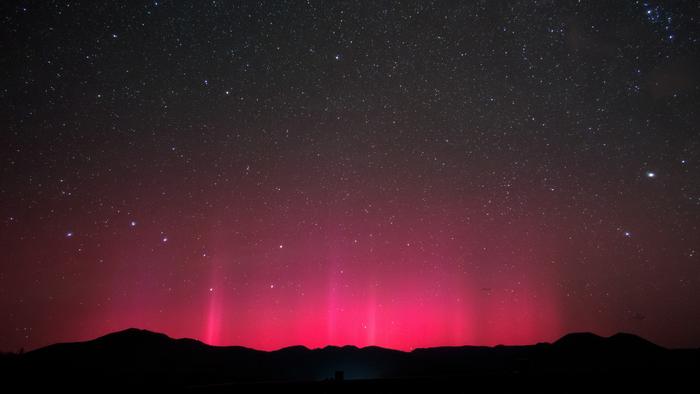
Central to this discovery is the integration of Japanese medieval chronicles, notably the diary Meigetsuki by Fujiwara no Teika, a renowned courtier and poet who documented sightings of “red lights in the northern sky over Kyoto” in February 1204 CE. Auroras are visually spectacular manifestations of solar-induced geomagnetic storms but are not caused directly by SPEs; rather, SPEs accompany the solar activity that triggers such spectacular sky phenomena. This historical narrative furnished a temporal and geographical target for the researchers to examine archived organic material.
Their laboratory forensic work focused on measuring the concentration of carbon-14 isotopes entrapped in ancient tree rings of the asunaro, a conifer native to Northern Japan. Carbon-14 is generated in Earth’s upper atmosphere when solar protons interact with atmospheric nitrogen, and these isotopes then embed into living organisms. By refining carbon-14 measurement techniques developed over a decade, OIST scientists achieved a resolution so fine that it detected subtle fluctuations corresponding to solar activity spikes previously undetectable.
The meticulous cross-referencing of dendroclimatology—using tree-ring growth patterns to date and correlate past climatic and environmental events—allowed the OIST team to deduce with remarkable certainty that this sub-extreme SPE occurred around the onset of the 13th century. Moreover, simultaneous low-latitude auroral sightings in China corroborate the timeline, presenting a rare convergence of natural archival records and human observation.
Intriguingly, the reconstructed solar cycles from this period deviate markedly from the modern eleven-year periodicity, exhibiting a compressed seven- to eight-year cycle indicative of a highly active Sun. This anomaly not only illuminates the variability of solar behavior across centuries but also emphasizes that periods of heightened solar activity persist over timescales relevant to human history.
The implications of this research are profound. By filling substantial chronological gaps in our understanding of solar proton events, scientists can better forecast and mitigate risks posed by similar solar outbursts in the future, especially as human activities increasingly expose astronauts and space infrastructure to space weather vulnerabilities. The study demonstrates that reconstructing solar history requires an interdisciplinary approach: ultramodern scientific measurement techniques intertwined with careful scrutiny of historical and cultural records.
Furthermore, the research brings to light anomalies in the relationship between auroral sightings and solar cycle phases. While the detected SPE aligns with solar cycle maxima, some auroral events reported in historical documents occurred near solar minima, a deviation from established patterns and an intriguing puzzle for solar physicists.
OIST’s innovative approach, spearheaded by Professor Hiroko Miyahara and her team, opens new paths for space weather research. Their ability to detect sub-extreme solar events fosters a more nuanced understanding of the Sun’s behavior, bridging gaps between astrophysics, climate science, and historical scholarship. This synergy is indispensable for developing robust models to predict and prepare for future solar events that might otherwise catch humanity unawares.
As we stand at the dawn of a new era in space exploration, where lunar bases and crewed missions to Mars loom on the horizon, insights gleaned from the Sun’s medieval past are more vital than ever. This landmark study underscores the necessity of monitoring and decoding the Sun’s subtle warnings hidden in the annals of history and nature alike.
Finally, the integration of dendroclimatic data with historical eye-witness accounts exemplifies the richness gained when disparate scientific and humanities disciplines unite to tackle complex planetary phenomena. While the Sun remains, in many ways, an enigmatic force, efforts such as this bring us closer to decoding its rhythms and safeguarding our technological civilization against its occasional fury.
News Publication Date: 10-Apr-2026
Web References: http://dx.doi.org/10.2183/pjab.102.011
References: Proceedings of the Japan Academy Series B
Cite Scienmag News
Cameron Wolfe. (April 10, 2026). Medieval Japanese Poetry and Buried Trees Illuminate Volatile Space Weather. Scienmag. https://scienmag.com/medieval-japanese-poetry-and-buried-trees-illuminate-volatile-space-weather/
Cameron Wolfe. "Medieval Japanese Poetry and Buried Trees Illuminate Volatile Space Weather." Scienmag, 10 April 2026, https://scienmag.com/medieval-japanese-poetry-and-buried-trees-illuminate-volatile-space-weather/. Accessed 4 September 2026.
Cameron Wolfe. "Medieval Japanese Poetry and Buried Trees Illuminate Volatile Space Weather." Scienmag. April 10, 2026. https://scienmag.com/medieval-japanese-poetry-and-buried-trees-illuminate-volatile-space-weather/


