


The immense financial burden inflicted on the U.S. healthcare system by firearm injuries has been meticulously quantified in a recent comprehensive study spearheaded by researchers at Northwestern Medicine. Over the span from 2016 to 2021, initial hospital treatment costs for these injuries totaled an estimated staggering $7.7 billion. This finding casts a harsh light on the disproportionate fiscal impact borne by urban trauma centers, which predominantly serve Medicaid patients and operate on struggling financial margins. The study, soon to be published in JAMA Health Forum, underscores the deep and systemic challenges trauma centers face amidst the gun violence epidemic, particularly as Medicaid reimbursements routinely fall short of the actual costs incurred.
Analyzing data derived from emergency department and inpatient hospital visits across six states—Arkansas, Florida, Maryland, Massachusetts, New York, and Wisconsin—researchers sought to extrapolate national healthcare expenditure directly attributable to firearm-related injuries. These states were deliberately selected owing to their robust collection of high-quality records detailing both inpatient and emergency hospital admissions. By rigorously assessing every documented firearm injury incident requiring hospital treatment, the team established a comprehensive cost framework illuminating not only the financial magnitude but also patterns reflecting patient demographics, hospital characteristics, and payer sources.
Over the initial years covered by the study, from 2016 through 2019, annual treatment costs maintained relative stability at approximately $1.2 billion consistently each year. However, this plateau sharply shifted by 2021, with costs escalating to $1.6 billion—a clear 33% surge—correlating closely with the documented rise in firearm injuries coinciding with the COVID-19 pandemic. Particularly alarming was a 54% increase in treatment costs among pediatric patients from 2019 to 2021, a demographic that signals troubling emergent trends in youth gun violence and its consequent financial repercussions on healthcare institutions.
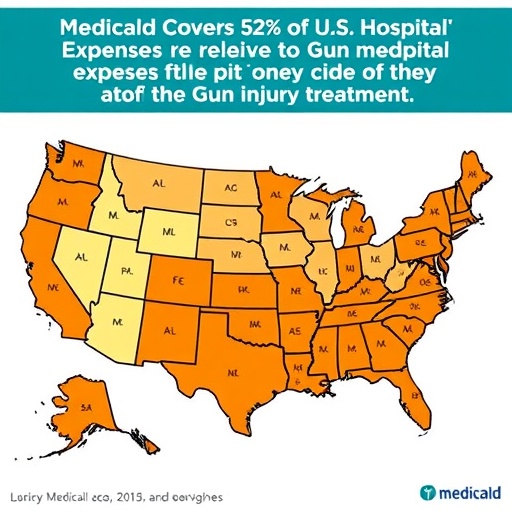
A critical revelation of the research highlighted Medicaid’s outsized role as the primary payer, accounting for 52% of all hospital costs linked to firearm injury treatment. Yet, Medicaid’s reimbursement levels mimicked insufficient compensation, frequently failing to cover the comprehensive cost of care provided. This discrepancy imposes severe financial strain on safety-net hospitals and trauma centers that often serve marginalized populations, including a disproportionate number of Black patients, men, and individuals residing in economically disadvantaged areas. The inescapable fiscal deficits trauma centers endure raise anxiety that ongoing Medicaid funding reductions mandated by Congress could imperil the very infrastructure essential to addressing traumatic injuries in vulnerable communities.
This financial crisis is compounded by the narrow economic margins under which many trauma hospitals operate. The persistent shortfalls require these centers to absorb substantial losses, threatening their sustainability. Should funding cuts continue unchecked, experts warn institutional closures or status downgrades from trauma centers to general hospitals might ensue, seriously diminishing access to critical, life-saving interventions not only for gunshot wounds but also for other severe traumas such as motor vehicle collisions, falls, and cycling accidents. The consequences would be fatal on a broad scale, affecting the overall emergency healthcare delivery network nationwide.
It is noteworthy that the study explicitly focused on initial hospitalization costs, excluding numerous adjacent expenditures integral to the continuum of care for firearm injuries. These omitted costs include ambulance and air medical transport, extended rehabilitation services, subsequent follow-up treatments, and potential re-hospitalizations due to complications or recurring health issues. Beyond direct medical expenses, the analysis did not capture the indirect yet profound economic effects experienced by victims and their families—namely lost wages, long-term disability, psychological distress, and community-level socioeconomic deterioration.
The demographic analysis underscored that patients who are Black, male, and from low-income areas represent the most substantial share of incurred costs. This finding situates firearm injury not only as a clinical and economic crisis but also as a glaring public health disparity tightly intertwined with systemic social inequities. Recognition of these patterns invites targeted policy interventions aimed at addressing the root causes and mitigating the disproportionate toll on specific communities through equitable resource allocation and preventive measures.
The study offers an urgent call to action advocating for enhanced financial support targeted at trauma center hospitals serving disproportionately impacted populations. Bolstering Medicaid funding and restructuring reimbursement policies to more accurately reflect treatment costs would stabilize these institutions and ensure continued access to essential trauma care services. Furthermore, the research team highlights the crucial necessity for expanded investments in injury-prevention strategies, including comprehensive community-based programs and safe firearm storage education, designed to reduce unauthorized access to firearms and consequently prevent injury.
In sum, this landmark study lays bare the complex interplay between gun violence, healthcare economics, and public policy. With a $7.7 billion expenditure on initial treatment alone, the data showcase an untenable burden imposed on hospitals at the frontline of America’s firearm epidemic. The temporal surge in costs during the pandemic heightens the urgency for systemic reforms to safeguard trauma centers and the communities they serve. As firearm injuries remain a leading cause of death and disability in the United States, holistic approaches integrating healthcare funding, prevention, and social equity are imperative to curb the overarching human and economic toll.
The forthcoming publication in JAMA Health Forum represents a pivotal contribution to understanding the financial dimensions of firearm injury care in the United States and aims to galvanize policymakers, healthcare stakeholders, and public health professionals toward actionable change. By highlighting both the magnitude and the distribution of costs, the research invites a reframing of the gun violence crisis as not only a matter of public safety but also as a critical determinant of health system sustainability and equity.
News Publication Date: September 26, 2025
Web References: https://dx.doi.org/10.1001/jamahealthforum.2025.3299
Cite Scienmag News
Ophelia Keating. (September 26, 2025). Medicaid Covers 52% of U.S. Hospital Expenses Related to Gun Injury Treatment. Scienmag. https://scienmag.com/medicaid-covers-52-of-u-s-hospital-expenses-related-to-gun-injury-treatment/
Ophelia Keating. "Medicaid Covers 52% of U.S. Hospital Expenses Related to Gun Injury Treatment." Scienmag, 26 September 2025, https://scienmag.com/medicaid-covers-52-of-u-s-hospital-expenses-related-to-gun-injury-treatment/. Accessed 5 September 2026.
Ophelia Keating. "Medicaid Covers 52% of U.S. Hospital Expenses Related to Gun Injury Treatment." Scienmag. September 26, 2025. https://scienmag.com/medicaid-covers-52-of-u-s-hospital-expenses-related-to-gun-injury-treatment/


