


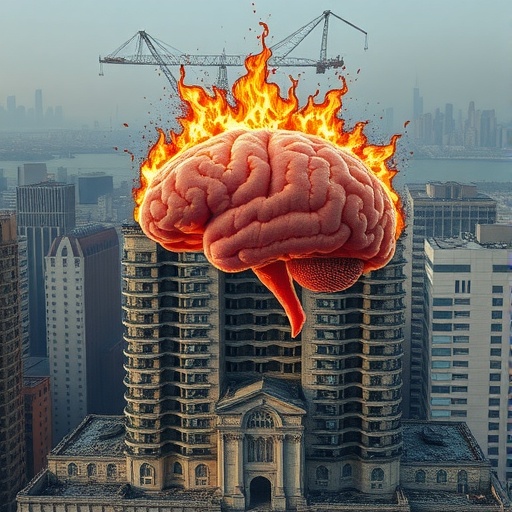
In the wake of natural disasters such as earthquakes, the psychological aftermath often rivals the physical destruction in complexity and severity. A groundbreaking study by F. Usluoglu, published in BMC Psychology, delves into the nuanced interconnections between executive function, mentalization, and earthquake-related stress reactions in adults. This research offers profound insights into how cognitive mechanisms influence psychological resilience and vulnerability following seismic catastrophes, illuminating paths for targeted interventions.
Executive function, a core set of cognitive processes including working memory, inhibitory control, and cognitive flexibility, orchestrates our ability to manage complex tasks and adapt to changing environments. These functions are pivotal not only for goal-directed behavior but also for emotional regulation under stress. Usluoglu’s study positions executive function at the center of understanding how individuals cognitively process and emotionally respond to the trauma induced by earthquakes, which often manifest as sudden, uncontrollable, and life-threatening events.
Mentalization, or theory of mind, refers to the faculty to comprehend and interpret one’s own and others’ mental states—beliefs, desires, intentions, and emotions. This construct is crucial for social cognition and emotional empathy, serving as a bridge that connects internal cognitive processes to external social contexts. By examining mentalization alongside executive function, the study explores how the ability to mentalize under duress might modulate the severity of earthquake-induced stress reactions.
The research methodology integrates psychometric assessments to quantify executive function and mentalization capacities in adult participants who have experienced significant seismic events. Concurrently, validated scales to measure stress-related psychological symptoms such as anxiety, post-traumatic stress disorder (PTSD), and depression were utilized to map the psychological landscape post-earthquake. This multidimensional approach allows for a rigorous examination of interrelations among cognitive and emotional variables in disaster contexts.
One of the most striking findings reveals that impairments in executive function significantly correlate with heightened earthquake-related stress reactions. Specifically, diminished working memory and inhibitory control are linked to increased difficulty in regulating fear and intrusive thoughts, hallmark features of PTSD. This suggests that cognitive control deficits exacerbate vulnerability to trauma, as the brain’s capacity to suppress maladaptive emotional responses is compromised.
Furthermore, mentalization appears to serve as a partial buffer against earthquake-related stress. Participants exhibiting stronger mentalization skills reported lower levels of psychological distress, indicating that an enhanced ability to interpret and make sense of emotional states—both their own and others’—may foster adaptive coping mechanisms. By promoting emotional awareness and social connectedness, mentalization could mitigate the isolating effects of trauma.
Critically, the interplay between executive function and mentalization emerged as a key determinant of stress outcomes. The study proposes a dynamic model where optimal executive control supports effective mentalization, which in turn facilitates emotional regulation during post-earthquake stress. This synergy suggests that interventions aimed at bolstering both cognitive domains may hold promise for ameliorating psychological distress in disaster survivors.
Neurobiological perspectives provide further depth to these findings. Executive functions are primarily subserved by the prefrontal cortex, a brain region known to be involved in high-order cognition and emotion regulation. Mentalization networks involve the temporoparietal junction and medial prefrontal cortex, regions also implicated in social cognition. Trauma-related stress has been shown to disrupt these neural circuits, underlining the biological plausibility of Usluoglu’s behavioral observations.
Given these insights, the study advocates for incorporating cognitive remediation strategies into post-disaster mental health programs. Techniques such as computerized working memory training and mindfulness-based mentalization enhancement could augment executive capacity and social cognitive processing. These interventions may not only reduce immediate stress reactions but also strengthen resilience against future traumatic exposures.
The implications extend beyond earthquake contexts to other forms of trauma and chronic stress. The demonstrated links between executive function, mentalization, and emotional outcomes highlight universal pathways through which cognitive processes have a profound impact on mental health. Thus, the findings resonate with broader psychological and psychiatric frameworks concerned with trauma recovery.
Importantly, the study also emphasizes the heterogeneity of responses to earthquake trauma, shaped by individual cognitive profiles. This heterogeneity underscores the necessity for personalized intervention approaches, moving away from one-size-fits-all mental health responses. Tailoring therapies to cognitive strengths and weaknesses might optimize recovery trajectories and improve long-term psychological outcomes.
The research sets a foundation for longitudinal studies to track how executive function and mentalization evolve post-disaster and how these trajectories relate to symptom remission or chronicity. Moreover, integrating neuroimaging data in future work may elucidate the mechanistic underpinnings of these cognitive-emotional relationships, advancing both theoretical knowledge and clinical practice.
In an era marked by increasing frequency and intensity of natural disasters, understanding the cognitive substrates of stress resilience is not only scientifically compelling but socially imperative. Usluoglu’s study contributes a critical piece to this complex puzzle, encouraging interdisciplinary collaborations between cognitive neuroscience, clinical psychology, and disaster management.
Ultimately, the work invites policymakers and mental health professionals to rethink disaster response paradigms, advocating for cognitive-centered, evidence-based interventions that address both brain and behavior. By doing so, it paves the way for fostering robust psychological defenses in populations facing the unpredictable fury of earthquakes and other traumata.
Cite Scienmag News
Glenn Wilkins. (September 26, 2025). Executive Function, Mentalization, and Earthquake Stress Reactions. Scienmag. https://scienmag.com/executive-function-mentalization-and-earthquake-stress-reactions/
Glenn Wilkins. "Executive Function, Mentalization, and Earthquake Stress Reactions." Scienmag, 26 September 2025, https://scienmag.com/executive-function-mentalization-and-earthquake-stress-reactions/. Accessed 4 September 2026.
Glenn Wilkins. "Executive Function, Mentalization, and Earthquake Stress Reactions." Scienmag. September 26, 2025. https://scienmag.com/executive-function-mentalization-and-earthquake-stress-reactions/


