


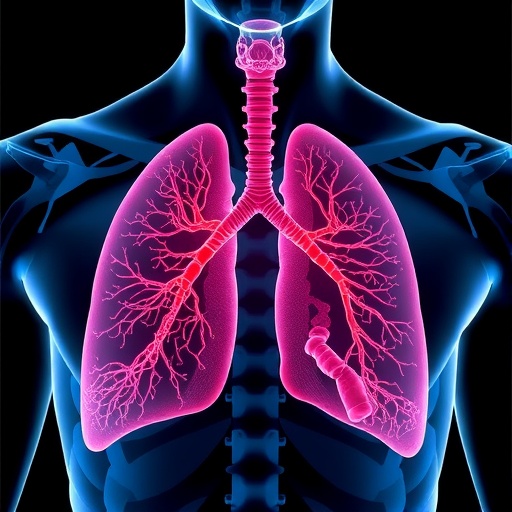
The process by which mechanical forces drive structural remodeling in living tissues has maintained a pivotal role in the development and function of human organs. Despite its significance in health and disease, particularly within respiratory pathophysiology, studying this biomechanical phenomenon in human-relevant conditions has long posed a formidable challenge to researchers. In a groundbreaking advancement, a team of multidisciplinary scientists has unveiled a novel microphysiological system that incorporates pneumatically controllable soft actuators designed to mimic the dynamic mechanical loading found in the mucosal tissues of the human respiratory tract. This innovation promises not only to transform preclinical investigations of respiratory diseases but also to deepen our fundamental understanding of tissue remodeling mechanics.
Asthma, a chronic respiratory condition marked by airway constriction and inflammation, serves as the clinical foundation for this research. The new model replicates the constrictive stresses experienced in distal regions of asthmatic lungs. By faithfully emulating the compressive forces that occur during asthma exacerbations, the researchers have succeeded in recreating the fibrotic remodeling of airways—a hallmark of disease progression that has been difficult to scrutinize using conventional models. This microengineered platform thus represents an unprecedented tool for exploring the pathological remodeling processes that exacerbate airway obstruction over time.
What sets this model apart is its incorporation of pneumatically addressable soft actuators, which dynamically simulate the rhythmic mechanical forces experienced during breathing and asthma-related airway constriction. These actuators gently deform the engineered airway tissue constructs, enabling the observation of cellular and extracellular matrix responses to mechanical stimuli in real time. The ability to modulate the intensity and frequency of these forces provides experimental precision and flexibility hitherto unattainable in in vitro studies, offering powerful insights into force-driven tissue remodeling mechanisms.
Through the application of this system, the research team has demonstrated that compressive forces induce a fibrotic response in airway tissues, characterized by excessive deposition of extracellular matrix components and thickening of airway walls. This fibrotic remodeling narrows the lumen and stiffens the airway, compounding airflow obstruction. The model’s fidelity was validated by comparing its outputs with in vivo observations, confirming that the mechanical environment plays a pivotal role in driving disease-related tissue changes.
Moving beyond the airway epithelium, the investigators engineered vascularized airway constructs within the model to probe vascular remodeling phenomena, which have been implicated in the pathology of asthma but remain poorly understood. They uncovered that mechanical constriction of airways promotes subepithelial fibrosis—a dense accumulation of fibrous tissue beneath the airway lining—which in turn acts as a critical driver of increased vascularity observed in asthmatic lungs. These findings clarify the mechanobiological link between airway constriction and abnormal blood vessel development, providing a fresh lens through which to view the disease’s vascular dimension.
A further remarkable dimension of this research lies in its integration of proteomics analysis. By comprehensively profiling the protein expression changes induced by mechanical forces within the microphysiological system, the team identified key molecular mediators involved in the aberrant remodeling cascade. This high-resolution molecular insight lays the groundwork for pinpointing novel therapeutic targets, potentially guiding the development of interventions designed to modulate or halt the pathological remodeling triggered by mechanical stress.
Importantly, the study also tested the feasibility of therapeutic modulation directly within the microphysiological platform. By pharmacologically targeting the molecular mediators revealed through proteomics, the researchers demonstrated the capacity to pharmacologically influence pathological remodeling processes, underscoring the system’s utility as a drug screening and development tool. This dovetails with the broader aspiration to develop precision medicine strategies tailored to the biomechanical contexts of individual patients’ lung pathology.
The microphysiological model’s biomimetic architecture, combining human airway tissue constructs with soft actuator technology, represents a significant stride toward recapitulating the complex interplay of cellular, extracellular, and mechanical elements that define respiratory tissue behavior in health and disease. Traditional culture models have often fallen short by lacking the dynamic mechanical environment critical for genuine physiologic or pathophysiologic response. This new platform bridges that gap, allowing researchers to probe dynamic remodeling at a level of realism and control that closely mirrors in vivo conditions.
Beyond asthma, the implications of this innovation extend widely across pulmonary research. Chronic obstructive pulmonary disease (COPD), pulmonary fibrosis, and even infectious respiratory diseases could potentially benefit from models that accurately reproduce the biomechanical microenvironment of lung tissues. Furthermore, the methodology is adaptable to other mechanically active organs, opening new avenues to study mechanotransduction and remodeling in tissues ranging from the cardiovascular system to the musculoskeletal framework.
The translational potential of this microphysiological system is underscored by its human relevance. Many preclinical respiratory studies rely heavily on animal models or static 2D cultures that lack intricacies of human lung anatomy and mechanics. This platform circumvents those limitations, promoting findings that are more directly applicable to human physiology, thereby accelerating the pipeline from discovery to clinical application.
At the crossroads of bioengineering, cell biology, and respiratory medicine, this research exemplifies the power of interdisciplinary collaboration. By merging expertise in soft robotics, microfabrication, and molecular analysis, the investigators have forged a cutting-edge tool that redefines how mechanical forces are studied in complex tissue systems. The system’s modularity also enables customization to incorporate patient-specific cells, potentially enabling personalized disease models that reflect individual disease variability.
Looking ahead, this technology opens exciting possibilities for integrating real-time imaging, genomic editing, and multi-omics analyses to capture the comprehensive impact of mechanical forces on tissue remodeling. Coupled with advances in computational modeling, it may facilitate predictive simulations of disease progression and treatment response, contributing to the burgeoning field of digital twin models in healthcare.
Crucially, the study highlights the often-underappreciated role of biomechanics in chronic respiratory diseases. As clinical strategies have traditionally focused on inflammation and immune responses, recognizing mechanical forces as drivers of pathological remodeling reshapes therapeutic paradigms. Understanding and intervening in these mechanotransductive pathways could lead to novel treatments that not only alleviate symptoms but also modify disease course by preventing tissue stiffening and irreversible airway narrowing.
In the wake of this work, future investigations might explore how environmental factors like air pollution and cigarette smoke interact with mechanical forces to exacerbate tissue remodeling. Additionally, the potential reversibility of force-induced fibrosis and vascular remodeling warrants rigorous exploration within this versatile model, informing regenerative approaches and timing of therapeutic interventions.
In sum, this pioneering microphysiological model heralds a new era in respiratory research, where mechanical forces no longer remain elusive variables but become quantifiable and controllable determinants of tissue behavior. Its deployment will undoubtedly enhance our mechanistic understanding, facilitate therapeutic discovery, and ultimately improve clinical outcomes for millions afflicted with asthma and related pulmonary conditions—a landmark stride toward deciphering the biomechanics of life itself.
Cite Scienmag News
Ophelia Keating. (May 11, 2026). Mechanical Force Shapes Asthmatic Lung Tissue Remodeling. Scienmag. https://scienmag.com/mechanical-force-shapes-asthmatic-lung-tissue-remodeling/
Ophelia Keating. "Mechanical Force Shapes Asthmatic Lung Tissue Remodeling." Scienmag, 11 May 2026, https://scienmag.com/mechanical-force-shapes-asthmatic-lung-tissue-remodeling/. Accessed 4 September 2026.
Ophelia Keating. "Mechanical Force Shapes Asthmatic Lung Tissue Remodeling." Scienmag. May 11, 2026. https://scienmag.com/mechanical-force-shapes-asthmatic-lung-tissue-remodeling/


