


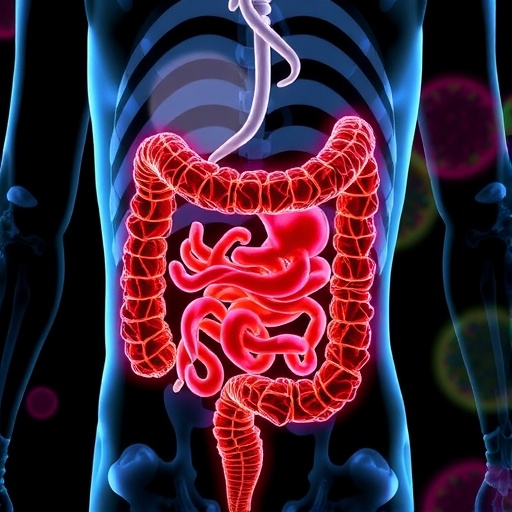
A groundbreaking study from McMaster University has unveiled a precision bacteriophage therapy aimed at treating inflammatory bowel disease (IBD) by selectively targeting adherent-invasive Escherichia coli (AIEC), bacteria implicated in Crohn’s disease inflammation. Published in Science Translational Medicine, this interdisciplinary research combines microbiome science and engineering to develop a viral-based intervention that suppresses harmful bacterial behavior without disrupting the gut’s delicate microbial ecosystem.
IBD affects hundreds of thousands worldwide, with escalating pediatric incidence rates notably in Canada. Conventional treatments rely heavily on immunosuppressants and steroids, which may lose efficacy over time or cause serious side effects due to their broad systemic actions. The McMaster team addresses these limitations by focusing on a subgroup of E. coli strains defined not by genetic markers alone but by their ability to adhere to and invade intestinal epithelium, a mechanism central to propagating gut inflammation.
Leveraging axenic animal models and isolated bacterial strains from Crohn’s patients, researchers demonstrated that selected bacteriophages operate with exceptional specificity. Unlike antibiotics, phages act through a lock-and-key mechanism, targeting only pathogenic bacteria while sparing beneficial microbes. Intriguingly, the phage therapy did not exterminate AIEC populations but attenuated their virulence by silencing a molecular adhesin critical for bacterial attachment and immune activation. This “disarming” approach effectively reduced intestinal inflammation while preserving microbiome diversity.
The study further revealed a synergistic interaction between phage therapy and corticosteroids. Administered in combination, low-dose steroids showed enhanced anti-inflammatory effects compared to standard dosages alone. This is a novel demonstration of phage use to potentiate non-antibiotic drugs, heralding new avenues for combinatory therapies with reduced toxicity profiles.
“These findings represent a paradigm shift in personalized medicine for IBD,” explained Dr. Elena Verdu of the Farncombe Family Digestive Health Research Institute. By developing diagnostic assays to detect the bacterial adhesive function in stool samples, clinicians could identify patients most likely to benefit from this targeted intervention.
The collaboration between the Verdu and Hosseinidoust laboratories exemplifies the power of cross-disciplinary research, integrating microbiology, immunology, and engineering principles. The team is now expanding their phage libraries to cover diverse bacterial strains and preparing for translational steps toward human clinical trials.
This approach underscores a future where bacteriophage therapeutics can precisely modulate microbial communities, neutralizing disease-causing traits without collateral damage, thus redefining treatment strategies for complex microbiome-mediated diseases like IBD.
Cite Scienmag News
Morgan Morrow. (July 9, 2026). McMaster scientists deploy harmless viruses to fight inflammatory bowel disease. Scienmag. https://scienmag.com/mcmaster-scientists-deploy-harmless-viruses-to-fight-inflammatory-bowel-disease/
Morgan Morrow. "McMaster scientists deploy harmless viruses to fight inflammatory bowel disease." Scienmag, 9 July 2026, https://scienmag.com/mcmaster-scientists-deploy-harmless-viruses-to-fight-inflammatory-bowel-disease/. Accessed 4 September 2026.
Morgan Morrow. "McMaster scientists deploy harmless viruses to fight inflammatory bowel disease." Scienmag. July 9, 2026. https://scienmag.com/mcmaster-scientists-deploy-harmless-viruses-to-fight-inflammatory-bowel-disease/


