


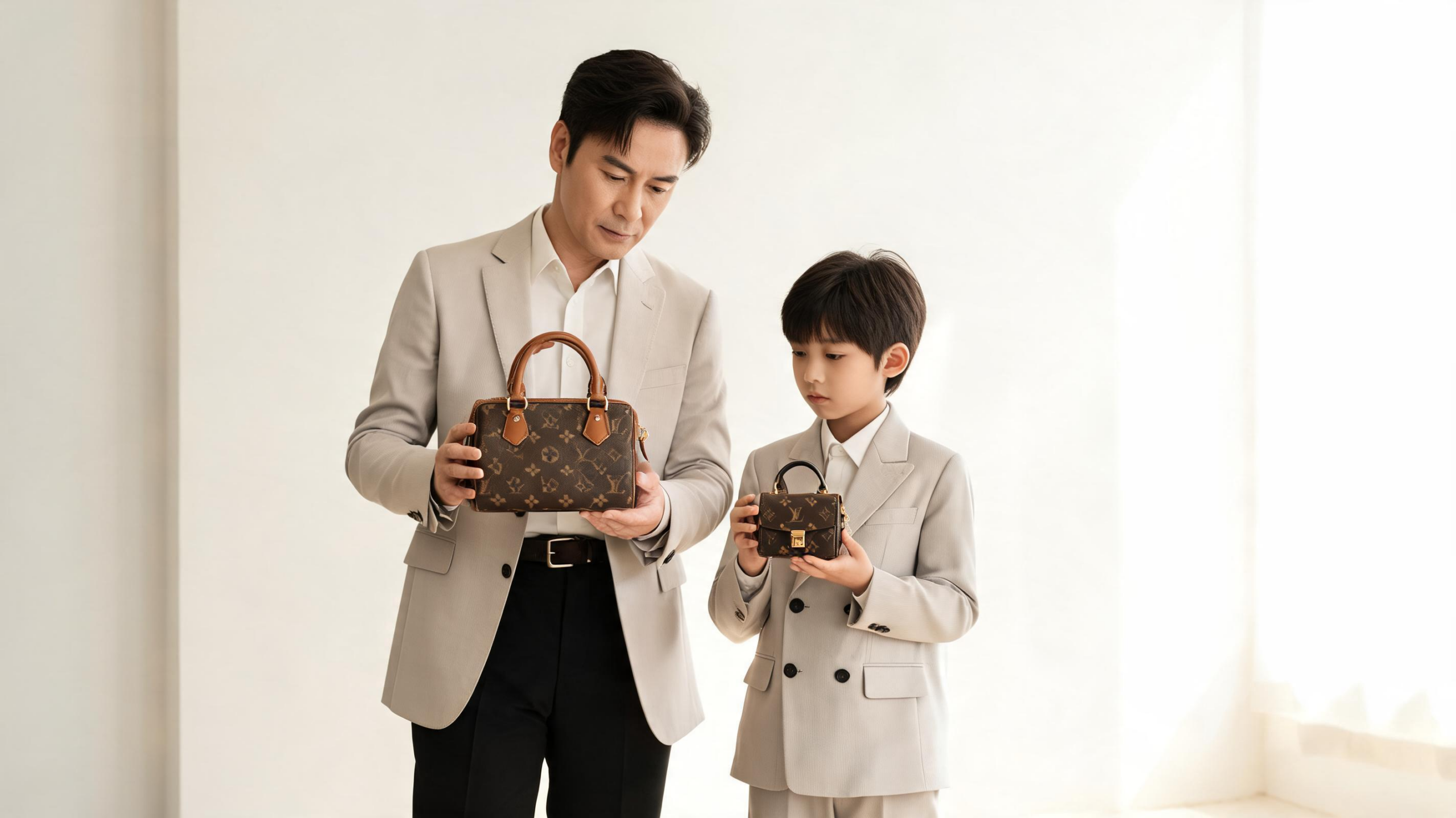
Materialism does not simply flow from parent to child like an inherited trait, according to a new study published in Trends in Psychology. Instead, researchers report that the family environment acts as a gatekeeper that determines whether parents’ materialistic values are actually transmitted to the next generation, and, in turn, whether young people orient their life goals toward money, image, and status. The study, led by Samuel Lins of the Center for Psychology at the University of Porto, together with Maria Almeida Caria of the University of Fortaleza and Cynthia Freitas de Melo of the University of Porto, offers a nuanced picture of how one of consumer culture’s most consequential value systems takes root in young minds.
Materialistic values, defined by the prominence people place on financial success, possessions, and physical appearance relative to other life priorities, have been extensively linked to poorer well-being. Meta-analytic evidence, including a large 2014 synthesis by Dittmar and colleagues in the Journal of Personality and Social Psychology, shows that a strong materialistic orientation is reliably associated with lower personal well-being. More recent meta-analytic work by Bradshaw and colleagues in 2023 extended this conclusion to the domain of life goals, finding universal wellness costs when people prioritize extrinsic goals over intrinsic ones. Understanding where these values come from, and how they are or are not passed down within families, therefore carries practical significance well beyond academic curiosity.
To probe the mechanisms of value transmission, the research team recruited 208 young adults, of whom 168 were women and 40 were men, with a mean age of 20.20 years and a standard deviation of 6.42 years. Participants, described as being in the stage of emerging adulthood theorized by Jeffrey Arnett, reported on their own materialistic values, their perceptions of their parents’ materialism, the parenting environment they grew up in, and their own life goals. Emerging adulthood is a developmental window in which identity, values, and long-term aspirations are still actively being shaped, making it a strategic period in which to examine the residue of family socialization.
Statistically, the study employed moderated mediation analysis, a regression-based framework popularized by Andrew Hayes that tests whether an indirect effect operates through a mediator and whether that indirect effect changes strength depending on a moderator. In this design, children’s materialism was modeled as the mediator linking parental materialism to children’s life goals, while the perceived family environment, specifically whether it was democratic or authoritarian in character, was tested as a moderator of the first path, the link between parental materialism and children’s own materialism. This architecture allowed the researchers to ask not merely whether parents influence children, but under what relational conditions that influence materializes.
The results delivered a surprise in the direct path. Parental materialism, on its own, did not predict whether the young adult participants endorsed extrinsic life goals centered on wealth, fame, or image. Values transmission, in other words, is not automatic. A materialistic parent does not reliably produce a materialistically driven child simply by existing as a role model. This finding echoes a broader literature on parent-child value similarity, including work by Barni, Knafo-Noam, and Schwartz, which shows that resemblance between parents and children on values is often modest and depends heavily on the quality of the relationship and the socialization context rather than on parental intentions alone.
The critical factor turned out to be the family environment. When participants perceived a democratic family climate, one characterized by warmth, dialogue, negotiation, and responsiveness to the child’s perspective, the relationship between parental materialism and children’s materialism was positive. In such homes, materialistic parents apparently modeled and communicated consumer values that children absorbed and internalized. In contrast, under an authoritarian family environment, marked by coercive control, strict demands, and limited open communication, the relationship between parental materialism and children’s materialism was negative. Children raised in authoritarian households were less likely to adopt their parents’ materialistic orientation, suggesting that value transmission requires a channel of influence that authoritarian climates appear to close.
The interpretation offered by the researchers is that the family environment enables or disables the transmission of materialistic values, and that these values, once adopted, guide young people’s focus toward extrinsic objectives. Theoretical frameworks from Grusec and Goodnow on value internalization help explain the pattern: children internalize parental values most effectively when they accurately perceive the values’ content and accept them, both of which are fostered by democratic, warm parenting and undermined by coercive discipline that provokes resistance rather than emulation. Related consumer research, such as Richins and Chaplin’s work on material parenting, similarly shows that how goods are used in the parenting process matters as much as parental attitudes toward possessions themselves.
Why might authoritarian parenting blunt materialistic transmission? One possibility is reactance: adolescents in controlling households may distance themselves from parental models, rejecting values associated with parents they experience as domineering. Another relates to emotional security, since prior research, including Ching and Wu’s study of parental conflict and adolescent materialism, suggests that insecurity can itself foster materialistic values as a compensatory mechanism, but the dynamics of that compensation may interact with parenting style in complex ways. The moderated mediation results indicate that materialism in children did serve as the conduit through which family conditions ultimately related to extrinsic life goals, meaning that the family climate shaped children’s materialism, and children’s materialism in turn shaped the goals they set for their lives.
The study’s limitations warrant caution in interpretation. The design was cross-sectional and correlational, relying on retrospective perceptions of parenting rather than observed family behavior, so causal direction cannot be firmly established; it is possible, for instance, that shared materialism produces a more relaxed family climate rather than the reverse. The sample was also skewed toward women, and all measures were self-reported by adult children, leaving parental perspectives unmeasured directly. The authors note that data supporting the findings are available from the corresponding author upon request, and the work followed ethical protocols including informed consent.
Nevertheless, the findings carry clear implications. For practitioners and parents concerned about the cultural pull of consumerism, the message is that values are not inherited through instruction alone but through relational climate. Democratic parenting appears to open a channel through which parental values, for better or worse, flow to children, which means the same openness that helps transmit generosity, curiosity, or civic engagement can also transmit materialism. Authoritarian environments, while perhaps limiting materialistic contagion, come with their own well-documented psychological costs. The broader takeaway is a call for intentionality: parents who wish to buffer their children against materialistic values may need to attend not only to their own consumption habits and stated ideals, but to the everyday emotional and communicative fabric of family life in which those values either take root or wither. As societies grapple with the well-being toll of extrinsic goal pursuit documented across cultures, this research suggests that the first and perhaps most powerful arena of intervention remains the home.
The distinction between intrinsic and extrinsic goals traces back to self-determination theory, which holds that aspirations such as personal growth, close relationships, and community contribution tend to satisfy basic psychological needs, whereas pursuits of wealth, fame, and image offer only contingent satisfactions. The present findings suggest that the family is one setting where this goal orientation is calibrated long before individuals make deliberate choices about their priorities.
It is also worth noting that value transmission in families is rarely a one-way street. Research on parent-child value similarity indicates that children actively filter, negotiate, and sometimes reject what parents offer, and that perceived norms within the family shape whether parental messages are heard as genuine convictions or as mere expectations. The democratic climate in this study may function precisely as such a channel, giving children enough access to parental reasoning to reconstruct materialistic values as their own.
Future work could follow families over time, incorporate both parents’ and children’s reports, and test whether these dynamics hold across cultures with differing levels of consumer development, questions the authors’ data-sharing statement should help address.
Subject of Research: Materialistic Heritage: The Influence of Parental Figures on Children’s Life Goals
Article Title: Materialistic Heritage: The Influence of Parental Figures on Children’s Life Goals
Article References: Lins, S., Caria, M. A., & de Melo, C. F. (2026). Materialistic Heritage: The Influence of Parental Figures on Children’s Life Goals. Trends in Psychology. https://doi.org/10.1007/s43076-026-00536-5
Image Credits: AI Generated
DOI: 10.1007/s43076-026-00536-5
Keywords: Materialistic, Heritage, Influence, Parental, Figures, Children, Life, Goals, scientific research
Cite Scienmag News
Glenn Wilkins. (September 11, 2026). Materialistic Heritage: The Influence of Parental Figures on Children’s Life Goals. Scienmag. https://scienmag.com/materialistic-heritage-the-influence-of-parental-figures-on-childrens-life-goals/
Glenn Wilkins. "Materialistic Heritage: The Influence of Parental Figures on Children’s Life Goals." Scienmag, 11 September 2026, https://scienmag.com/materialistic-heritage-the-influence-of-parental-figures-on-childrens-life-goals/. Accessed 4 October 2026.
Glenn Wilkins. "Materialistic Heritage: The Influence of Parental Figures on Children’s Life Goals." Scienmag. September 11, 2026. https://scienmag.com/materialistic-heritage-the-influence-of-parental-figures-on-childrens-life-goals/


