


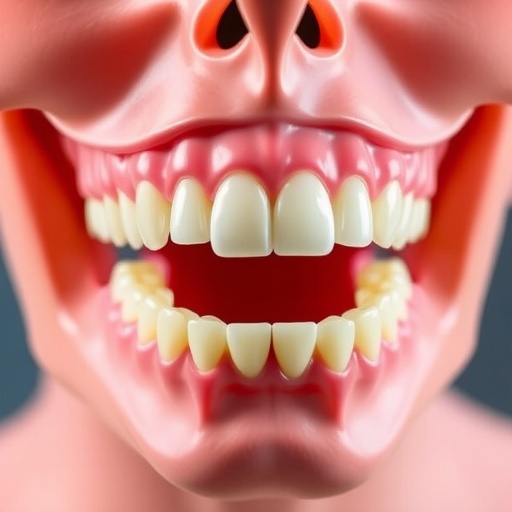
For patients who lose part of their jaw to cancer, trauma, or aggressive benign disease, the surgery to rebuild the bone is only half of the story. The other half is being able to chew, speak, and smile again, which depends on dental rehabilitation that is often delayed by months or, in many health systems, never delivered at all. A new cost analysis from a team at Chris O’Brien Lifehouse Hospital in Sydney, Australia, published in the journal 3D Printing in Medicine, has for the first time broken down, dollar by dollar, what it actually costs to produce a point-of-care 3D-printed dental prosthesis for patients undergoing microvascular jaw reconstruction. The headline figure is strikingly modest: a mean of $861.72 USD per prosthesis, with a range of $702.78 to $1,032.34 across the twenty-one patients studied. That number, the researchers argue, reframes the economics of digital dental rehabilitation and offers hospitals a concrete baseline for deciding whether to bring this technology in-house.
The clinical context matters for understanding why this costing study is significant. When a segment of the maxilla or mandible is removed, surgeons typically reconstruct it with an osseous free flap, most commonly a piece of fibula or other vascularized bone transferred from elsewhere in the body and connected to blood vessels at the recipient site. This restores the structural continuity of the jaw, but it does not restore teeth. Historically, fitting a patient with a functional dental prosthesis after such reconstruction has been a slow, multi-stage process involving traditional impressions, laboratory work carried out by external dental laboratories, and repeated adjustments. The result is that many patients spend a year or more without teeth on the reconstructed segment, a gap that takes a measurable toll on nutrition, speech, social confidence, and overall health-related quality of life.
The Sydney group’s answer to this delay is a fully digital workflow built around virtual surgical planning and computer-aided design and computer-aided manufacturing, collectively known as VSP and CAD/CAM. In this pipeline, imaging of the patient’s reconstructed jaw is converted into a digital model, dental implants are planned virtually in precise positions, and an implant-retained prosthesis is designed in software and then printed in resin on equipment housed within the hospital’s own Integrated Prosthetics and Reconstruction laboratory. Because the entire chain from scan to finished appliance happens at the point of care, the team can deliver a definitive implant-retained prosthesis far faster than conventional outsourced fabrication, and in many cases place the prosthesis at the same operation as the primary reconstruction. Seventeen of the twenty-one patients in the study received their prosthesis during the primary reconstructive procedure, meaning they woke up from major jaw surgery with a fixed dental restoration already in place.
To determine what this actually costs, the researchers used a method called micro-costing with a “bottom-up” approach, which is the most granular form of economic analysis available in health services research. Rather than taking a hospital’s average billing figures or a national tariff, the team enumerated every discrete activity involved in producing each prosthesis: the start-up and calibration of equipment, the planning and design sessions, the printing and post-processing of the resin appliance, staff time, consumables, and machine depreciation. Each activity was assigned a unit cost, and the costs were summed for every individual prosthesis produced between July 2023 and June 2024. Prostheses with incomplete data were excluded, and all figures are reported in 2024 US dollars to make the results comparable across health systems. This granularity is precisely what distinguishes the study from prior economic evaluations, which have tended to lump digital prosthetic rehabilitation into broad categories of reconstruction cost.
The decomposition of the $861.72 mean cost reveals where the money actually goes, and the answer is not the printing itself. The single largest contributor was start-up cost, averaging $333.71 per prosthesis, a figure that reflects the amortized expense of acquiring and commissioning the printers, scanners, and software required to run the service. The fabrication phase, the physical printing and finishing of the resin prosthesis, averaged $267.64, while the design and planning phase, the skilled labor of virtually mapping implant positions and modeling the appliance, came in at $260.37. In other words, roughly ninety percent of the per-unit cost is consumed by planning, design, and the spread of fixed start-up investment, not by materials or machine time. That has a crucial implication: as a program matures and its fixed costs are absorbed across a growing patient volume, the marginal cost of each additional prosthesis should fall substantially.
The study also identified clear cost drivers at the level of individual patients. The total cost of production rose with the number of implant fixtures used to retain the prosthesis and with the number of prosthetic units, the artificial teeth, incorporated into the final appliance. Nineteen of the twenty-one patients underwent mandibular reconstruction, with the remainder involving the maxilla, and twelve patients were being treated for benign disease while the rest had malignant indications. These findings give surgical teams and hospital administrators a way to anticipate costs case by case: a patient requiring a longer reconstruction with more implants and more units will consume more design labor and more materials, and the data now quantify exactly how much more. This kind of patient-level cost granularity is essential for any institution attempting to build a business case for a point-of-care manufacturing service, for negotiations with insurers, and for health technology assessment bodies weighing whether to fund the technology at scale.
Dental rehabilitation after jaw reconstruction is not a cosmetic luxury. Patients who cannot chew on the reconstructed side of the mouth often face nutritional deficits, weight loss, and reliance on softer or liquid diets, and the psychological burden of being unable to speak clearly or appear in public without a visible dental defect is well documented in head and neck cancer literature. Health-related quality of life instruments consistently show that restoring dental function is one of the most impactful interventions available to this patient population after the tumor has been controlled. By demonstrating that the raw production cost of a definitive implant-retained prosthesis is under nine hundred dollars, the Lifehouse team provides a powerful argument that the barrier to widespread access is organizational and financial policy rather than any intrinsic expense of the technology itself. Comparable prosthetic work outsourced to commercial dental laboratories, particularly implant-retained fixed appliances for reconstructed jaws, typically carries substantially higher price tags, though direct comparisons vary by market and are complicated by differences in what each quote includes.
At the same time, the authors are candid about the principal obstacle their data expose: the start-up costs of digital dental manufacturing are likely to be a significant barrier for institutions considering point-of-care production. Purchasing resin printers, intraoral or laboratory scanners, planning software licenses, and post-processing equipment, and then training staff to operate the full chain, requires upfront capital that smaller hospitals and low-volume centers may struggle to justify. The $333.71 average start-up contribution per prosthesis in this study reflects a service that has already absorbed its capital costs across a modest patient volume; a center producing only a handful of prostheses per year would see that per-unit share balloon. The implicit policy question is whether such services should be concentrated in higher-volume centers of excellence, whether public health systems should co-invest in shared manufacturing hubs, or whether falling hardware prices will eventually make the technology accessible even to low-volume units. The study does not settle that debate, but it supplies the cost data that any serious resolution will require.
The methodology carries the usual caveats of single-center micro-costing studies. Twenty-one patients is a modest sample, drawn from one institution’s first full year of operation, and costs were modeled from the hospital laboratory’s perspective rather than capturing the broader societal costs of delayed rehabilitation, patient travel, or lost productivity. Equipment pricing varies considerably between countries, and the choice to report in 2024 US dollars aids comparability but does not erase those differences. The team also notes that the version of the article shared ahead of final publication is citable and carries a permanent DOI but remains subject to minor editorial revisions in the version of record. Still, the analytical framework, itemizing every activity from planning to fabrication and assigning unit costs to each, is exactly the kind of transparent methodology that allows other institutions to adapt the findings to their own settings rather than treat the numbers as fixed.
What the study ultimately offers is a proof of feasibility with a price tag attached. A hospital that can invest in the digital chain can, on the evidence of this cohort, deliver implant-retained dental prostheses to jaw reconstruction patients at a per-unit production cost of roughly eight hundred to one thousand dollars, often timed to the primary surgery itself, transforming what has historically been a year-long rehabilitation bottleneck into something completed before the patient leaves the operating theater. As resin printing hardware continues to fall in price and planning software matures, the dominant remaining costs will shift further toward skilled design labor, which scales with case complexity rather than technology. For the growing number of centers performing microvascular jaw reconstruction, the message from Sydney is that the economics of point-of-care dental rehabilitation are no longer hypothetical; they are measured, itemized, and, for the first time, small enough to act on.
Cite Scienmag News
Ophelia Keating. (September 11, 2026). Dental prosthetics after jaw reconstruction: a detailed cost analysis. Scienmag. https://scienmag.com/dental-prosthetics-after-jaw-reconstruction-a-detailed-cost-analysis/
Ophelia Keating. "Dental prosthetics after jaw reconstruction: a detailed cost analysis." Scienmag, 11 September 2026, https://scienmag.com/dental-prosthetics-after-jaw-reconstruction-a-detailed-cost-analysis/. Accessed 12 September 2026.
Ophelia Keating. "Dental prosthetics after jaw reconstruction: a detailed cost analysis." Scienmag. September 11, 2026. https://scienmag.com/dental-prosthetics-after-jaw-reconstruction-a-detailed-cost-analysis/


