


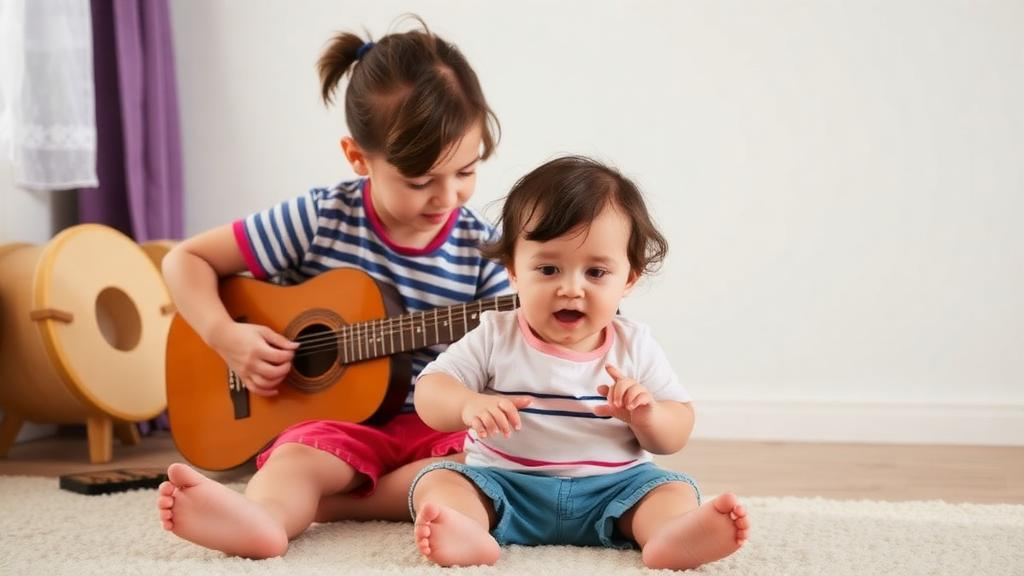
What if the secret to healthier, more capable toddlers was hiding in plain sight—in the songs they sing and the games they play before their third birthday? A team of Spanish researchers believes it might be, and they have designed one of the most ambitious early-childhood experiments yet attempted to find out. The MoviMusi study, a cluster-randomised controlled trial described in the Journal of Activity, Sedentary and Sleep Behaviors, will test whether a carefully co-designed programme of movement and music can transform how children aged one to three move, sleep, and develop motor and musical skills across an entire school day.
The stakes are surprisingly high for such a young age group. International guidelines recommend that toddlers accumulate at least 180 minutes of physical activity per day, including structured activity, while limiting restraint and screen time and securing 11 to 14 hours of good-quality sleep within every 24-hour period. Yet the evidence suggests most toddlers fall dramatically short. In an Australian study cited by the research team, fewer than 9 percent of toddlers met the full suite of national 24-hour movement guidelines for the early years. While 96.5 percent met the physical activity target and 79.7 percent met the sleep target, a mere 11.4 percent stayed within recommended sedentary screen time limits. Data from Singapore tell a similar story: around 82 percent of toddlers met sleep recommendations, but only about half met physical activity guidelines and fewer than 39 percent stayed within screen time limits. Canadian studies echo the pattern, with adherence to sleep and activity guidelines generally high but the majority of two-year-olds exceeding screen time recommendations.
Why does this matter so much? Because the early years are a period of extraordinary neural plasticity, when the foundations of motor competence, cognition, and emotional regulation are laid down. Research shows that toddlers’ gross motor skills are positively associated with cognitive development, and that shorter naps combined with a higher proportion of nighttime sleep correlate with better cognitive outcomes. Conversely, the prevalence of below-average motor skills in young children appears to be higher than normative samples would predict—a red flag that targeted developmental programmes can potentially address, since studies have shown such programmes can improve gross motor skills in toddlers. Music, meanwhile, is far more than entertainment at this age. When caregivers receive music training, children in their care show increased visual, vocal, and physical engagement, and music training in kindergartens has been shown to improve inhibitory control, a core executive function. Musical workshops built around sound-producing objects have been found to enhance toddlers’ natural exploratory drive.
Despite this converging evidence, no study to date has evaluated a holistic programme in early childhood education and care settings that integrates physical activity, sedentary behaviour, sleep, and motor and musical skills simultaneously. That gap is what MoviMusi is designed to fill. The trial will run over 24 months in the capital cities of three Spanish regions—Valencia, Murcia, and Toledo—chosen because they reflect the diversity of the Spanish educational system. In total, 24 public early childhood education and care centres will participate, split evenly between an intervention group and a control group: five centres per arm in Valencia, four per arm in Murcia, and three per arm in Toledo. With an average class size of 13 toddlers, this translates to roughly 312 children, distributed as 130 toddlers in Valencia, 104 in Murcia, and 78 in Toledo.
The trial’s design reflects the statistical realities of studying children in group settings. Because children within the same classroom behave more similarly to one another than to children in other classrooms—an effect quantified by an intraclass correlation—the researchers used cluster-randomisation formulas to calculate their sample. They powered the study to detect an expected increase of 8 minutes of moderate-to-vigorous physical activity per school day, building on their own previous accelerometry work showing that children aged two to three accumulate about 40 minutes of such activity during childcare hours. With a significance level of 5 percent, 90 percent statistical power, and an intraclass correlation of 0.35, 24 centres emerged as the required sample. Randomisation will occur only after baseline measurements are complete, at the end of the first year, performed by an independent researcher using a computer-generated sequence—a blinded procedure that protects against allocation bias.
What makes MoviMusi genuinely distinctive is its participatory philosophy. Rather than imposing a rigid, top-down curriculum, the researchers will work with each intervention centre’s principals, educators, and families to co-design a programme tailored to that centre’s specific realities. Previous research suggests these horizontal, dialogic interventions are more effective at changing school culture around physical activity than vertical, prescriptive ones. The programme unfolds along three axes. First, training: educators and families attend seminars and workshops on promoting physical activity as healthy behaviour and using music as a didactic resource. Second, participation: over two months, each institution designs its own movement and music programme, supported by baseline data on the personal, social, and environmental correlates of the children’s movement behaviours. Third, implementation: the specific actions run for six months, after which the team evaluates effectiveness against the control group, whose centres continue their usual curriculum.
The measurement toolkit is remarkably comprehensive for a population so young. Children will wear ActiGraph wGT3X-BT accelerometers on their right hip for one full week, from waking to bedtime, with data processed in 15-second epochs and scored using validated cutoffs for two-year-olds. Sleep will be captured through the Spanish-adapted Brief Infant Sleep Questionnaire, supplemented by teacher-recorded nap times during school hours. Motor skills will be assessed with the Peabody Developmental Motor Scales, third edition, a standardised instrument validated for Spanish children from six months to five years. Musical skills will be measured with MUSKITO—a new scale the research team itself is developing—covering listening, singing, instrumental interpretation, improvisation or composition, and movement. Direct observation during unstructured outdoor play will use a modified version of the OSRAC-P system, in which trained coders record a child’s activity state every 25 seconds in five-second observation windows, with intercoder reliability verified using Cohen’s kappa.
Beyond the child-level outcomes, the study casts a wide net across the entire educational ecosystem. Researchers will assess the quality of each centre using the Infant/Toddler Environment Rating Scale, measure playground area and density using satellite imagery and geographic information systems, and classify playgrounds as low or high density based on free space per child. Parents will complete validated questionnaires on their children’s after-hours activity, screen time, and modes of transport to school, alongside a dedicated scale measuring barriers to active commuting. Focus groups with educators and families, conducted at baseline and after implementation, will probe perceptions of barriers and facilitators to embedding movement and music in daily practice. The team will even analyse official curriculum documents to understand how public authorities promote—or fail to promote—movement and music in early childhood education, and will invite education authorities to result-dissemination meetings.
The researchers are candid about the challenges ahead. Interventions must respect each centre’s internal culture rather than dictate activities; family engagement with questionnaires cannot be taken for granted; accelerometer data will inevitably be lost to the absences that are common in toddler classrooms; and coordinating a project across three cities with different administrative rhythms demands dedicated local leads. The statistical plan anticipates these realities, using mixed-effects longitudinal models that adjust for baseline values, age, sex, and body mass index, with random effects for cities, groups, and participants, and multiple imputation for missing data handled by a blinded analyst. Ethical approval has been granted by the University of Valencia’s ethics committee, and written informed consent will be required from all participating families.
If MoviMusi succeeds, the implications could ripple well beyond the 24 participating nurseries. The team plans to share results at three levels—within each centre, at public events in the three cities, and through an open conference—culminating in a set of good-practice guidelines for promoting movement and music opportunities that could inform curriculum design and teacher training nationally and internationally. The study also answers a call from leading movement-behaviour researchers, who have identified interventions for children under three as a critical frontier. In a world where toddler screen time is quietly eroding the building blocks of healthy development, the idea that songs and structured play, delivered through the everyday curriculum, could shift the trajectory of an entire generation is a proposition worth testing rigorously. MoviMusi is now positioned to deliver exactly that test.
Subject of Research: A cluster-randomised controlled trial of a movement and music programme on movement behaviours and motor and musical skills in toddlers
Article Title: Effectiveness of a movement and music programme on activity, sedentary, and sleep behaviours and motor and musical skills in young children: protocol for the MoviMusi cluster randomised controlled trial
Article References: del Mar Bernabé-Villodre, M., Martínez-Bello, V. E., Vega-Perona, H., Díaz-Barahona, J., García-Ochoa, Y. C., Molines-Borrás, S., Gértrudix-Barrio, F., Montoya-Rubio, J. C., Fernández-Vilar, M. Á., Azorín-Delegido, J. M., Filenko, N., Martínez-Rojas, Á., & Martínez-Bello, D. A. (2024). Effectiveness of a movement and music programme on activity, sedentary, and sleep behaviours and motor and musical skills in young children: protocol for the MoviMusi cluster randomised controlled trial. Journal of Activity, Sedentary and Sleep Behaviors, 3(1), Article 28. https://doi.org/10.1186/s44167-024-00065-5
Image Credits: AI Generated
DOI: 10.1186/s44167-024-00065-5
Keywords: early childhood education, physical activity, sedentary behaviour, sleep, motor skills, musical skills, cluster randomised controlled trial, toddlers, MoviMusi, accelerometry, 24-hour movement guidelines, Spain
Cite Scienmag News
Glenn Wilkins. (October 4, 2026). Music and Movement Trial Aims to Reshape Toddler Development in Spanish Nurseries. Scienmag. https://scienmag.com/music-and-movement-trial-aims-to-reshape-toddler-development-in-spanish-nurseries/
Glenn Wilkins. "Music and Movement Trial Aims to Reshape Toddler Development in Spanish Nurseries." Scienmag, 4 October 2026, https://scienmag.com/music-and-movement-trial-aims-to-reshape-toddler-development-in-spanish-nurseries/. Accessed 4 October 2026.
Glenn Wilkins. "Music and Movement Trial Aims to Reshape Toddler Development in Spanish Nurseries." Scienmag. October 4, 2026. https://scienmag.com/music-and-movement-trial-aims-to-reshape-toddler-development-in-spanish-nurseries/


