


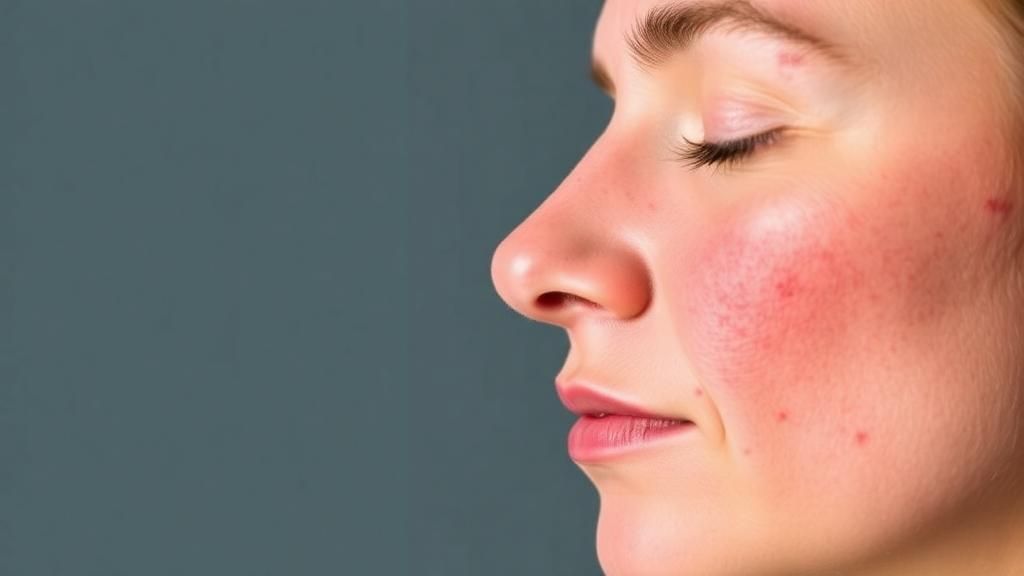
Rosacea is one of the most common chronic inflammatory skin conditions in the world, yet it remains stubbornly under-studied at the population level. A new short report published in the Archives of Dermatological Research by a team of researchers based at Northwestern University, led by corresponding author Peter Lio, sets out to change that. Drawing on the National Institutes of Health’s All of Us research database, the study examines rosacea alongside a broad sweep of lifestyle factors, dietary patterns and treatment approaches, in what the authors describe as a comprehensive analysis of the condition and its associated variables. The work, published on 17 September 2026, arrives at a moment when dermatologists are increasingly looking beyond the clinic to understand how everyday habits and systemic health interact with chronic skin disease.
The NIH All of Us program is one of the most ambitious biomedical data collection efforts ever attempted. Launched as part of a national push toward precision medicine, it aims to gather health, lifestyle and environmental information from more than a million participants across the United States, with deliberate oversampling of communities that have historically been underrepresented in medical research. Participants contribute survey responses covering diet, physical activity, smoking and alcohol use, alongside electronic health record data, physical measurements and, for many, genomic information. For dermatology researchers, this represents a rare opportunity: most rosacea studies are conducted in single clinics with hundreds of patients, while a database of this scale allows investigators to examine associations across tens of thousands of individuals drawn from wildly different backgrounds.
Rosacea itself is far more than simple facial redness. Clinicians recognize several overlapping subtypes, including erythematotelangiectatic rosacea, marked by persistent flushing and visible blood vessels; papulopustular rosacea, which produces acne-like bumps; phymatous rosacea, which can cause thickening of the skin, most famously around the nose; and ocular rosacea, which affects the eyes and eyelids. The condition follows a relapsing-remitting course, flaring in response to triggers that vary from person to person. Common culprits include sun exposure, heat, emotional stress, spicy foods, alcohol and hot beverages. Because the disease is so heterogeneous, large-scale data is essential for separating genuine risk factors from anecdotal associations that have accumulated over decades of clinical observation.
The pathophysiology of rosacea involves a complex interplay of innate immune dysregulation, neurovascular abnormalities and disruption of the skin’s microbial and physical barriers. Research over the past two decades has implicated elevated levels of antimicrobial peptides such as cathelicidin, heightened reactivity of transient receptor potential channels that sense heat and irritation, and an altered relationship with Demodex mites that colonize facial hair follicles. Chronic inflammation in rosacea has also been linked, in other studies, to systemic comorbidities including gastrointestinal disorders, cardiovascular disease and metabolic conditions, which is precisely the kind of association that a database as broad as All of Us is positioned to interrogate. Understanding whether rosacea is purely a skin disease or a visible marker of broader inflammatory states remains an open and clinically important question.
By analyzing lifestyle and dietary variables alongside rosacea status, the Northwestern team’s approach reflects a growing recognition that the social determinants of health, the conditions in which people live, work and eat, shape dermatologic outcomes in ways that prescriptions alone cannot address. The concept, articulated in influential public health literature, holds that researchers must consider the causes of the causes. For rosacea, this could mean examining how obesity, smoking status, alcohol consumption, diet quality and physical activity correlate with disease presence and severity across a diverse population. It could also mean investigating whether treatment patterns differ systematically by demographic group, a question with direct implications for health equity in dermatology.
Treatment for rosacea currently spans a layered arsenal. Topical agents such as metronidazole, azelaic acid and ivermectin target the inflammatory and mite-related components of the disease, while brimonidine and oxymetazoline constrict dilated facial blood vessels to reduce persistent redness. Oral antibiotics, particularly low-dose doxycycline, remain a mainstay for moderate to severe cases, and isotretinoin is occasionally used off-label for refractory disease. Laser and intense pulsed light therapies address the vascular changes that medications cannot fully reverse. Skincare routines built around gentle cleansing and barrier repair are considered foundational. Yet adherence varies enormously, and many patients cycle through multiple therapies before finding a regimen that controls their flares. Mapping real-world treatment patterns across a large cohort could reveal gaps between guideline recommendations and what patients actually receive.
The All of Us database is particularly valuable for this kind of research because of its demographic breadth. Traditional rosacea studies have often focused on fair-skinned populations of European descent, partly because the condition is easiest to diagnose visually in lighter skin. In skin of color, erythema can be subtle or absent, and rosacea is frequently misdiagnosed or overlooked, contributing to delays in treatment. A dataset that deliberately includes diverse racial and ethnic groups offers the chance to characterize how rosacea presents, and how it is managed, across the full spectrum of skin tones. The authors’ affiliation with related research subjects including race and ethnicity, obesity, risk factors and nutrition suggests the analysis was structured around exactly these dimensions.
As with any database study, the methodology carries inherent constraints that readers should keep in mind. All of Us relies substantially on participant-reported survey data and electronic health records, both of which are subject to misclassification: rosacea diagnoses may be inconsistently coded, and dietary recall is notoriously imprecise. Observational associations drawn from such data can identify correlations but cannot by themselves establish causation, and unmeasured confounders may influence any observed relationships. The authors note that no new datasets were generated or analyzed within the current study, indicating that the work functions as a secondary analysis of existing program data. Short reports of this kind are often best understood as hypothesis-generating contributions that lay groundwork for more targeted prospective studies rather than as definitive answers.
Nevertheless, the significance of the approach is hard to overstate. Dermatology has historically lagged behind other medical specialties in leveraging large-scale real-world data, in part because skin disease is so visually heterogeneous and because many conditions are managed outside hospital record systems. Studies that mine national biobanks for dermatologic signals are helping to close that gap, and rosacea, with its tangled mix of triggers, comorbidities and treatment options, is an ideal candidate for this kind of investigation. If lifestyle and dietary factors can be more firmly linked to disease activity, clinicians may one day pair pharmacologic treatment with concrete behavioral guidance, much as they now do for acne or psoriasis.
For the millions of people who live with rosacea, research of this kind carries practical hope. The condition affects quality of life out of proportion to its medical severity, with documented impacts on self-esteem, social interaction and even employment in customer-facing roles. Flares are unpredictable, triggers are personal, and the emotional burden of a visibly inflamed face is easy to underestimate. A rigorous, population-scale accounting of which habits, foods and treatments actually matter, grounded in a dataset built to reflect the diversity of the American public, moves the field closer to personalized management strategies. The Northwestern team’s analysis, published as volume 318, article 433 of the Archives of Dermatological Research, is a step toward that future, and it signals that chronic skin disease is finally getting the big-data attention it deserves.
Subject of Research: Population-scale analysis of rosacea risk factors, lifestyle and dietary associations, and treatment patterns using the NIH All of Us database
Article Title: Rosacea and associated factors: a comprehensive analysis of lifestyle, dietary, and treatment patterns using the NIH All of Us database
Article References: Rosacea and associated factors: a comprehensive analysis of lifestyle, dietary, and treatment patterns using the NIH All of Us database. (n.d.). https://doi.org/10.1007/s00403-026-04952-6
Image Credits: AI Generated
DOI: 10.1007/s00403-026-04952-6
Keywords: rosacea, NIH All of Us, dermatology, skin disease, lifestyle factors, diet, treatment patterns, inflammation, health equity, population health, chronic skin condition, precision medicine
Cite Scienmag News
Daisy Hatcher. (October 10, 2026). Massive NIH Database Study Probes How Lifestyle, Diet and Treatment Shape Rosacea. Scienmag. https://scienmag.com/massive-nih-database-study-probes-how-lifestyle-diet-and-treatment-shape-rosacea/
Daisy Hatcher. "Massive NIH Database Study Probes How Lifestyle, Diet and Treatment Shape Rosacea." Scienmag, 10 October 2026, https://scienmag.com/massive-nih-database-study-probes-how-lifestyle-diet-and-treatment-shape-rosacea/. Accessed 10 October 2026.
Daisy Hatcher. "Massive NIH Database Study Probes How Lifestyle, Diet and Treatment Shape Rosacea." Scienmag. October 10, 2026. https://scienmag.com/massive-nih-database-study-probes-how-lifestyle-diet-and-treatment-shape-rosacea/


