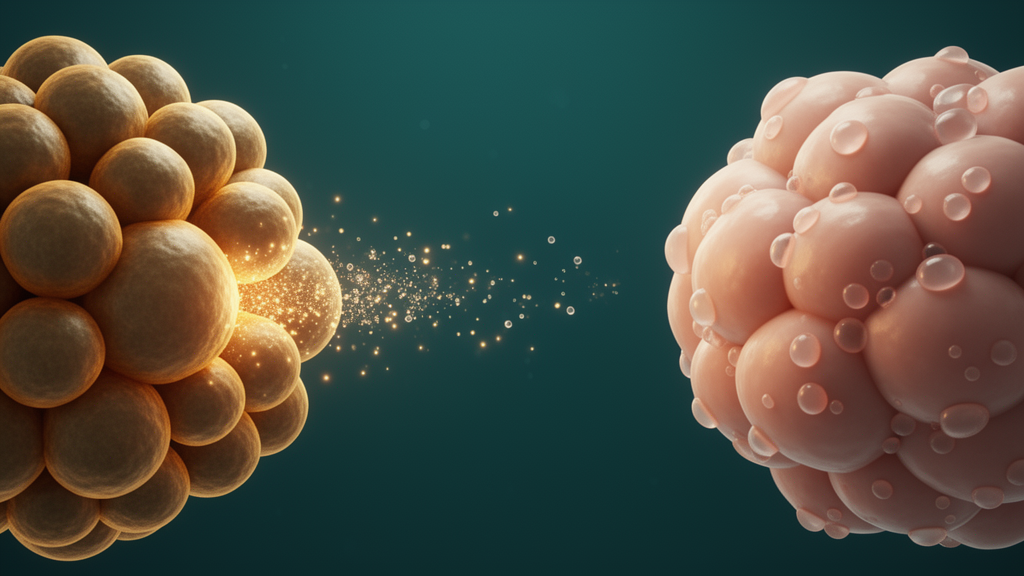
A semisynthetic derivative of a marine natural product has been shown to alter the chemical messages that liver cells send to fat cells, and the resulting shift appears to favor a healthier metabolic profile in the recipient tissue. In a study published in Frontiers in Pharmacology on 23 October 2026, researchers at the University of Naples Federico II reported that conditioned media collected from HepG2 liver cells treated with the phosphoeleganin-derived compound PE/2 increased adiponectin expression, lowered pro-inflammatory cytokine mRNA levels, promoted lipid droplet accumulation, and enhanced insulin receptor and Akt phosphorylation in differentiated 3T3-L1 mouse adipocytes. The same media also improved glucose consumption in the fat cells, and adding recombinant interleukin-6 back into the media largely erased these benefits. The findings are entirely cell-culture based, but they offer a detailed mechanistic picture of how a single marine-derived molecule might modulate the endocrine dialogue between two of the body’s central metabolic organs.
The liver and adipose tissue are far more than passive storage depots. Both organs secrete cytokines, hepatokines, and adipokines into the circulation, conveying metabolic signals systemwide and helping to maintain energy homeostasis. When this liver-adipose communication axis falls out of balance, the consequences can include insulin resistance, chronic low-grade inflammation, metabolic dysfunction-associated fatty liver disease, and obesity. Hepatic TNFα and IL-6, for example, are considered pivotal contributors to the pathogenesis of metabolic diseases in humans, while the adipokine adiponectin acts to mitigate inflammation, insulin resistance, and fatty liver progression. Because currently available drugs are not entirely free of side effects, the authors argue that discovering new chemical entities capable of enhancing insulin sensitivity remains a crucial goal for preventing and treating metabolic disorders.
The molecule at the center of the new work traces back to the Mediterranean ascidian Aplidium elegans, a marine invertebrate from which the researchers previously isolated phosphoeleganin, a phosphorylated polyketide whose complex structure and configuration were determined through extensive two-dimensional nuclear magnetic resonance analysis and microscale chemical degradation and derivatization. Phosphoeleganin has been shown to inhibit protein tyrosine phosphatase 1B, an enzyme whose blockade improves insulin signaling in skeletal muscle cells. Because marine resources are finite and subject to temporal variability in availability, the team rationally designed simplified fragments of the parent molecule for deeper structure-activity relationship studies. Specimens of A. elegans were collected in April 2023 along the coast of Pozzuoli, Italy, and purified phosphoeleganin was obtained through exhaustive extraction followed by consecutive chromatographic fractionation steps.
Two semisynthetic fragments, designated PE/2 and PE/3, were generated by oxidative cleavage of phosphoeleganin’s 1,2-diol functionality, and the two fragments have exhibited clearly divergent biological behaviors. In earlier experiments with HepG2 liver cells, only PE/2 acted as an insulin-sensitizing agent, increasing insulin-induced INSR and Akt phosphorylation, while also decreasing IL-6 expression and secretion. PE/2, however, was not able to inhibit PTP1B. Conversely, the phosphorylated fragment PE/3, previously shown to be an insulin mimetic agent in muscle cells through significant PTP1B inhibition, did not improve insulin signaling in HepG2 cells. These tissue-specific differences led the team to hypothesize that the improvement in hepatic insulin signaling induced by PE/2 might be mediated by suppression of IL-6 rather than by the phosphatase pathway implicated in muscle.
To model how hepatocytes communicate with adipocytes, the researchers employed a conditioned media approach, in which culture medium harvested from donor HepG2 cells, containing secreted cytokines, growth factors, and extracellular vesicles, was transferred to recipient 3T3-L1 cells. This method mimics paracrine and autocrine communication in vitro and allows investigators to assess how soluble factors released by one cell type influence another. The team selected HepG2 and 3T3-L1 cells for reproducibility, unlimited availability, and phenotypic stability, while acknowledging in the paper that these established lines carry a metabolic and secretory profile distinct from human primary hepatocytes and adipocytes. The authors note that the cell models overcome the high inter-donor variability and costs associated with primary cells, a trade-off that shapes how the results should be interpreted.
The cytokine results were striking. Conditioned media from PE/2-treated HepG2 cells, termed CMPE/2, increased adiponectin mRNA in differentiated 3T3-L1 adipocytes by 1.85-fold compared with conditioned media alone. In parallel, CMPE/2 decreased the mRNA levels of the pro-inflammatory cytokines IL-8 and IL-1β by 43 percent and 52 percent, respectively, without affecting TNFα or IL-6 expression in the recipient fat cells. Consistent with a calmer inflammatory tone, the phosphorylation of JNK, one of the main mediators of cytokine-induced inflammation, decreased by 36 percent in the PE/2-treated HepG2 cells themselves compared with control. Together, the data indicate that the liver cells exposed to PE/2 released a soluble factor profile that pushed the recipient adipocytes toward a protective adipokine phenotype.
The lipid findings added an unexpected dimension. Oil Red O staining revealed that lipid droplet content was 1.75-fold higher in adipocytes incubated with CMPE/2 than in those exposed to control conditioned media. Surprisingly, mRNA levels of SREBP1c and ChREBP, the master transcription factors regulating lipogenesis, and of their downstream effector fatty acid synthase, did not change in the presence of CMPE/2, suggesting that lipid synthesis in this model proceeds through a pathway not directly governed by these proteins. Instead, CMPE/2 increased the expression of the key adipogenic markers PPARγ, C/EBPα, FABP4, and GLUT4 by 1.59-fold, 2.78-fold, 3.90-fold, and 2.63-fold, respectively. The authors interpret this moderate increase in adipogenesis as potentially metabolically protective, noting that in vivo a roughly two-fold rise in adipogenesis does not impair adipose tissue expandability but rather promotes healthy, metabolically favorable expansion.
Whether this adipokine and lipid profile translated into enhanced insulin responsiveness was the next question. Conditioned media from HepG2 cells stimulated with insulin alone, termed CMIns, did not significantly increase insulin receptor or Akt phosphorylation in the 3T3-L1 adipocytes. However, conditioned media from HepG2 cells co-treated with insulin and PE/2, termed CMIns+PE/2, increased INSR and Akt phosphorylation by 2.13-fold and 1.63-fold, respectively, compared with control conditioned media, and by 1.83-fold and 1.42-fold compared with CMIns. Total INSR and Akt protein levels were unchanged. As a functional readout, medium glucose levels were 22 percent lower in the presence of CMIns and 40 percent lower in the presence of CMIns+PE/2 than in control media, with CMIns+PE/2 decreasing glucose concentration by 24 percent relative to CMIns, reflecting an increased consumption rate in the fat cells.
The involvement of the PI3K/Akt pathway was tested directly. When 3T3-L1 cells received conditioned media from HepG2 cells treated with insulin, PE/2, and the PI3K/Akt inhibitor LY294002, the CMIns+PE/2-mediated increase in Akt phosphorylation was completely blocked. In parallel, the inhibitor co-treatment increased medium glucose levels by 1.55-fold and reduced lipid accumulation by 51 percent compared with CMIns+PE/2, restoring both parameters to levels comparable with the control conditioned media. These reversal experiments indicate that the improved insulin signaling, glucose utilization, and lipid storage observed in the recipient adipocytes depend on intact PI3K/Akt signaling, anchoring the phenotype to a well-defined intracellular pathway rather than to a diffuse, uncharacterized effect.
The final and perhaps most telling experiment concerned IL-6. Building on the team’s previous demonstration that PE/2 reduced IL-6 levels in HepG2 culture medium by 26 percent, the researchers supplemented CMPE/2 with recombinant IL-6, restoring the cytokine to the concentration measured in control conditioned media. The protective effect of PE/2 largely disappeared: adiponectin expression fell by 40 percent, while IL-8 and IL-1β mRNA rose by 1.77-fold and 2.60-fold, respectively, compared with CMPE/2 alone. mRNA levels of PPARγ, C/EBPα, and GLUT4 were 47 percent, 53 percent, and 57 percent lower in the IL-6-restored cells, and glucose consumption returned to control levels. This rescue experiment corroborates the hypothesis that IL-6 is involved in the action mediated by PE/2, consistent with prior reports that IL-6 suppresses adiponectin expression, induces IL-8 and IL-1β upregulation, and contributes to insulin resistance in 3T3-L1 cells. The authors caution that the findings require independent validation in primary cell systems and in vivo models, noting that the limited availability of PE/2, its very low solubility in water and physiological saline, and the unresolved question of whether the compound modulates other key hepatokines currently constrain further experimental development.
Subject of Research: Effects of the phosphoeleganin-derived compound PE/2 on liver-to-adipocyte cell communication, cytokine balance, and insulin signaling in cell culture
Article Title: Conditioned media derived from HepG2 cells treated with phosphoeleganin synthetic-derived compound PE/2 improve cytokine balance and metabolic response in 3T3-L1 adipocytes
Article References: Mormone, F., Ferraro, G., Morelli, C., Fiory, F., Cabaro, S., Perruolo, G., Casertano, M., Menna, M., Formisano, P., Imperatore, C., & Oriente, F. (2026). Conditioned media derived from HepG2 cells treated with phosphoeleganin synthetic-derived compound PE/2 improve cytokine balance and metabolic response in 3T3-L1 adipocytes. Frontiers in Pharmacology, 17, Article 1909848. https://doi.org/10.3389/fphar.2026.1909848
Image Credits: AI Generated
DOI: 10.3389/fphar.2026.1909848
Keywords: phosphoeleganin, PE/2, marine natural products, HepG2 cells, 3T3-L1 adipocytes, conditioned media, interleukin-6, adiponectin, insulin signaling, Akt pathway, liver-adipose axis, metabolic disease
Cite Scienmag News
Ophelia Keating. (October 26, 2026). Marine-Derived Compound PE/2 Reshapes Liver-to-Fat Cell Communication in Cell Study. Scienmag. https://scienmag.com/marine-derived-compound-pe-2-reshapes-liver-to-fat-cell-communication-in-cell-study/
Ophelia Keating. "Marine-Derived Compound PE/2 Reshapes Liver-to-Fat Cell Communication in Cell Study." Scienmag, 26 October 2026, https://scienmag.com/marine-derived-compound-pe-2-reshapes-liver-to-fat-cell-communication-in-cell-study/. Accessed 26 October 2026.
Ophelia Keating. "Marine-Derived Compound PE/2 Reshapes Liver-to-Fat Cell Communication in Cell Study." Scienmag. October 26, 2026. https://scienmag.com/marine-derived-compound-pe-2-reshapes-liver-to-fat-cell-communication-in-cell-study/