


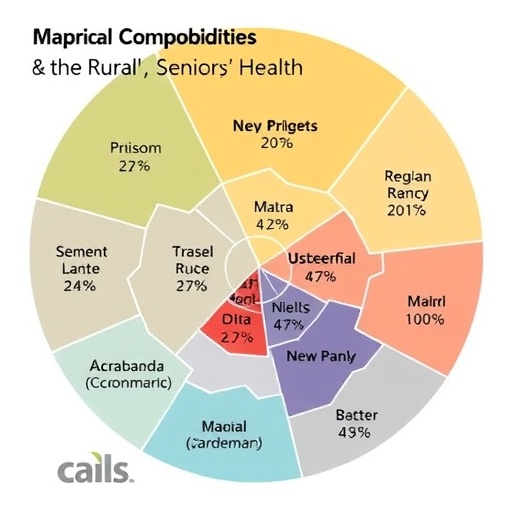
In the rapidly evolving field of geriatric health, understanding the intricate relationships between multiple chronic conditions has become a critical challenge. Among rural older adults aged 65 and above, such complexities are particularly pronounced due to a combination of lifestyle, environmental, and healthcare access factors. A groundbreaking study has recently emerged, shedding light on the co-occurrence network characteristics of comorbidities within this population, utilizing health examination indicators as its primary data source. This research not only elucidates the interconnected nature of chronic diseases but also pinpoints pivotal comorbidity nodes that could revolutionize clinical approaches for elderly care in rural settings.
The foundation of this study lies in the innovative use of health examination indicators — objective, quantifiable measures obtained from routine medical checkups. These indicators encompass a broad spectrum of physiological parameters, laboratory test results, and vital signs, forming an extensive dataset that reflects the complex health status of individuals. By harnessing these indicators, the researchers constructed co-occurrence networks that map the relationships between various chronic conditions, effectively transforming static clinical data into dynamic models that reveal hidden interactions and patterns.
Central to this research is the concept of a co-occurrence network: a graphical representation where nodes symbolize distinct comorbidities, and edges signify statistically significant co-existence relationships between them. This approach enables the identification of clusters or communities of diseases that frequently present together. For example, metabolic syndromes such as hypertension, diabetes, and dyslipidemia often co-occur, and understanding their network centrality provides insights into their roles as key influencers in patients’ overall health trajectories.
The study’s cohort, rural older adults aged 65 and above, represents a demographic often characterized by limited healthcare resources, lower socioeconomic status, and higher vulnerability to multiple chronic conditions. Traditional epidemiological analyses may overlook the nuanced interplay of diseases in such populations, but the co-occurrence network model elevates the analytical depth. This methodology facilitates a systemic perspective, considering not just isolated conditions but their combined effects and mutual reinforcement within the aging organism.
One of the most remarkable aspects uncovered by this study is the identification of key comorbidity nodes, which act as hubs within the network. These nodes possess high degrees of connectivity, meaning they are frequently associated with many other conditions. Targeting these central comorbidities with preventive or therapeutic interventions could therefore yield disproportionate benefits, potentially mitigating the progression or impact of multiple downstream diseases simultaneously.
Technically, the research team employed advanced statistical techniques, including network topology analysis and centrality measures such as degree, betweenness, and closeness centralities. These metrics help highlight the importance and influence of specific nodes within the network structure. For instance, a node with high betweenness centrality might serve as a critical conduit linking disparate disease clusters, rendering it an optimal focal point for interrupting pathological intersections.
The utilization of health examination indicators provides an additional layer of granularity by incorporating physiological data that reflect early or subclinical alterations preceding overt disease manifestation. This early-warning capacity is especially valuable in rural elder populations, where timely diagnosis and management remain challenging. The integration of these indicators into network models paves the way for predictive analytics, offering prospects for proactive health management rather than reactive treatment.
Moreover, the study’s methodological framework incorporates machine learning algorithms to refine the co-occurrence network by filtering spurious associations and enhancing predictive accuracy. Through iterative validation, these algorithms ensure the robustness and clinical relevance of identified connections, setting a new standard for applied geriatric epidemiology research. The advanced computational techniques underline the potential of artificial intelligence in extracting actionable knowledge from complex biological datasets.
The implications of these findings extend beyond academic interest; they possess real-world translational potential. Clinicians, healthcare policymakers, and community health workers can leverage network insights to design targeted intervention programs tailored to the unique comorbidity profiles prevalent in rural elderly populations. For example, prioritizing screenings for high-centrality conditions could optimize resource allocation and improve patient outcomes in settings constrained by limited medical infrastructure.
Additionally, the research emphasizes the interconnectedness of physical and biochemical markers, suggesting avenues for integrated healthcare models that synthesize data from multiple health domains. This multidisciplinary approach aligns with contemporary movements toward precision medicine, wherein treatments and prevention strategies are customized based on comprehensive individual health profiles, including their position within a broader comorbidity network.
While the study represents a significant advancement, it also opens avenues for further inquiry. Future research could explore temporal dynamics of co-occurrence networks to understand how comorbidity patterns evolve with aging or in response to interventions. Longitudinal datasets and real-time health monitoring could enrich network models, allowing for adaptive healthcare strategies that evolve alongside patients’ changing health landscapes.
Furthermore, expanding such network analyses to diverse geographical and demographic contexts would enhance the generalizability and utility of the approach. Comparative studies might reveal distinct network architectures influenced by cultural, environmental, or genetic factors, tailoring public health strategies accordingly. This expansion could inform global aging initiatives aimed at curbing the burden of chronic diseases across different societies.
In conclusion, this pioneering research harnesses the power of co-occurrence network analysis, grounded in robust health examination data, to unravel the complex web of comorbidities afflicting rural older adults. By identifying key nodes within this network, it opens new pathways for targeted, efficient healthcare interventions that promise to improve quality of life and longevity in an underserved, vulnerable population. The intersection of network science, gerontology, and clinical practice revealed here marks a promising frontier for the future of elderly care.
Cite Scienmag News
Ophelia Keating. (June 11, 2026). Mapping Key Comorbidities in Rural Seniors’ Health. Scienmag. https://scienmag.com/mapping-key-comorbidities-in-rural-seniors-health/
Ophelia Keating. "Mapping Key Comorbidities in Rural Seniors’ Health." Scienmag, 11 June 2026, https://scienmag.com/mapping-key-comorbidities-in-rural-seniors-health/. Accessed 3 September 2026.
Ophelia Keating. "Mapping Key Comorbidities in Rural Seniors’ Health." Scienmag. June 11, 2026. https://scienmag.com/mapping-key-comorbidities-in-rural-seniors-health/


