


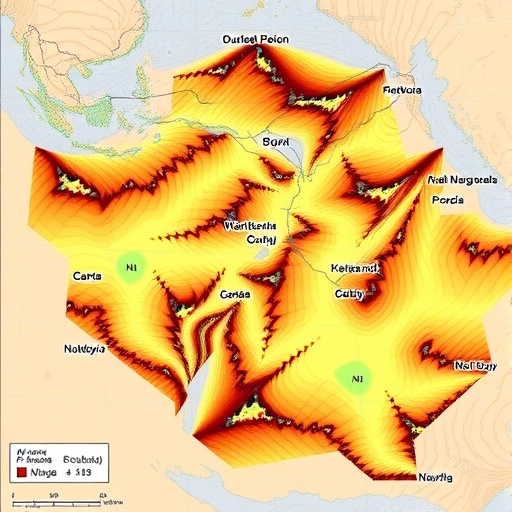
In the ever-evolving world of energy resources, one key focus area has emerged: the intricate relationship between aquifer delineation and coalbed methane (CBM) productivity. In a groundbreaking study, researchers Zhao, Zhang, and Tang have provided critical insights into this relationship within the Benxi Formation located in the Central-Eastern Ordos Basin. Their research showcases how effective aquifer delineation is not just a geographical exercise but a vital element influencing the productivity and extraction techniques of deep coalbed methane.
The study begins by addressing the importance of accurately delineating aquifers in the Benxi Formation. This region has gained attention for its significant deposits of coalbed methane, a clean energy source that holds the potential to diversify energy portfolios and reduce reliance on other fossil fuels. By providing clarity on the spatial distribution of aquifers, this research sets the stage for optimizing extraction methodologies aimed at maximizing methane yield while minimizing ecological disruption.
Aquifer delineation involves analyzing the subsurface geological structures to separate different water-bearing formations. In the case of the Benxi Formation, this activity requires advanced geological modeling techniques and exhaustive field studies. The researchers employed cutting-edge geophysical tools alongside traditional methodologies to paint a detailed picture of the underground layout. This holistic approach not only enhances the understanding of the geological formations but also aids in predicting how these formations will interact with gas extraction processes.
A substantial part of the research emphasizes the interplay between aquifer characteristics and methane productivity. The researchers discovered that specific hydraulic properties, such as permeability and porosity, play a fundamental role in how efficiently methane can be extracted. They also argued that traditional approaches to evaluating methane productivity often overlook these critical aquatic characteristics. By integrating aquifer analysis into productivity models, researchers can more accurately predict potential methane yields.
A unique finding from Zhao et al.’s study is how variations in aquifer thickness directly correlate with the volume of recoverable methane. This relationship underscores the need for tailored extraction strategies that consider the aquifer’s specific characteristics. As the team points out, ignoring these details could lead to suboptimal production rates and even result in environmental liabilities. Hence, the refinement of delineation techniques stands as a necessary step toward responsible energy extraction.
The implications of this research extend beyond the immediate scope of energy production. The health of aquifers is intrinsically linked to environmental stewardship in mining practices. Over-extraction of methane can lead to detrimental impacts on groundwater resources, reversing years of ecological stability. Therefore, the findings stress the importance of sustainable practices that take aquifer health into account during methane extraction processes.
The study also introduces innovative methodologies for simulating aquifer behavior that could significantly enhance the predictive capabilities of production models. Utilizing numerical simulation models, the researchers were able to assess how various extraction scenarios might affect the aquifer system over time. This predictive power equips energy companies with the data needed to make informed decisions regarding their operational strategies.
Further, the research acknowledges the importance of regulatory frameworks in the protection of aquifers. As methane extraction practices evolve, there is a pressing need for legislation that reflects the new scientific understandings attained through such studies. Policymakers would benefit from embracing these insights to develop regulations that prioritize both energy production and aquifer preservation.
By contributing to the body of knowledge on aquifer delineation and its impact on CBM productivity, this study sets a new standard for future research. It not only enhances scientific understanding but also serves as a guide for practitioners in the field. The emphasis on integrating geological evaluation with resource extraction strategies positions this research as pioneering.
The exploration of the Central-Eastern Ordos Basin is especially significant given its vast coalbed methane reserves. As the global energy landscape shifts towards cleaner alternatives, the urgency to optimize methane extraction while safeguarding water resources intensifies. This study represents a significant step in bridging the gap between energy resource management and environmental conservation.
In conclusion, the research by Zhao, Zhang, and Tang offers a fresh perspective on an increasingly relevant topic in energy sustainability. The findings reveal a path forward that balances the ambitious goals of energy production with the equally pressing necessity of environmental protection. As coalbed methane continues to emerge as a favorable alternative to traditional fossil fuels, the insights garnered from this study will likely resonate across the broader field of energy resource management, influencing practices both locally and globally.
As the industry navigates the complexities of sustainable energy extraction, the recommendations arising from this research promise to shape future mining practices, ensuring that aquifers are not only delineated but also respected in the pursuit of energy resources. The dedication to merging technological advances with ecological considerations heralds a future where energy extraction can indeed coexist with environmental integrity.
By fostering an understanding of the intricate relationship between aquifers and methane production, this study invites further inquiry into the boundaries of geological research and energy sustainability. The challenge remains to continuously adapt and innovate as we strive towards a more responsible and sustainable energy future.
Cite Scienmag News
Violet Maxwell. (December 14, 2025). Mapping Aquifers in Benxi Formation Boosts CBM Output. Scienmag. https://scienmag.com/mapping-aquifers-in-benxi-formation-boosts-cbm-output/
Violet Maxwell. "Mapping Aquifers in Benxi Formation Boosts CBM Output." Scienmag, 14 December 2025, https://scienmag.com/mapping-aquifers-in-benxi-formation-boosts-cbm-output/. Accessed 3 September 2026.
Violet Maxwell. "Mapping Aquifers in Benxi Formation Boosts CBM Output." Scienmag. December 14, 2025. https://scienmag.com/mapping-aquifers-in-benxi-formation-boosts-cbm-output/


