


…
…
The proposal arrives at a moment when mammalian microbiome research has matured considerably, yet its evolutionary interpretation remains fragmented. Most studies of the mammalian microbiome focus on ecological dynamics within a single host generation, cataloguing which organisms occupy which body sites and how those communities respond to diet, antibiotics, or disease. Far fewer investigations ask why particular microbial partners recur across generations of hosts, and whether the mammalian body has evolved dedicated machinery to ensure that recurrence. The framework advanced in this hypothesis-and-theory article addresses that gap by treating transmission fidelity itself as a trait that natural selection can act upon, rather than as a passive byproduct of maternal contact.
A useful way to appreciate the argument is to consider how biologists already think about other forms of parental investment. Mothers provision offspring with nutrients, antibodies, hormones, and thermal care, and each of these contributions has well-characterized mechanisms and recognized fitness consequences. The author’s proposal asks whether microbial provisioning deserves a place in that same conceptual category. If certain bacterial or archaeal lineages consistently aid their hosts—by priming the immune system, digesting otherwise unavailable nutrients, or excluding pathogens—then a mother who reliably passes those lineages to her offspring confers a measurable advantage, and any maternal trait that improves the reliability of that transfer becomes a candidate target of selection.
The comparative sweep across monotremes, marsupials, and eutherians gives the hypothesis its empirical backbone. Monotremes such as the platypus and echidna lay eggs and lack true nipples, yet they nourish young with milk secreted onto specialized patches of skin and fur. Marsupials deliver highly altricial young to a pouch where prolonged lactation continues development. Eutherians combine an extended placental gestation with nipple-based nursing. These three reproductive strategies represent successive variations on a shared glandular theme, and each creates a different configuration of maternal–offspring contact. If microbial transmission fidelity increased along this evolutionary sequence, one might expect corresponding changes in how tightly microbial communities are regulated at glandular surfaces, and in how consistently particular lineages appear in successive generations of offspring. The article’s apocrine–mammary–microbiota axis is designed to make such comparisons tractable by focusing attention on the secretory biology that all three lineages share.
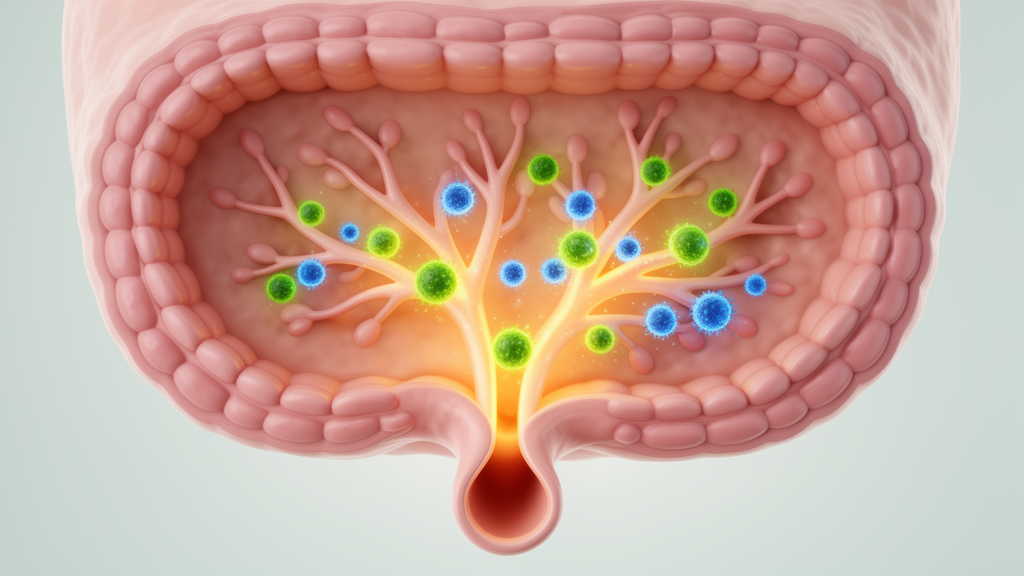
Apocrine glands deserve particular attention in this regard. These secretory structures, which release their products by shedding portions of the secreting cells themselves, are distributed across mammalian skin and are ancestral to the mammary gland. Their secretions carry lipids, proteins, and other molecules that shape the chemical environment of the skin surface, and that environment in turn selects for characteristic microbial communities. Sebaceous glands contribute their own lipid-rich secretions, and the interplay of these glandular products helps explain why different body sites host recognizably different microbial assemblages. The hypothesis argues that when mammary glands arose from this apocrine heritage, they brought with them the capacity to regulate microbial communities, and redirected it toward a new purpose: conditioning the microbial environment encountered by nursing offspring.
Milk itself is now known to contain far more than fat, sugar, and protein. Human and bovine milk both carry live microorganisms, human milk oligosaccharides that selectively feed particular gut bacteria, antimicrobial peptides, and immunoglobulins. The oligosaccharides are especially instructive: dozens of distinct structures are synthesized enzymatically, yet the infant cannot digest most of them. Their apparent purpose is to nourish specific microbes, notably bifidobacteria, that colonize the infant gut. This observation has long puzzled researchers who interpret milk components purely as nutrition for the infant, but it fits naturally within a framework in which the mother is also cultivating a microbial community. Under the filial microorganism concept, such selective feeding would count as a host mechanism facilitating the establishment of a transmitted lineage.
The distinction the author draws between filial microorganisms and merely transmitted ones is one of the article’s more careful conceptual contributions. Many microbes reach offspring incidentally—picked up from soil, food, or the general environment—and their presence in offspring says little about host evolution. A filial lineage, by contrast, is one for which the host lineage has evolved mechanisms that promote its transfer or maintenance. The term deliberately avoids requiring obligate vertical transmission, acknowledging that even a favored microbe may sometimes be acquired horizontally. This flexibility matters because microbial communities are dynamic, and a rigid definition would exclude partnerships that are real but intermittent. The proposed diagnostic criteria—preferential maternal transmission, persistence across host generations, evidence of host facilitation, and measurable fitness contributions—give researchers a checklist for evaluating candidate lineages without demanding perfection on any single criterion.
The speculative extension to the eutherian placenta will likely draw the most scrutiny. Claims of a resident placental microbiome have circulated in the literature for roughly a decade, fueled by studies detecting bacterial DNA in placental tissue. Subsequent work has shown that such signals can arise from contamination during sample collection and sequencing, and the field has grown appropriately cautious. The article sidesteps that controversy by proposing something different: the placenta as a transient immunological interface rather than a microbial reservoir. On this view, the immunological events surrounding the transition from pregnancy to birth—when fetal and maternal immune systems must negotiate a dramatic shift in exposure—may seed very low-abundance microbial populations that are then expanded and refined by subsequent contact with the birth canal, maternal skin, glandular secretions, and milk. This framing is testable, because it predicts specific patterns: founder populations initiated at the placental interface should be sparse, should overlap with maternal sources encountered later, and should be shaped by immunological processes rather than by stable in-utero residence.
The immunological dimension of the framework connects to well-established biology. Mammalian neonates are born with immature immune systems, and early microbial exposure is now understood to be essential for proper immune education. Germ-free mice, raised without any microbiota, show profound defects in immune development, gut architecture, and even behavior. Colostrum, the first milk produced after birth, is rich in immunoglobulins and other factors that interact with the developing immune system and with incoming microbes. If mammalian evolution has progressively woven microbial transmission into reproductive biology, the immune system would be expected to participate actively—tolerating beneficial lineages while excluding harmful ones—and several known mechanisms, including secretory immunoglobulin A and the selective growth factors in milk, fit that expectation.
It is worth emphasizing what the hypothesis does not claim. The author explicitly notes that nutrition, protection, developmental regulation, and reproductive efficiency remain fully adequate explanations for many features of mammalian reproduction, and that microbial transmission need not have been the primary selective force behind mammary evolution. The argument is instead about secondary functions: once structures such as mammary glands created recurrent maternal–offspring interfaces, microbial transmission could become an additional selectable function whenever the associated microbes enhanced fitness. This layered view of adaptation, in which structures acquire new functions without abandoning old ones, is a familiar pattern in evolutionary biology, and it makes the hypothesis compatible with mainstream accounts of mammary origin rather than competing against them.
The framework also builds on the author’s earlier Acari Hypothesis, which proposed that interactions with mite ectoparasites shaped several distinctive mammalian traits, including glandular skin, IgE-mediated immunity, and the mammary glands themselves. The present article treats that earlier work as an evolutionary foundation rather than as independent evidence, and readers unfamiliar with it should understand that the apocrine–mammary–microbiota axis can be evaluated on its own terms. Still, the connection is conceptually coherent: if glandular secretions evolved partly to manage ectoparasites and their pathogens, the microbial communities those secretions cultivate would have been under selection for defensive functions, and the same communities could later have been repurposed for intergenerational transmission.
Testing the hypothesis will require longitudinal studies that follow microbial lineages across multiple host generations, ideally in wild populations where environmental acquisition can be distinguished from maternal transfer. Modern strain-level genomics makes this increasingly feasible: individual bacterial strains can be tracked with sufficient resolution to determine whether an offspring’s microbes match its mother’s or the surrounding environment’s. Such studies exist in preliminary form for humans and for some laboratory animals, but systematic cross-generational sampling across monotremes, marsupials, and eutherians remains rare. The article’s predictions offer a concrete research agenda for filling that gap, and the comparative framework suggests which lineages and which host mechanisms deserve closest attention.
The broader significance of the proposal lies in how it reframes inheritance. Evolutionary theory has long treated the transmission of host genes as the canonical form of heredity, with microbial inheritance acknowledged but often treated as an exception or a curiosity. If mammalian biology has evolved dedicated mechanisms for preserving beneficial microbial partnerships, then inheritance in mammals is genuinely multi-channel, encompassing genes, epigenetic marks, behavioral traditions, and microbial lineages, each with its own transmission machinery. The filial microorganism concept gives that microbial channel a precise definition and a set of testable criteria, which is exactly what a field needs to move from suggestive observations to rigorous evaluation. Whether the hypothesis survives that evaluation in full, in part, or not at all, it clarifies the questions that future comparative and experimental work should address.
For now, the article stands as a well-structured theoretical contribution: it identifies a genuine gap in evolutionary understanding, proposes a specific and falsifiable framework, grounds that framework in comparative mammalian biology, and articulates predictions that working scientists can pursue. Its success will ultimately depend on evidence, but its immediate value is in giving researchers a shared vocabulary—the apocrine–mammary–microbiota axis, filial microorganisms, and the placenta as a transient immunological interface—with which to organize the accumulating observations of maternal microbial transmission across the mammalian tree of life.
Subject of Research: Evolutionary biology
Article Title: A proposed framework for microbial inheritance in mammalian evolution: the apocrine-mammary-microbiota axis
Article References: Retzinger, A. C. (2026). A proposed framework for microbial inheritance in mammalian evolution: the apocrine-mammary-microbiota axis. Frontiers in Ecology and Evolution, 14, Article 1935049. https://doi.org/10.3389/fevo.2026.1935049
Image Credits: AI Generated
DOI: 10.3389/fevo.2026.1935049
Keywords: microbiome, mammalian evolution, microbial inheritance, mammary glands, placenta, coevolution, proposed, framework, microbial, inheritance, mammalian, evolution
Cite Scienmag News
Morgan Morrow. (October 16, 2026). Mammary Glands May Have Evolved to Pass Beneficial Microbes From Mother to Offspring, New Framework Proposes. Scienmag. https://scienmag.com/mammary-glands-may-have-evolved-to-pass-beneficial-microbes-from-mother-to-offspring-new-framework-proposes/
Morgan Morrow. "Mammary Glands May Have Evolved to Pass Beneficial Microbes From Mother to Offspring, New Framework Proposes." Scienmag, 16 October 2026, https://scienmag.com/mammary-glands-may-have-evolved-to-pass-beneficial-microbes-from-mother-to-offspring-new-framework-proposes/. Accessed 16 October 2026.
Morgan Morrow. "Mammary Glands May Have Evolved to Pass Beneficial Microbes From Mother to Offspring, New Framework Proposes." Scienmag. October 16, 2026. https://scienmag.com/mammary-glands-may-have-evolved-to-pass-beneficial-microbes-from-mother-to-offspring-new-framework-proposes/


