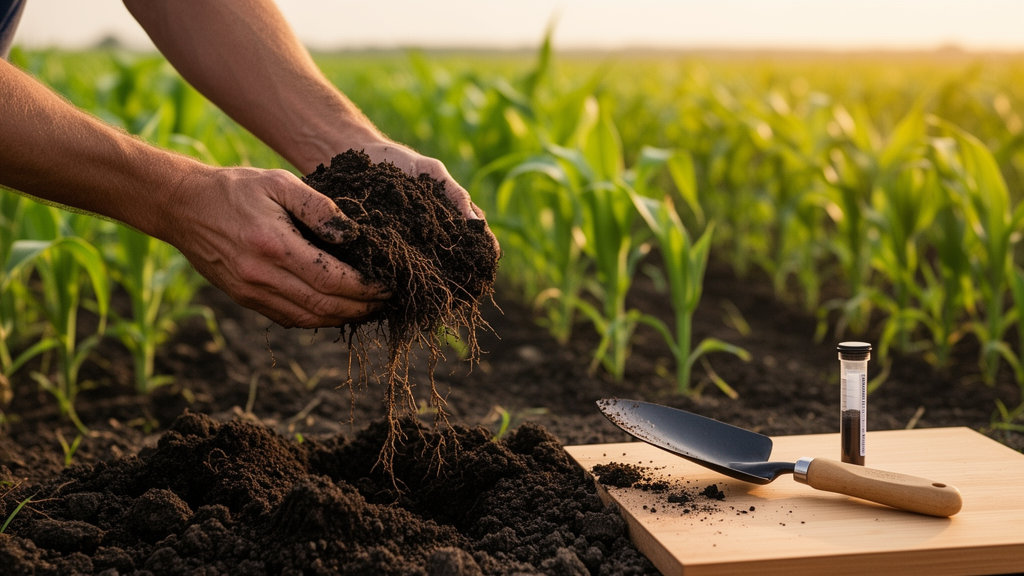
Soil microbes decide how quickly nitrogen fertilizer becomes nitrate, and a new study of tropical maize suggests that the plant’s genotype and the amount of nitrogen applied jointly steer that process, often in unexpected directions. The research, published in Annals of Microbiology, examined whether maize lines that differ in their ability to stimulate soil organic matter mineralization also differ in how much nitrification they promote after fertilization.
The researchers classified tropical maize (Zea mays) genotypes into three groups based on earlier measurements of soil organic matter mineralization: a high mineralizer (DTPYC9-F143-5-4-1-2), a medium mineralizer (CML421 = P31DMR#1-55-2-3-2-1), and a low mineralizer ([CML312/CML444//[DTP2WC4H255-1-2-2-BB/LATA-F2-138-1-3-1-B]-1-3-2-3-B]-2-1-2). They then applied nitrogen fertilizer at two rates, 50 and 100 kilograms of nitrogen per hectare, representing low and high nitrogen regimes.
To probe the microbial machinery behind nitrogen cycling, the team combined MicroResp™ assays, which measure soil functional diversity and microbial activity, with quantitative PCR. The qPCR work quantified copies of the ammonia monooxygenase gene amoA in ammonia-oxidizing archaea (AOA) and bacteria (AOB), the organisms responsible for the first step of nitrification, and tracked changes in the size of the bacterial community through 16S rRNA gene copies.
The results show that nitrogen availability is a powerful lever. In soil without maize plants, adding nitrogen increased microbial biomass carbon by 15 percent, basal activity by 8 percent, and net nitrification by 521 percent. When maize genotypes were grown under the high nitrogen regime, basal activity rose by 5 to 25 percent and net nitrification by 52 to 370 percent, with the magnitude depending on the genotype.
Perhaps the most striking finding is the direction of the relationship between carbon and nitrogen processes. Across the maize genotypes, nitrification and microbial activity were inversely related to the genotype-specific order of soil organic matter mineralization. In other words, genotypes that stimulated greater mineralization did not promote more nitrification; the pattern ran the other way. The authors conclude that enhanced soil organic matter mineralization is typically not associated with increased nitrification, a result they say redefines the assumed link between these two processes.
The study also disentangled the roles of plant and nutrient supply in shaping the microbial community. The presence of maize and the nitrogen regime exerted strong selective pressure on the community, and the clustering of microbial community-level physiological profiles depended on both plant presence and nitrogen regime. However, when it came to the abundance of AOA, AOB, and total bacterial 16S rRNA genes, nitrogen rate, rather than maize genotype, was the dominant influence.
One further observation connects these soil processes to the crop itself: nitrogen use efficiency of the maize genotypes increased with increasing soil organic matter mineralization associated with those genotypes. This suggests that the same genotypic trait that drives faster carbon turnover in the rhizosphere may help the plant capture applied nitrogen more effectively, even as it does not translate into higher nitrification rates.
The authors frame their conclusion as a caution against one-size-fits-all nitrogen management. Because a maize genotype’s capacity to regulate nitrification depends on the nitrogen input rate, they argue that genotype-specific responses must be considered in context. Integrating genotype selection with optimized nitrogen management, they suggest, offers a promising strategy to enhance conservation and use efficiency, sustain biomass yield, and minimize nitrogen losses that harm the environment.
For soil scientists, the work adds a mechanistic piece to the puzzle of how plant genetics, carbon mineralization, and nitrogen transformations interact in the rhizosphere. The study appears as an open access original article in Annals of Microbiology, published on 2 October 2026.
Subject of Research: How maize genotype and nitrogen availability shape soil nitrification and microbial functional diversity
Article Title: Nitrogen availability and maize genotype shape nitrification through shifts in soil microbial functional diversity
Article References: Kilonzi, J. M., Otieno, S., & Mafurah, J. (2026). Nitrogen availability and maize genotype shape nitrification through shifts in soil microbial functional diversity. Annals of Microbiology. https://doi.org/10.1186/s13213-026-01879-1
Image Credits: AI Generated
DOI: 10.1186/s13213-026-01879-1
Keywords: maize, nitrification, soil organic matter, nitrogen fertilizer, microbial functional diversity, amoA gene, ammonia-oxidizing archaea, ammonia-oxidizing bacteria, rhizosphere, nitrogen use efficiency, MicroResp, qPCR
Cite Scienmag News
Alan Morgan. (October 28, 2026). Maize Genotype and Nitrogen Rate Steer Soil Nitrification Differently. Scienmag. https://scienmag.com/maize-genotype-and-nitrogen-rate-steer-soil-nitrification-differently/
Alan Morgan. "Maize Genotype and Nitrogen Rate Steer Soil Nitrification Differently." Scienmag, 28 October 2026, https://scienmag.com/maize-genotype-and-nitrogen-rate-steer-soil-nitrification-differently/. Accessed 30 October 2026.
Alan Morgan. "Maize Genotype and Nitrogen Rate Steer Soil Nitrification Differently." Scienmag. October 28, 2026. https://scienmag.com/maize-genotype-and-nitrogen-rate-steer-soil-nitrification-differently/