


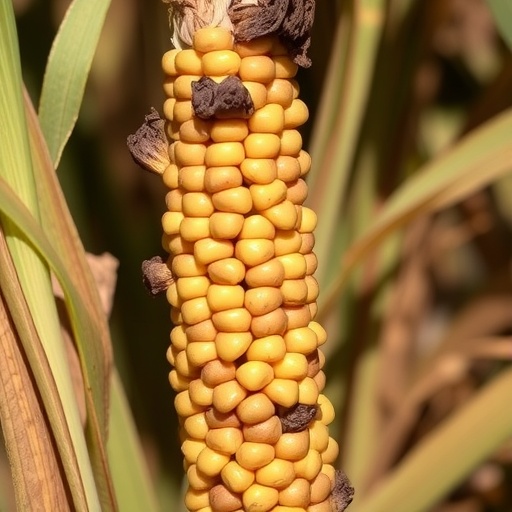
In a groundbreaking study published in “Discover Agriculture,” researchers delve into the complex interactions between maize crops and various foliar disease-causative fungi in Southwestern Ethiopia. This region, characterized by its unique agricultural practices and ecological challenges, serves as a vital backdrop for understanding the intricacies of plant-pathogen interactions. The research emphasizes the significance of pathogenic variability and species attributes, shedding light on how these factors contribute to foliar diseases that jeopardize maize production.
Understanding the variability among fungal pathogens is crucial for developing effective management strategies. The researchers conducted an extensive field survey, meticulously collecting and identifying fungal isolates from symptomatic maize plants. The findings revealed a striking diversity of fungal species, each demonstrating unique pathogenic attributes. This discovery is not just academic; it has profound implications for farmers and agricultural industries that rely heavily on maize as a staple crop.
Fusarium, Colletotrichum, and Alternaria were among the most frequently isolated genera, each presenting distinct characteristics regarding host interaction and disease severity. These pathogens have adapted remarkably well to the local environmental conditions, allowing them to proliferate and inflict significant damage on maize crops. This variation can be attributed to multiple factors, including climate change, soil health, and farming practices that influence the microbial community within the agroecosystem.
The researchers highlighted the intricate relationship between fungal virulence and the maize varieties planted within the region. Certain maize cultivars displayed remarkable resilience to specific fungal isolates, suggesting that plant breeding for disease resistance could be a feasible strategy for managing foliar diseases in this area. This endeavor underscores the potential for integrating traditional knowledge with modern agricultural practices to enhance crop yields and food security.
Moreover, the study provides a comprehensive analysis of the environmental conditions under which these fungal pathogens thrive. High humidity and specific temperature ranges were identified as critical factors that facilitate fungal growth and infection. This insight is invaluable for local farmers, as it can inform the timing of planting and crop management strategies tailored to mitigate disease outbreaks.
Interestingly, the research also explored the genetic variability of the isolated fungi. Using advanced molecular techniques, the authors were able to ascertain genetic differences among pathogen populations. This information is pivotal not only for understanding disease dynamics but also for predicting future outbreaks based on evolving pathogen capabilities. The genetic insights garnered from this study provide a strong foundation for developing molecular markers that can be utilized in breeding programs aimed at enhancing crop resilience.
Furthermore, the authors propose a multifaceted approach to combating foliar diseases in maize. They advocate for an integrated pest management strategy that combines cultural practices, biological control, and the judicious use of fungicides. By employing such a multi-pronged strategy, farmers can achieve sustainable disease management while minimizing environmental impact. This holistic perspective is a paradigm shift in how agricultural stakeholders may address the challenges posed by plant pathogens.
While the findings of this research are specific to Southwestern Ethiopia, they resonate on a global scale. The study underscores the pressing need for ongoing research into the interactions between crops and pathogens, particularly as climate change continues to alter agricultural landscapes. Sharing this knowledge internationally can aid farmers worldwide in adapting to shifting conditions and tackle the persistent threat posed by plant diseases.
The implications of the study extend beyond immediate agricultural practices; they encompass broader themes of food security and economic stability in agricultural communities. As maize production is pivotal for subsistence and livelihood in many regions, addressing the threats posed by foliar diseases must be a priority for policy-makers and agricultural planners. This research lays the groundwork for future studies aimed at formulating responsive policies and interventions.
Furthermore, the role of advanced agritech solutions cannot be underestimated. The integration of remote sensing and data analytics can provide farmers with real-time insights into crop health and potential disease outbreaks. By leveraging technology alongside traditional farming knowledge, stakeholders can devise proactive strategies to enhance crop resilience and yield, ultimately steering towards a more sustainable agricultural future.
It is also crucial to engage with local farming communities throughout the research process. By collaborating with farmers and utilizing their indigenous knowledge, scientists can ensure that their findings are relevant and applicable in real-world settings. This participatory approach fosters trust and encourages the adoption of new practices aimed at improving resistance to diseases.
In conclusion, the research conducted by Abera et al. represents a significant advancement in understanding the fungal pathogens affecting maize in Southwestern Ethiopia. Their work emphasizes the importance of recognizing and addressing pathogenic variability to improve crop management strategies. As agricultural practices evolve, it is imperative that researchers, farmers, and policymakers collaborate closely to safeguard food security and enhance agricultural resilience in the face of growing disease threats.
This study not only contributes to the academic field of plant pathology but also serves as a call to action for integrating scientific research with practical applications in agricultural practices. By harnessing the power of collaboration and innovation, stakeholders can navigate the complex challenges posed by foliar diseases, ensuring a brighter future for maize production in Ethiopia and beyond.
Abera, A., Mendesil, E., Temesgen, J. et al. Foliar disease-causing fungal isolates associated with maize: pathogen variability and species attributes in Southwestern Ethiopia. Discov Agric 3, 154 (2025). https://doi.org/10.1007/s44279-025-00275-8
Cite Scienmag News
Alan Morgan. (September 14, 2025). Maize Fungal Diseases: Pathogen Diversity in Ethiopia. Scienmag. https://scienmag.com/maize-fungal-diseases-pathogen-diversity-in-ethiopia/
Alan Morgan. "Maize Fungal Diseases: Pathogen Diversity in Ethiopia." Scienmag, 14 September 2025, https://scienmag.com/maize-fungal-diseases-pathogen-diversity-in-ethiopia/. Accessed 3 September 2026.
Alan Morgan. "Maize Fungal Diseases: Pathogen Diversity in Ethiopia." Scienmag. September 14, 2025. https://scienmag.com/maize-fungal-diseases-pathogen-diversity-in-ethiopia/


