


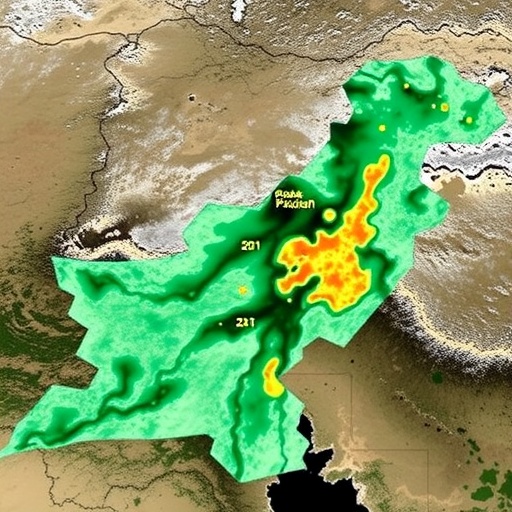
In recent years, the urgency to understand and mitigate climate change has never been greater, particularly due to the increasing concentrations of greenhouse gases like methane in the atmosphere. A recent study conducted by Altaf, Muhammad, Nadeem, and colleagues explores the key drivers of atmospheric methane across Pakistan using a sophisticated machine learning approach. This research has the potential to reshape our understanding of methane emissions and inform future policy and environmental strategies.
Methane, a potent greenhouse gas, has more than 80 times the warming power of carbon dioxide over a 20-year period. It is primarily emitted through natural and anthropogenic sources, including agriculture, landfill waste, and fossil fuel extraction. In Pakistan, the challenge is amplified by the country’s diverse agricultural landscape and growing population, which place additional stress on the environment. The authors of the study believe that understanding the key drivers of methane emissions is essential for developing effective strategies to mitigate its impact.
The research employs advanced machine learning algorithms to analyze extensive datasets, which include atmospheric methane concentrations, meteorological factors, and land-use types. By harnessing machine learning technology, the researchers are able to identify complex relationships and patterns that traditional methods might overlook. This innovative approach marks a significant advancement in environmental monitoring and assessment techniques.
One of the key requirements for such studies involves the availability of high-quality atmospheric data, which has historically been a significant barrier. Fortunately, significant improvements in satellite technology and ground-based observation networks have made it easier for researchers to gather relevant data. The study utilizes data from various sources, including satellite remote sensing and localized ground observations, which significantly enhances the reliability of its findings.
In their analysis, the researchers identified several critical factors that contribute to methane emissions within Pakistan. Land use changes, particularly the conversion of forests to agricultural land, were shown to be a significant driver of increased methane concentrations. Additionally, industrial activities, especially those associated with fossil fuel extraction, were found to release substantial amounts of methane into the atmosphere.
Another notable finding of the study is the strong correlation between meteorological factors, such as temperature and humidity, and methane levels. Warmer temperatures tend to increase methane emissions from natural sources, such as wetlands and rice paddies, further compounding the issue in a warming world. This creates a feedback loop that could lead to more significant emissions as the climate continues to change.
The machine learning model developed by the researchers offers a valuable tool that can be used to predict future methane emissions with greater accuracy. By inputting various land-use scenarios and climate data, policymakers could evaluate the potential impacts of different interventions and strategies aimed at reducing methane emissions. This predictive capability represents a crucial advancement in our efforts to manage greenhouse gas emissions effectively.
Moreover, the study emphasizes the need for an integrated approach that combines technological innovations with policy-led initiatives. The authors call for greater collaboration between governmental agencies, research institutions, and industry stakeholders to bridge the existing data gaps and implement effective mitigation strategies. By leveraging advanced technologies and a multidisciplinary approach, Pakistan can better manage its methane emissions and work towards meeting international climate commitments.
Given the complexity of methane emissions, the authors also suggest that continued research is needed to dive deeper into the interactions between anthropogenic and natural drivers. Understanding these relationships is paramount for creating targeted interventions that can effectively reduce methane levels, particularly in sensitive areas like agriculture and waste management.
To ensure the findings of the study reach broader audiences, including policymakers, community leaders, and the general public, the authors advocate for increased awareness and education about the sources and impacts of methane emissions. Engaging local communities in initiatives aimed at reducing emissions—such as sustainable agricultural practices—could be a crucial step forward.
In conclusion, the study conducted by Altaf and his colleagues represents a significant contribution to the field of environmental science, particularly in the context of understanding methane emissions in Pakistan. By utilizing machine learning methods to analyze complex datasets, the researchers have effectively mapped out the key drivers of atmospheric methane, offering insights that are crucial for developing effective strategies to combat this potent greenhouse gas. As the world continues to grapple with the impacts of climate change, findings such as these underscore the need for innovative research methodologies and collaborative efforts to safeguard our environment for future generations.
This research not only sheds light on the specific situation in Pakistan but also offers a framework that other countries can adapt to address their methane emission challenges. It paves the way for a future where advanced technology and proactive policy measures work hand in hand to mitigate the impacts of climate change on a global scale.
Cite Scienmag News
Teresa Odom. (January 9, 2026). Machine Learning Uncovers Methane Drivers in Pakistan. Scienmag. https://scienmag.com/machine-learning-uncovers-methane-drivers-in-pakistan/
Teresa Odom. "Machine Learning Uncovers Methane Drivers in Pakistan." Scienmag, 9 January 2026, https://scienmag.com/machine-learning-uncovers-methane-drivers-in-pakistan/. Accessed 4 September 2026.
Teresa Odom. "Machine Learning Uncovers Methane Drivers in Pakistan." Scienmag. January 9, 2026. https://scienmag.com/machine-learning-uncovers-methane-drivers-in-pakistan/


