


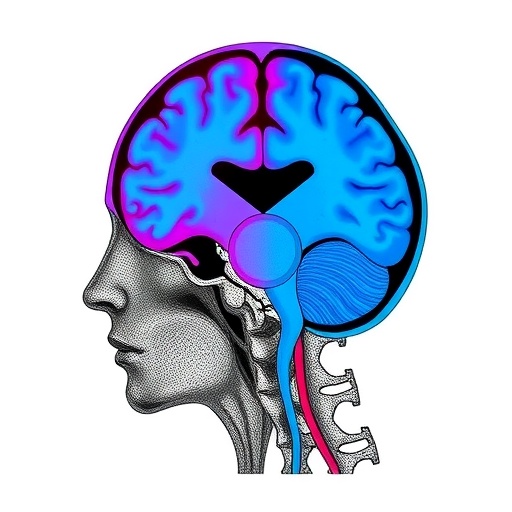
In a groundbreaking development that could revolutionize the diagnosis and treatment of anxiety-related disorders, researchers from the German National Cohort (NAKO) study have employed advanced machine learning techniques on structural MRI data combined with psychosocial factors to more accurately classify generalized anxiety disorder (GAD) and panic disorder. This innovative approach not only provides unprecedented insights into the neurobiological underpinnings of these common yet complex mental health conditions but also offers a promising pathway towards personalized medicine in psychiatry.
The study, spearheaded by Gutzeit, Weiß, Kuhn, and their multidisciplinary team, utilizes a multimodal phenotypic classification framework that integrates neuroimaging data with psychosocial metrics. Traditionally, clinical diagnosis of anxiety disorders relies heavily on subjective symptom reports and behavioral assessments, which can be unreliable and inconsistent. By leveraging high-dimensional imaging data of brain structures alongside detailed psychosocial profiles, the researchers managed to identify distinct biomarkers and phenotypic patterns that differentiate between GAD and panic disorder with remarkable accuracy.
Central to this investigation were structural MRI scans which captured detailed morphological information about brain regions implicated in emotion regulation, fear response, and stress processing. These brain maps revealed subtle but meaningful alterations in areas such as the amygdala, hippocampus, and prefrontal cortex, which are long known to play pivotal roles in anxiety pathology. Through sophisticated machine learning models, these neuroanatomical changes were quantitatively linked to specific anxiety phenotypes, going beyond the binary clinical labels to reveal a spectrum of neural substrates associated with these disorders.
The integration of psychosocial factors marks a significant advance in this research. Variables such as socioeconomic status, education, lifestyle, and exposure to traumatic events were fed alongside imaging data into the machine learning algorithms. This holistic perspective acknowledges that anxiety disorders arise from a complex interplay of biological vulnerability and environmental stressors. Consequently, the combined dataset allowed for more robust classification models that reflected the multifactorial nature of these mental illnesses.
Importantly, the machine learning approach capitalizes on pattern recognition capabilities to detect non-linear and high-dimensional relationships that traditional statistical methods might miss. By training on a large dataset from the NAKO cohort, which encompasses thousands of participants providing heterogeneous clinical and neuroimaging data, the models learned to generalize well across diverse populations. This scalability enhances the potential for clinical translation of these findings in broader psychiatric settings.
One of the most exciting findings from the study is the delineation of neural circuits that distinctly characterize panic disorder as opposed to generalized anxiety. While both disorders share overlapping symptoms like excessive worry and heightened arousal, the neural phenotypes uncovered suggest divergent pathophysiological pathways. For instance, panic disorder exhibits pronounced structural changes in areas governing acute fear responses, such as the periaqueductal gray and insular cortex, whereas GAD shows more diffuse alterations linked to sustained anxiety states involving the prefrontal cortex and hippocampus.
This nuanced differentiation has significant therapeutic implications. By identifying unique neural signatures, clinicians could tailor interventions more precisely—potentially selecting treatments targeting specific brain circuits implicated in each disorder. Such targeted therapies might include novel pharmacological agents, neuromodulation techniques, or customized psychotherapy approaches designed to modify dysfunctional neural networks revealed by this research.
The study also highlights the transformative role of artificial intelligence in psychiatric diagnostics. Machine learning algorithms provide a powerful toolset for integrating complex datasets—merging biological data from MRI with rich psychosocial information to refine diagnostic categories that have traditionally been challenging to define with precision. The work demonstrates how AI can unravel the heterogeneity within diagnostic groups, paving the way for a new generation of neuropsychiatric biomarkers grounded in objective data rather than solely clinical observation.
Moreover, the large-scale nature of the German National Cohort ensures the robustness and representativeness of the findings. Sampling a wide demographic cross-section minimizes biases that have historically plagued psychiatric research, such as overrepresentation of certain age groups or socioeconomic backgrounds. This inclusivity boosts confidence that the phenotypic classifications and neural correlates identified will be applicable to real-world patient populations, supporting their utility in future clinical practice.
The methodological rigor is another hallmark of the study. The researchers employed state-of-the-art cross-validation strategies to avoid model overfitting, ensuring that predictive accuracy reported reflects genuine generalizability. Additionally, the use of structural MRI as opposed to functional imaging confers practical advantages in clinical settings given its wider availability, shorter scan times, and greater consistency across imaging centers, making this approach more feasible for routine diagnostic use.
Looking ahead, this research opens several promising avenues for further exploration. Longitudinal studies could elucidate how these neural phenotypes evolve over time and in response to treatment, potentially offering markers for prognosis and therapeutic monitoring. Integrating other data modalities such as genetic, epigenetic, and metabolic profiles alongside imaging and psychosocial data could yield even richer phenotypic maps, accelerating precision psychiatry.
In conclusion, the work by Gutzeit and colleagues represents a landmark step toward objective, biologically informed classification of anxiety disorders. By merging neuroimaging and psychosocial domains through machine learning, the study transcends conventional diagnostic limitations, offering a blueprint for individualized medicine in mental health care. As this approach gains traction, it heralds a future where anxiety disorders are diagnosed and treated based on their unique neurobiological and psychosocial signatures, ultimately improving outcomes for millions affected worldwide.
Cite Scienmag News
Glenn Wilkins. (May 28, 2026). Machine Learning Uncovers Anxiety Types via MRI Data. Scienmag. https://scienmag.com/machine-learning-uncovers-anxiety-types-via-mri-data/
Glenn Wilkins. "Machine Learning Uncovers Anxiety Types via MRI Data." Scienmag, 28 May 2026, https://scienmag.com/machine-learning-uncovers-anxiety-types-via-mri-data/. Accessed 4 September 2026.
Glenn Wilkins. "Machine Learning Uncovers Anxiety Types via MRI Data." Scienmag. May 28, 2026. https://scienmag.com/machine-learning-uncovers-anxiety-types-via-mri-data/


